
Endpoints in Networking: What You Need to Know
This post explains what network endpoints are, how they function within a network, and how they differ from infrastructure devices like routers and switches. It covers common endpoint types, connection methods, and why endpoints matter for both network design and security. Written for CCNA beginner

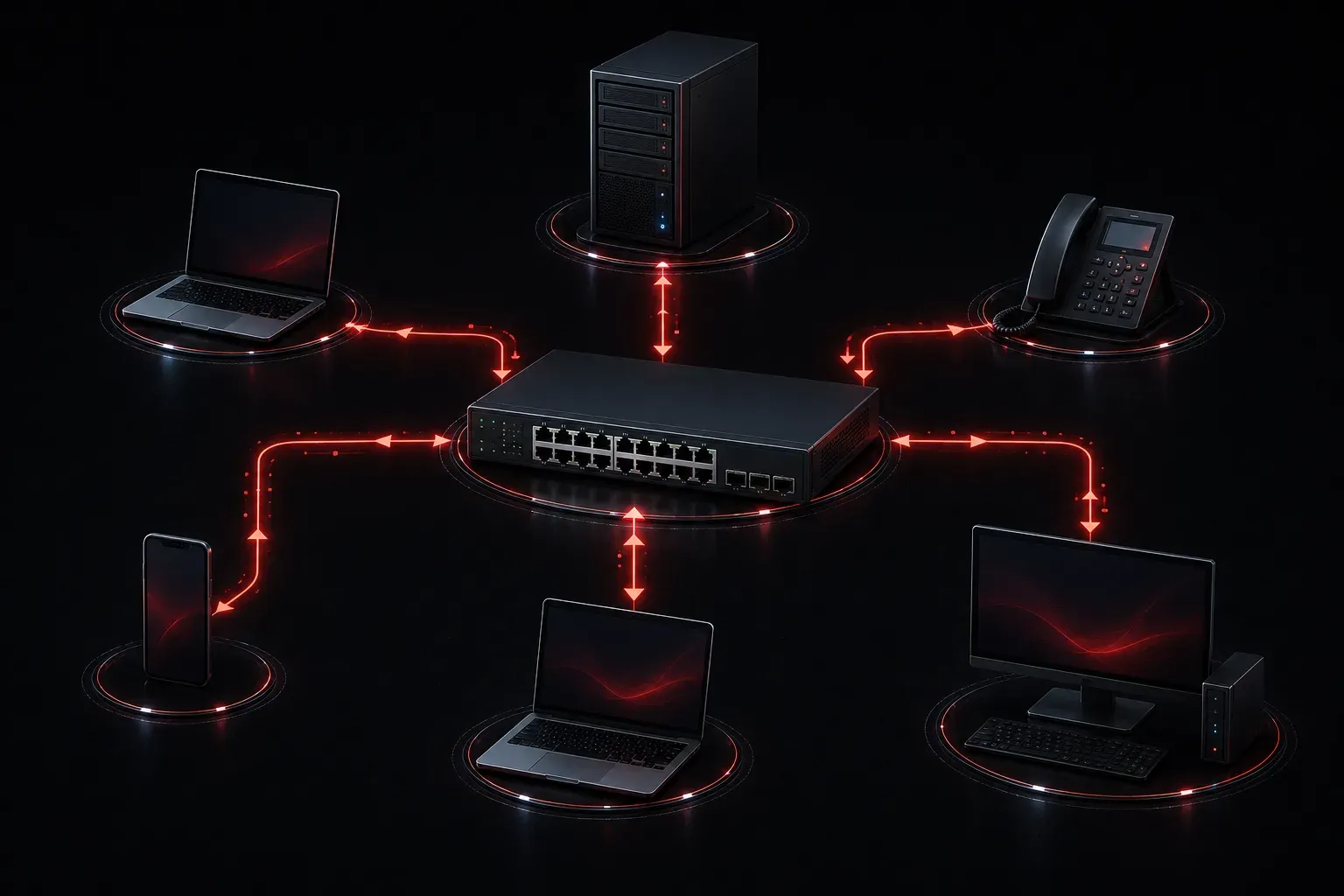
When you first start studying for the CCNA, you'll encounter a lot of terminology that sounds more complicated than it actually is. "Endpoints" is one of those terms. Once you understand what they are and why they matter, a lot of other networking concepts will start to click into place.
What Is a Network Endpoint?
A network endpoint is any device that sits at the edge of a network and communicates with other devices over that network. Think of endpoints as the starting and finishing points of network communication. Every time data travels across a network, it originates from an endpoint and is destined for another endpoint.
Common examples of endpoints include:
- Desktop computers and laptops: The most familiar endpoints in any office or home network
- Smartphones and tablets: Mobile devices that connect over Wi-Fi or cellular
- Servers: Devices that provide resources or services to other endpoints
- IP phones: Voice over IP (VoIP) devices that connect to the network for calls
- Printers: Network-connected printers that receive print jobs from other devices
- IP cameras: Security cameras that stream video over the network
- IoT devices: Smart thermostats, sensors, and other connected hardware
Notice what is not on this list: routers, switches, and firewalls. Those are infrastructure devices. Their job is to move and manage traffic between endpoints, not to generate or consume that traffic themselves.
The Endpoint Function in a Network
The endpoint function is straightforward: endpoints generate and receive data. When you browse a website, your laptop is the source endpoint and the web server is the destination endpoint. The routers and switches in between are just handling the delivery.
This distinction matters for the CCNA exam because Cisco organizes network components by their roles. Endpoints are often referred to as hosts in Cisco documentation and IOS terminology. You will see this frequently when reading routing tables or troubleshooting commands.
For example, when you run show ip arp on a Cisco router, you are viewing a list of IP-to-MAC address mappings. Most of the entries will be endpoints: computers, phones, and servers that the router has recently communicated with.
Router# show ip arp
Protocol  Address          Age (min)  Hardware Addr   Type   Interface
Internet  192.168.1.1             -   a8b1.d4c2.ef01  ARPA   GigabitEthernet0/0
Internet  192.168.1.10            4   3c22.fb11.aa09  ARPA   GigabitEthernet0/0
Internet  192.168.1.20            2   d4be.d9f3.0c14  ARPA   GigabitEthernet0/0
In this output, 192.168.1.10 and 192.168.1.20 are likely endpoints such as a workstation and a server. The 192.168.1.1 entry with no age value is the router's own interface.
Why Device Connection Type Matters
Endpoints can connect to a network in two primary ways:
- Wired connections: Using an Ethernet cable plugged into a switch port, typically providing more stable and faster connectivity
- Wireless connections: Connecting through a wireless access point using Wi-Fi standards like 802.11ac or 802.11ax
The device connection method affects performance, security, and how the network is designed. Wired endpoints are generally easier to manage and troubleshoot. Wireless endpoints introduce additional complexity around signal strength, interference, and authentication.
For the exam, understand that regardless of connection type, the network role of the endpoint stays the same: it sends and receives data. The infrastructure around it (switches, access points, routers) simply provides the path.
Endpoints and Network Security
Here is something important that catches many new networking students off guard: endpoints are often the biggest security risk on a network. Because they are controlled by end users and run a wide variety of software, they can be compromised, infected with malware, or misconfigured. This is why concepts like network segmentation, VLANs, and access control lists exist. Understanding that endpoints are the source and destination of all meaningful network traffic helps you understand why so much of network design focuses on controlling what they can and cannot reach.
What's Next
Now that you know what endpoints are and what role they play, the next logical step is understanding the infrastructure that connects them. In the next post in this series, we will look at network switches: how they work, how they differ from hubs, and why they are the backbone of modern local area networks. If you want to go deeper on network fundamentals in the meantime, pick up the Cisco Press CCNA 200-301 Official Cert Guide by Wendell Odom, which covers these foundational topics in excellent detail.
Tools and resources for this topic
- Wendell Odom CCNA Vol 1 — Covers networking fundamentals, switching, and routing basics.
- Wendell Odom CCNA Vol 2 — Covers advanced routing, WAN, infrastructure services, and security.