
IP Address Spoofing Mitigation with Access Control Lists (ACL)

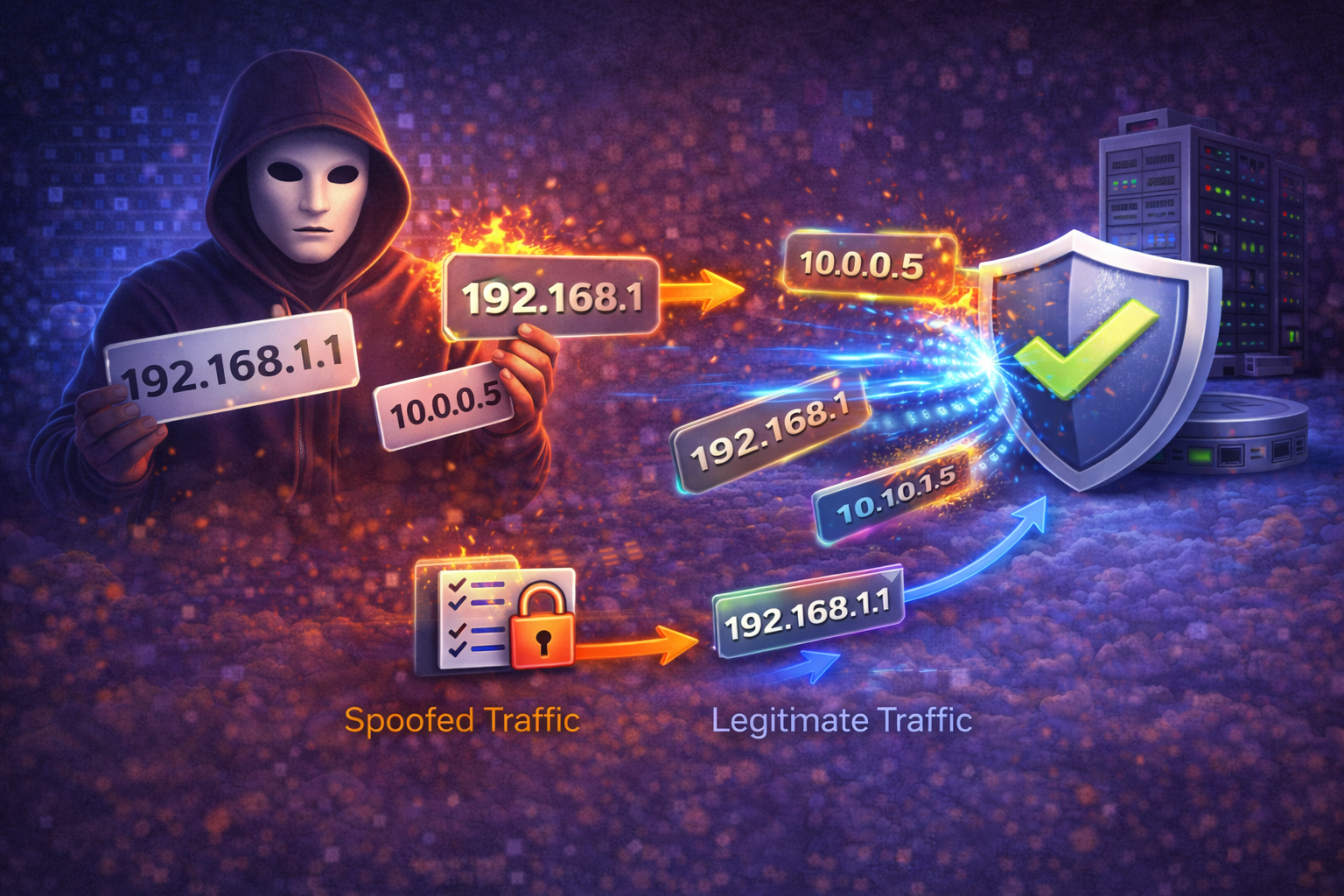
Understanding IP Spoofing
IP spoofing is a technique used by attackers to disguise their identity by modifying the source IP address in packet headers. This makes it appear as if the traffic is coming from a trusted source when it's actually originating from a malicious host. Common attack vectors that utilize IP spoofing include:
- DDoS attacks (distributed denial of service)
- Man-in-the-middle attacks
- Session hijacking
- Bypassing IP-based authentication
How Access Control Lists Help Prevent IP Spoofing
Access Control Lists (ACLs) provide an effective first line of defense against IP spoofing attacks by filtering traffic based on source and destination IP addresses, ports, and protocols. By implementing properly configured ACLs at strategic network points, you can:
- Block packets with obviously spoofed source addresses
- Prevent internal network addresses from entering from external interfaces
- Filter out packets with reserved or private IP addresses coming from the internet
- Implement ingress and egress filtering
Anti-Spoofing ACL Configuration Examples
Basic Ingress Filtering
The following ACL prevents packets with private IP addresses from entering your network from external sources:
! Block RFC 1918 private addresses from external interface
access-list 100 deny ip 10.0.0.0 0.255.255.255 any
access-list 100 deny ip 172.16.0.0 0.15.255.255 any
access-list 100 deny ip 192.168.0.0 0.0.255.255 any

! Block loopback addresses
access-list 100 deny ip 127.0.0.0 0.255.255.255 any

! Block multicast addresses
access-list 100 deny ip 224.0.0.0 31.255.255.255 any

! Block reserved addresses
access-list 100 deny ip 240.0.0.0 15.255.255.255 any

! Allow all other traffic
access-list 100 permit ip any any
Apply this ACL to your external interface:
interface GigabitEthernet0/0
 description External Interface
 ip access-group 100 in
Egress Filtering
Egress filtering ensures that only packets with legitimate source addresses leave your network:
! Only allow traffic from your internal network to leave
access-list 101 permit ip 192.168.1.0 0.0.0.255 any
access-list 101 deny ip any any

interface GigabitEthernet0/0
 description External Interface
 ip access-group 101 out
Advanced Anti-Spoofing ACL
A more comprehensive anti-spoofing ACL that blocks common spoofed addresses:
! Extended ACL for comprehensive anti-spoofing
ip access-list extended ANTI-SPOOF

! Block source addresses that should never appear on the internet
deny ip 0.0.0.0 0.255.255.255 any
deny ip 10.0.0.0 0.255.255.255 any
deny ip 127.0.0.0 0.255.255.255 any
deny ip 169.254.0.0 0.0.255.255 any
deny ip 172.16.0.0 0.15.255.255 any
deny ip 192.0.2.0 0.0.0.255 any
deny ip 192.168.0.0 0.0.255.255 any
deny ip 198.51.100.0 0.0.0.255 any
deny ip 203.0.113.0 0.0.0.255 any
deny ip 224.0.0.0 31.255.255.255 any
deny ip 240.0.0.0 15.255.255.255 any

! Block packets with broadcast destination from internet
deny ip any 255.255.255.255

! Allow legitimate traffic
permit ip any any
Best Practices for Anti-Spoofing ACLs
1. Implement Both Ingress and Egress Filtering
Deploy ACLs in both directions to provide comprehensive protection. Ingress filtering blocks spoofed packets entering your network, while egress filtering prevents your network from being used to launch spoofing attacks.
2. Position ACLs Strategically
Place anti-spoofing ACLs as close to the network edge as possible, typically on:
- External-facing router interfaces
- Firewall interfaces
- Internet gateway connections
3. Regular Updates and Monitoring
Regularly review and update your ACLs to account for:
- Changes in network topology
- New attack patterns
- Updated RFC specifications
- False positive reports
4. Test Thoroughly
Before deploying anti-spoofing ACLs in production:
- Test in a lab environment
- Verify legitimate traffic flows
- Check for unintended blocking
- Document expected behavior
Verification and Troubleshooting
Use these commands to verify your ACL configuration and troubleshoot issues:
! Show ACL configuration
show access-lists

! Display ACL hit counts
show access-lists 100

! Show interface ACL assignments
show ip interface GigabitEthernet0/0

! Debug ACL matches (use with caution in production)
debug ip packet 100
Limitations of ACL-Based Anti-Spoofing
While ACLs provide valuable protection against IP spoofing, they have limitations:
- Cannot detect spoofing within the same subnet
- May not catch sophisticated spoofing techniques
- Require regular maintenance and updates
- Can impact router performance with complex rules
For comprehensive security, combine ACLs with other anti-spoofing technologies such as:
- Unicast Reverse Path Forwarding (uRPF)
- Dynamic ARP Inspection (DAI)
- IP Source Guard
- DHCP Snooping
Conclusion
Implementing proper anti-spoofing ACLs is a crucial security practice that helps protect your network from IP spoofing attacks. By filtering traffic based on source IP addresses and blocking obviously forged packets, ACLs provide an effective first line of defense. However, remember that ACLs should be part of a layered security approach, combined with other security mechanisms for comprehensive protection.
Regular monitoring, testing, and updates of your anti-spoofing ACLs will ensure they continue to provide effective protection as your network evolves and new threats emerge.