
What is a Network? Why Networks Exist
This post explains what computer networks are, why we need them for resource sharing and communication, and covers the main types including PAN, LAN, MAN, and WAN with practical examples.
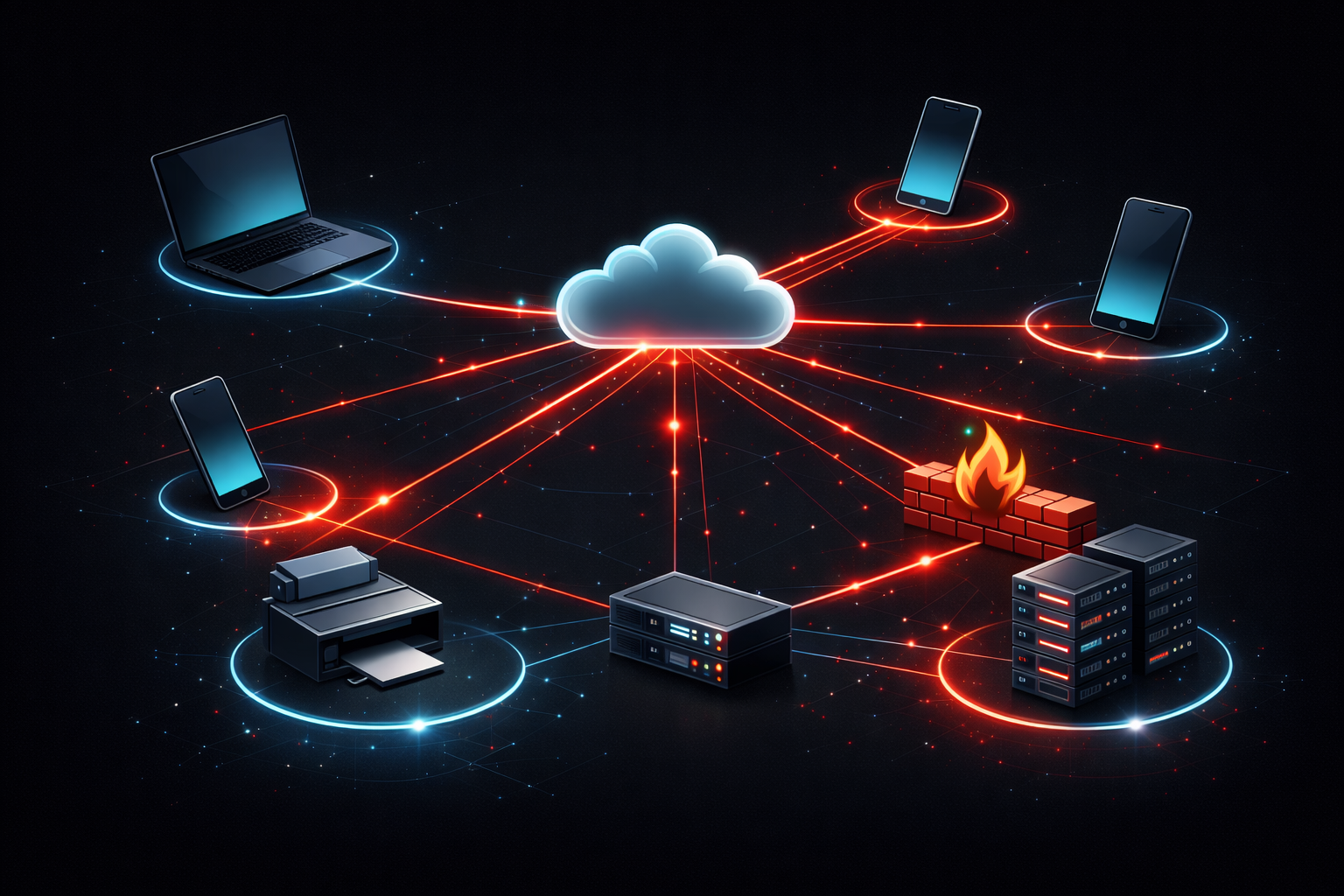
Imagine trying to share a single printer among 50 people in an office, but everyone has to physically carry their laptop to the printer each time. Or picture having to walk to your colleague's desk every time you want to send them a file. This chaos is exactly what computer networks solve.
What Exactly is a Network?
A computer network is simply a collection of devices connected together so they can communicate and share resources. Think of it like a highway system connecting different cities; instead of cars traveling between locations, we have data traveling between computers, phones, printers, and servers.
The devices in a network can be anything from your laptop and smartphone to servers, printers, and security cameras. The connections between them might be cables, Wi-Fi signals, or even fiber optic links.
Why Do We Need Networks?
Networks exist to solve three fundamental problems:
Resource Sharing
Instead of buying a printer for every person, a network lets everyone share one high-quality printer. The same applies to internet connections, file storage, and software applications. It's like having a shared library instead of everyone buying their own copy of every book.
Communication
Networks enable instant communication through email, messaging, video calls, and file transfers. Before networks, sharing information meant physically moving storage devices or printing documents.
Centralized Management
IT administrators can manage security, updates, and user access from a central location rather than visiting each individual computer. It's like having a master control room instead of managing each device separately.
Types of Networks
Networks come in different sizes and serve different purposes:
Personal Area Network (PAN)
This is your personal bubble of connected devices, your smartphone connecting to your wireless headphones, or your laptop connecting to your mouse via Bluetooth. PANs typically cover just a few meters around you.
Local Area Network (LAN)
A LAN covers a small geographic area like your home, office, or school building. All devices on a LAN can typically communicate directly with each other. Your home Wi-Fi network is a perfect example of a LAN.
Metropolitan Area Network (MAN)
MANs connect multiple LANs across a city or large campus. Think of a university with buildings spread across a city, or a company with multiple offices in the same metropolitan area. MANs bridge the gap between local and wide area networks.
Wide Area Network (WAN)
WANs span large geographical distances, connecting cities, countries, or even continents. The internet is the largest WAN, but companies also create private WANs to connect their offices worldwide. When you connect to your company's network from home, you're using a WAN connection.
Real-World Network Example
Let's trace a typical workday scenario: You arrive at the office and connect your laptop to the company Wi-Fi (LAN). You print a document to the shared printer (resource sharing), send an email to a colleague in another building (communication via MAN), and access files from the company's central server (centralized management). Later, you video call a client in another country (WAN communication).
Each of these actions demonstrates why networks are essential. Without them, modern business and personal computing would be impossible.
The Foundation of Everything
Understanding what a network is and why we need them provides the foundation for everything else in networking. Whether you're troubleshooting a connection issue, designing a new network, or studying for your CCNA, these core concepts apply to every scenario you'll encounter.
What's Next
Now that you understand what networks are and why they exist, the next step is exploring how devices actually find and communicate with each other. In our next post, we'll dive into network topologies – the different ways devices can be physically and logically connected to create these powerful communication systems.