
Practical Applications of Human-in-the-loop AI
This post explores real-world applications of human-in-the-loop AI across domains including content moderation, medical imaging, autonomous vehicles, and fraud detection. It explains the common conditions that make HITL the right design choice and gives practitioners a practical checklist for evalu

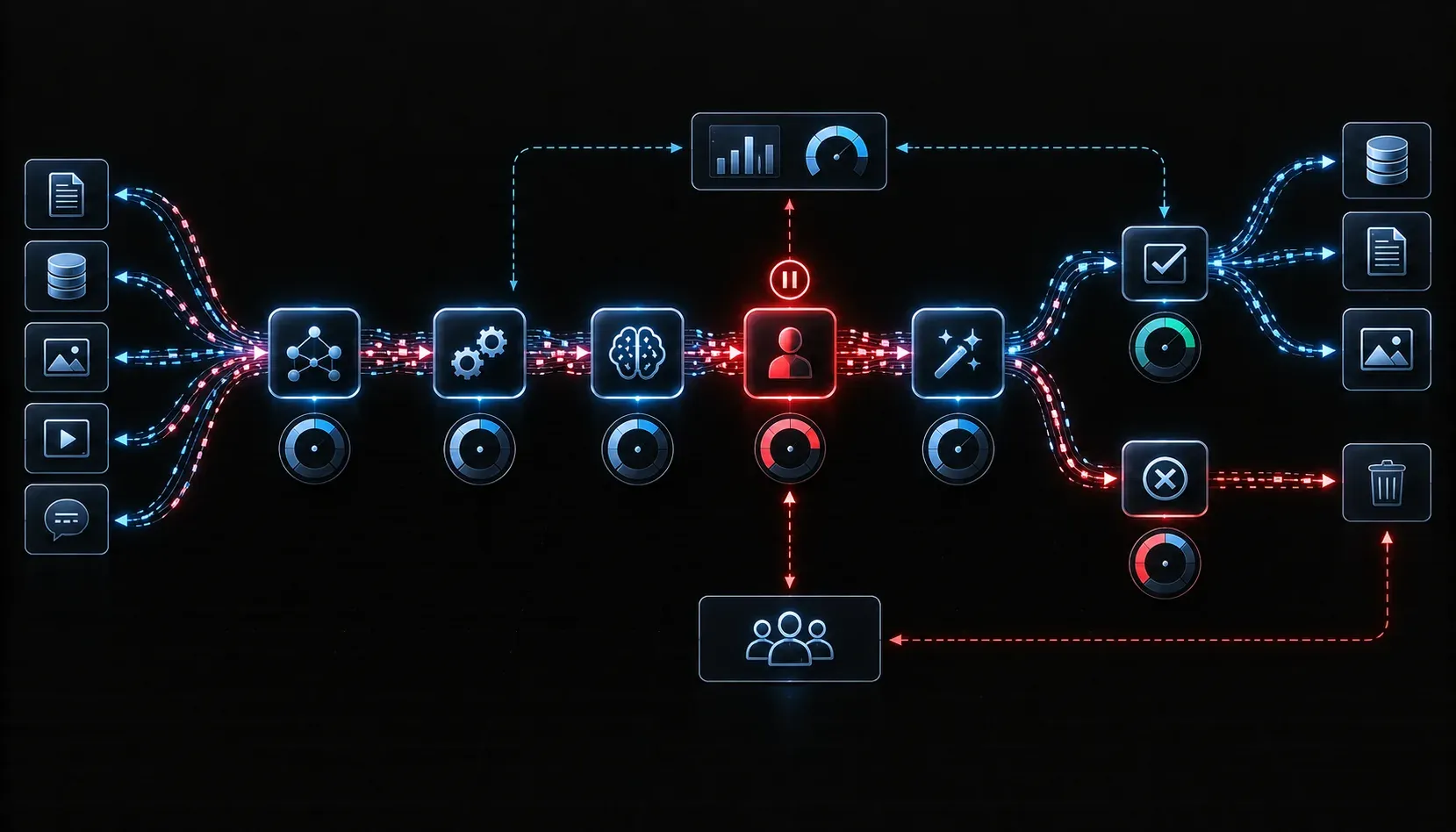
Agentic AI systems are getting better at acting autonomously, but "better" does not always mean "fully unsupervised." Knowing when to let the AI run and when to bring a human into the loop is one of the most practical skills you can develop as an AI practitioner. This post walks through concrete, real-world HITL examples so you can recognize the pattern when you encounter it in your own work.
What Makes HITL Different from Full Automation?
A fully automated pipeline runs start to finish without stopping. A human-in-the-loop (HITL) pipeline deliberately pauses at defined checkpoints and asks a human to review, approve, correct, or redirect before the system continues. The key word is deliberately. HITL is not a workaround for a broken system; it is a design decision made because the cost of an unchecked error is higher than the cost of a short human review.
Think of it like a commit approval workflow in software development. The automation (CI/CD pipeline) does the heavy lifting, but a human approves the merge before code hits production.
Real-World Applications of HITL AI
1. Content Moderation at Scale
Platforms like social media sites and forums use AI classifiers to flag potentially harmful content. The AI makes a first-pass decision, but borderline cases are routed to a human reviewer before action is taken. This is a classic HITL use case because the consequences of a false positive (removing legitimate speech) and a false negative (allowing harmful content) are both costly. The human resolves the ambiguity the model cannot confidently handle.
2. Medical Imaging and Diagnosis Support
AI models can scan radiology images, pathology slides, and ECG readings faster than any human. However, most clinical deployments position the AI as a second reader, not the decision-maker. The model highlights areas of concern, and the radiologist or clinician makes the final call. This keeps the human accountable, satisfies regulatory requirements, and catches the cases where the model's confidence was misplaced.
3. Autonomous Vehicle Edge Cases
Self-driving software handles the vast majority of driving tasks without intervention. But when the system encounters a scenario it is not confident about, such as an unusual road obstruction or ambiguous traffic signal, it can alert the human driver or, in remote monitoring setups, escalate to a human operator who takes temporary control. The HITL checkpoint only activates when uncertainty crosses a defined threshold.
4. AI-Assisted Code Generation
Tools like GitHub Copilot and similar assistants suggest code completions, but the developer always reviews and accepts or rejects each suggestion. The AI generates; the human approves. This is one of the most familiar applications of HITL AI for practitioners already working in technical roles. The loop is tight (seconds, not hours) but it is still a loop.
5. Customer Service Escalation
Conversational AI agents handle routine inquiries automatically. When the agent detects frustration signals, an out-of-scope question, or low confidence in its own response, it hands the conversation off to a human agent. The AI-driven decision-making covers the high-volume, low-complexity work; humans handle the exceptions that require judgment or empathy.
6. Financial Fraud Detection
Payment processors use ML models to flag suspicious transactions in real time. High-confidence fraud is blocked automatically. Borderline cases are queued for a human analyst to review before a final decision is recorded. This tiered approach balances speed with accuracy, since the cost of blocking a legitimate transaction for a real customer is significant.
The Common Thread Across All HITL Use Cases
Across every example above, three conditions make HITL the right design choice:
- High consequence of errors: Mistakes in these domains carry legal, financial, ethical, or safety weight.
- Model uncertainty: The AI performs well in most cases but struggles with edge cases, ambiguity, or novel inputs.
- Human review is feasible: The volume of escalations is small enough that humans can actually handle them without creating a bottleneck.
When you are evaluating whether a workflow needs HITL, use those three criteria as your checklist. If all three are true, design the checkpoint into the system from the start rather than adding it later as a patch.
What's Next
Now that you have seen where HITL applies in the real world, the next step is understanding how to design the checkpoint itself. In the next post, we will look at specific HITL design patterns, including approval gates, confidence thresholds, and escalation triggers, so you can build these workflows into your own agentic AI pipelines.