
Comparing Data Transformation Techniques in AI Agents
This post compares four core data transformation techniques used in AI agents: string templating, dictionary/JSON mapping, structured output parsing, and normalization. Each technique is explained with practical Python examples and mapped to real IT workflow use cases. Readers learn when to apply e

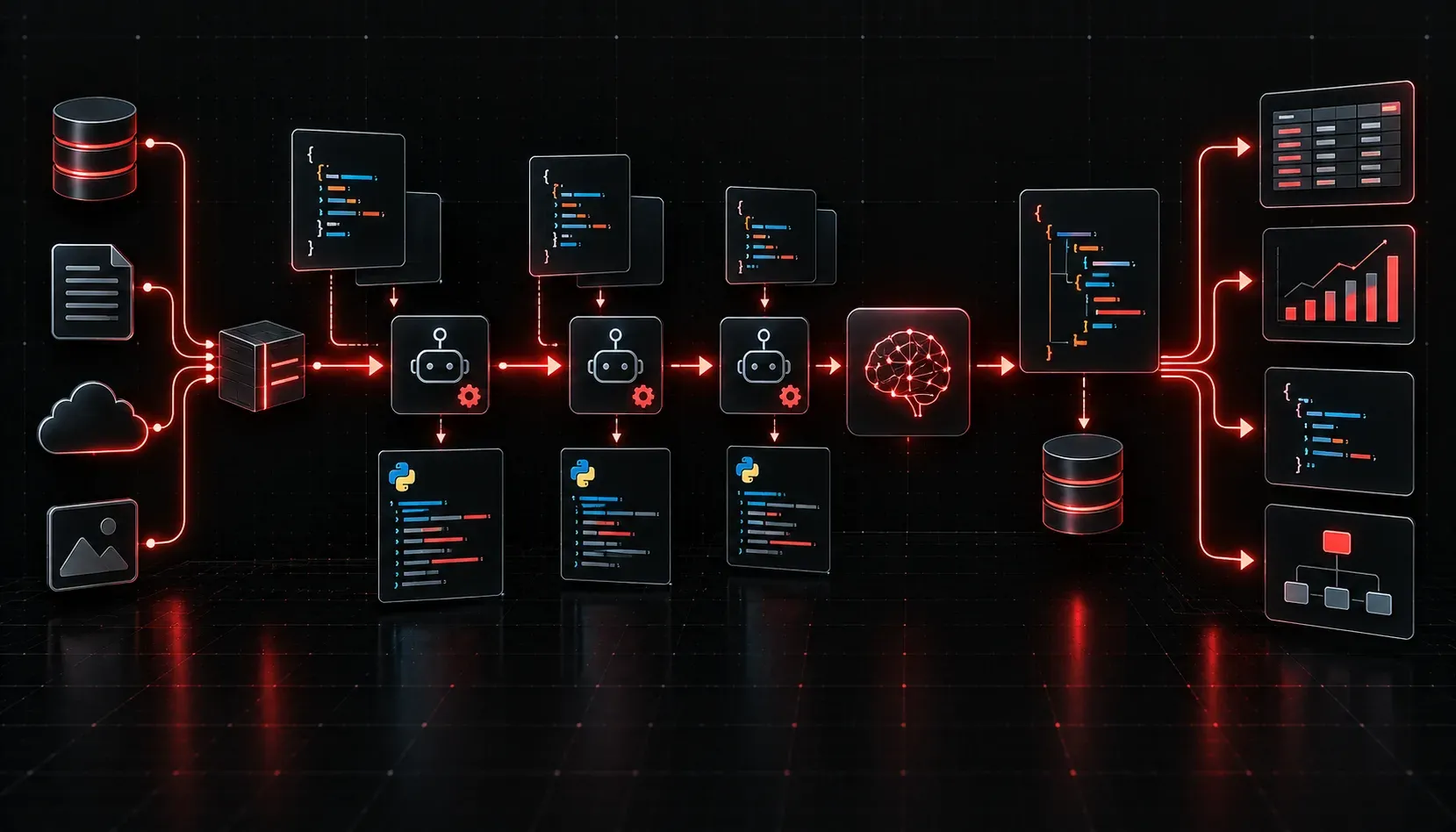
When you start building AI agents, you quickly realize that getting data into the agent is only half the battle. The other half is making sure that data flows cleanly between each step of the agent's workflow. This is where data transformation techniques come in, and understanding which technique to use (and when) will save you a lot of frustration.
This post breaks down the most common data transformation techniques used in AI agents, compares their strengths, and shows you where each one fits in a real IT workflow.
Why Data Transformation Matters in Agentic AI
An AI agent rarely works with just one tool or one data source. It might pull information from an API, query a database, call a language model, and then write results to a ticketing system, all in a single run. Each of those systems speaks a slightly different "language." Data transformation is the work of translating between those languages so each step gets exactly what it needs.
Poor data handling causes agents to fail silently, produce incorrect outputs, or crash entirely. Getting this right is one of the foundational agentic AI methods you need to understand early.
Technique 1: String Formatting and Templating
The simplest transformation technique is plain string manipulation. You take a value and embed it into a template or reformat it for the next step.
A common example: an agent retrieves a hostname from a network inventory and needs to inject it into a prompt for an LLM.
hostname = "core-router-01"
prompt = f"Summarize the recent alerts for device: {hostname}"
This works well for simple cases, but it breaks down fast when your data becomes nested or structured. Use string templating for straightforward text assembly and prompt construction.
Technique 2: Dictionary and JSON Mapping
Most real-world agent steps pass data as Python dictionaries or JSON objects. Mapping means pulling specific keys from one structure and building a new structure that the next step expects.
# Raw API response
raw_data = {
    "device": "core-router-01",
    "cpu_utilization": 87,
    "memory_free_mb": 512,
    "status": "degraded"
}

# Mapped output for the next agent step
alert_payload = {
    "host": raw_data["device"],
    "severity": "high" if raw_data["cpu_utilization"] > 80 else "low",
    "message": f"CPU at {raw_data['cpu_utilization']}%"
}
This is the most common data handling technique in AI agents. It is explicit, readable, and easy to debug. When comparing data transformation techniques for AI workflows, dictionary mapping is your default starting point.
Technique 3: Structured Output Parsing
Modern LLMs can return structured data if you ask them correctly. Instead of parsing free-form text, you instruct the model to respond in JSON, and then you validate and use that output directly.
Using a library like pydantic with OpenAI's structured output feature is a clean way to enforce this:
from pydantic import BaseModel
from openai import OpenAI

class IncidentSummary(BaseModel):
    device: str
    issue: str
    recommended_action: str

client = OpenAI()

response = client.beta.chat.completions.parse(
    model="gpt-4o",
    messages=[{"role": "user", "content": "Summarize this alert: CPU at 87% on core-router-01"}],
    response_format=IncidentSummary,
)

summary = response.choices[0].message.parsed
print(summary.recommended_action)
Structured output handling eliminates fragile regex parsing and makes your agent pipelines far more reliable. This technique is especially valuable when an LLM step feeds directly into another automated step.
Technique 4: Normalization and Type Coercion
Sometimes data arrives in an inconsistent format. One API returns CPU usage as a string ("87%"), another returns it as a float (0.87). Normalization is the process of converting everything into a consistent type before your agent logic runs.
def normalize_cpu(value):
    if isinstance(value, str):
        return float(value.strip("%")) / 100
    elif isinstance(value, (int, float)):
        return value if value <= 1 else value / 100
    return None
This kind of defensive data handling prevents type errors from crashing your agent mid-run, which is especially important in production IT automation workflows.
Quick Comparison Summary
- String templating: Best for prompt construction and simple text assembly
- Dictionary/JSON mapping: Best for reshaping structured data between agent steps
- Structured output parsing: Best when an LLM produces data consumed by downstream automation
- Normalization: Best for handling inconsistent inputs from multiple data sources
In practice, most agentic AI workflows combine all four. You normalize incoming data, map it into the shape your agent expects, use templating to build prompts, and rely on structured outputs to feed the next step cleanly.
What's Next
Now that you understand how data flows and transforms within an agent, the next step is learning how agents make decisions based on that data. The next post covers conditional logic and branching in agentic workflows, where we look at how agents decide which action to take next based on the results of previous steps.