
Firewall Types: Comparing Hardware and Software Firewalls
This post compares hardware and software firewalls, explaining their key differences and when to use each type. It covers the characteristics, examples, and ideal use cases for both firewall types in network protection.

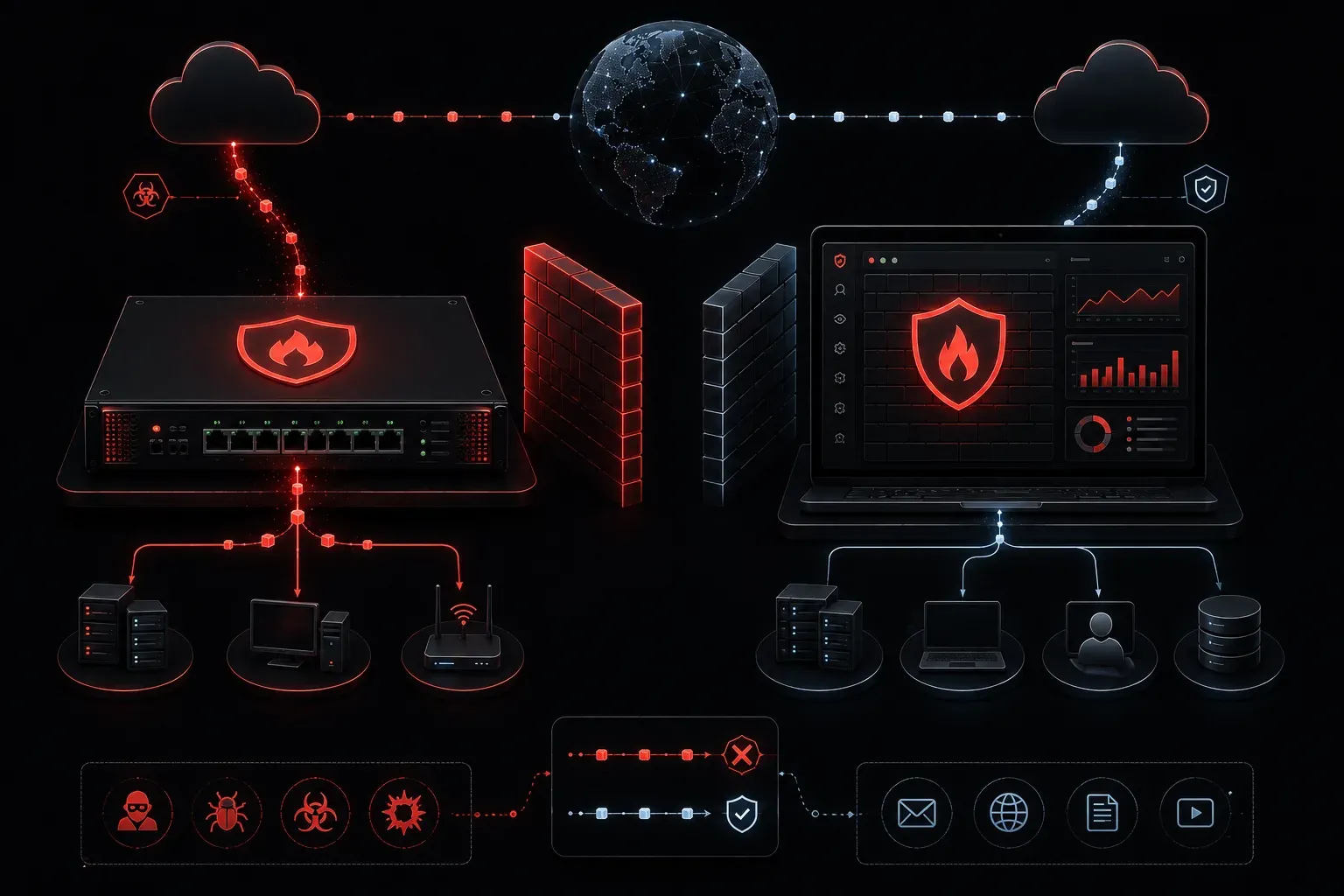
Understanding Firewall Types
When it comes to network protection, firewalls are your first line of defense against unauthorized access and cyber threats. But not all firewalls are created equal. Understanding the different firewall types, specifically hardware and software firewalls, is crucial for anyone starting their networking journey.
A firewall acts as a security guard for your network, monitoring incoming and outgoing traffic according to predefined security rules. Think of it as a checkpoint that decides what traffic gets through and what gets blocked. But the question is: should this checkpoint be a dedicated physical device or a program running on your computer?
Hardware Firewalls: The Dedicated Guardian
A hardware firewall is a standalone physical device that sits between your network and the internet. Most home routers actually include basic firewall functionality, though enterprise-grade hardware firewalls are much more sophisticated.
Key Characteristics of Hardware Firewalls
- Dedicated processing power: They have their own CPU, memory, and operating system
- Network-level protection: Protects all devices on the network simultaneously
- Always-on operation: Provides continuous protection without impacting individual device performance
- Centralized management: Network administrators can configure rules for the entire network from one location
Hardware firewalls excel in business environments where you need to protect multiple devices with consistent policies. They're particularly effective because they operate at the network perimeter, filtering traffic before it ever reaches individual computers.
Common Hardware Firewall Examples
- Cisco ASA (Adaptive Security Appliance)
- SonicWall TZ series
- Fortinet FortiGate
- Basic router firewalls (like those in home routers)
Software Firewalls: The Personal Bodyguard
A software firewall is a program that runs directly on a computer or server, monitoring traffic specific to that device. Every modern operating system includes a built-in software firewall.
Key Characteristics of Software Firewalls
- Host-based protection: Protects only the device it's installed on
- Application awareness: Can control which programs access the network
- Granular control: Offers detailed rules for specific applications and processes
- Cost-effective: Often free or low-cost compared to hardware solutions
Software firewalls shine when you need fine-grained control over individual applications. They can distinguish between different programs trying to access the network and apply different rules accordingly.
Common Software Firewall Examples
- Windows Defender Firewall (built into Windows)
iptables(Linux)- macOS Application Firewall
- Third-party solutions like Norton, McAfee, or ZoneAlarm
Hardware vs. Software: When to Use Which
The choice between hardware and software firewalls isn't always either/or. Many organizations use both as part of a defense-in-depth strategy.
Choose Hardware Firewalls When:
- Protecting multiple devices on a network
- You need consistent security policies across all devices
- Performance is critical (hardware doesn't consume host resources)
- Managing a business or enterprise network
- You want protection that users can't accidentally disable
Choose Software Firewalls When:
- You need application-specific control
- Working with mobile devices that connect to various networks
- Budget constraints make hardware solutions impractical
- You want to customize rules for individual computers
- Protecting servers that need granular application control
The Best of Both Worlds
In practice, the most robust network protection comes from using both firewall types together. A hardware firewall provides broad network-level protection, while software firewalls add an extra layer of host-specific security. This layered approach means that even if one firewall misses a threat, the other can catch it.
For CCST Networking exam purposes, remember that both firewall types serve important roles in network protection. Understanding when and why to use each type demonstrates your grasp of fundamental security concepts.
What's Next
Now that you understand the basic firewall types, the next step is diving deeper into how firewalls actually filter traffic. In our next post, we'll explore packet filtering techniques and stateful inspection, the core technologies that make both hardware and software firewalls effective at protecting your networks.