
Understanding Iterative and Sequential Prompting
Iterative and sequential prompting are essential techniques for AI generation. Iterative prompting refines outputs through multiple feedback rounds, while sequential prompting breaks complex tasks into connected steps for better results across text, image, and audio generation.

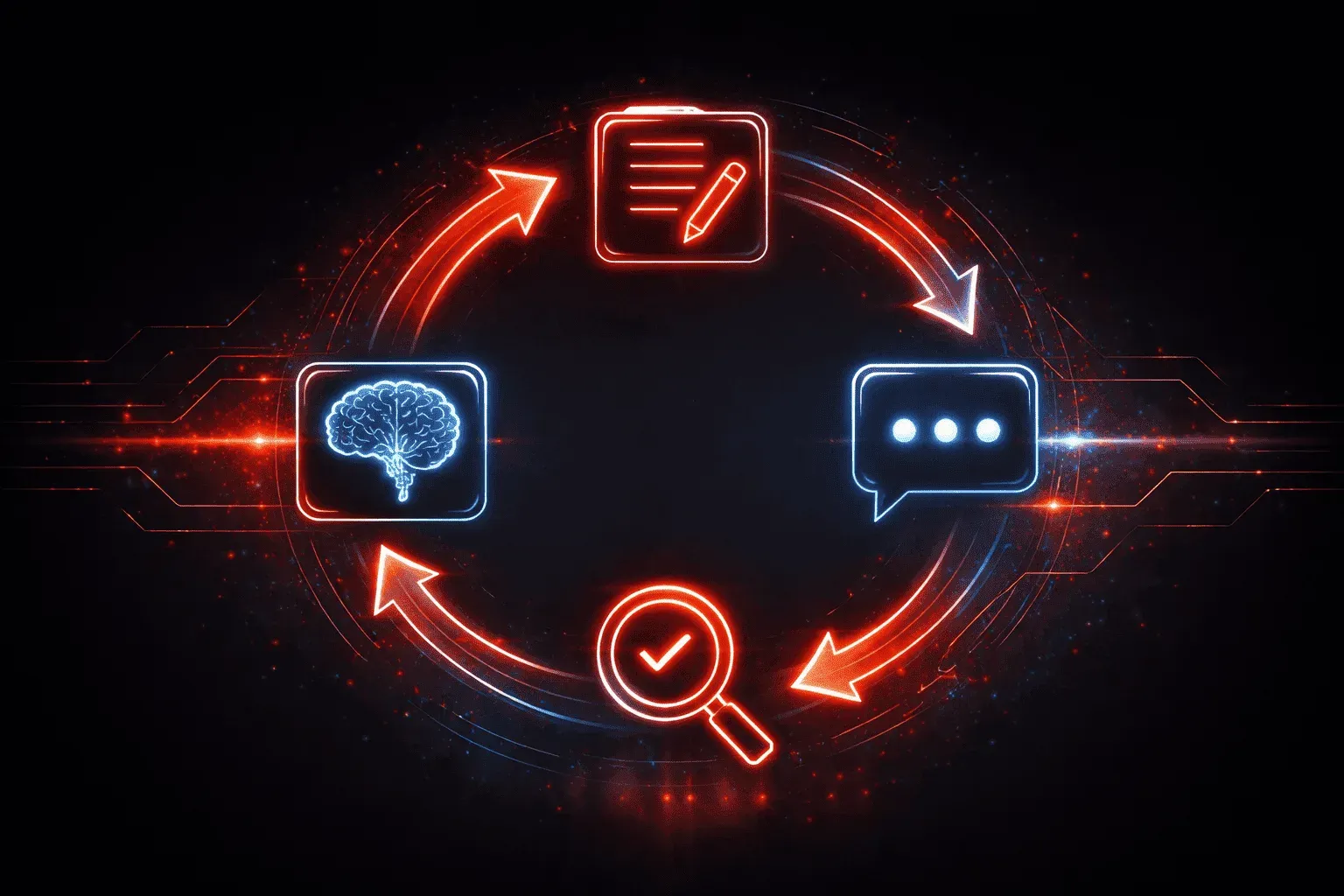
When working with AI tools like ChatGPT, DALL-E, or Midjourney, you'll quickly discover that getting the perfect output rarely happens on the first try. This is where iterative and sequential prompting techniques become essential skills for anyone serious about AI generation across text, image, and audio applications.
What is Iterative Prompting?
Iterative prompting is the process of refining your prompts through multiple rounds of feedback and adjustment. Think of it like sculpting, you start with a rough shape and gradually refine it until you achieve your desired result.
Here's a practical example using ChatGPT for text generation:
Initial prompt: "Write a network security policy"

Refined prompt: "Write a network security policy for a 50-person company with remote workers, focusing on VPN access and password requirements"

Final prompt: "Write a network security policy for a 50-person technology company with 30% remote workers. Include specific VPN protocols (OpenVPN or WireGuard), multi-factor authentication requirements, and password complexity standards. Format as a formal business document."
Each iteration builds upon the previous attempt, incorporating feedback from what the AI produced. The key is to analyze the output and identify what needs improvement: more specificity, a different tone, additional context, or clearer constraints.
Understanding Sequential Prompting
Sequential prompting involves breaking down complex tasks into a series of connected prompts, where each prompt builds upon the previous output. Instead of asking the AI to do everything at once, you create a logical sequence of steps.
Consider this sequential approach for creating technical documentation:
Prompt 1: "List the main components of a Cisco router's CLI interface"
[AI provides list]

Prompt 2: "For each component you listed, explain its primary function in 1-2 sentences"
[AI provides explanations]

Prompt 3: "Now create a beginner-friendly tutorial showing how to navigate between these CLI components with example commands"
[AI creates comprehensive tutorial]
This sequential approach often produces better results than asking for "a complete tutorial on Cisco router CLI navigation" in a single prompt.
Applying These Techniques Across AI Generation Types
These prompting techniques work across different types of AI generation:
Text Generation
Use iterative prompting to refine tone, style, and content depth. Sequential prompting works well for complex documents where you want to build arguments or explanations step-by-step.
Image Generation
With tools like DALL-E or Midjourney, iterate by adjusting style descriptors, composition elements, or lighting conditions. Sequential prompting helps when creating variations or building upon specific elements from previous generations.
Audio Generation
For AI audio tools, iterate on parameters like genre, instruments, or mood. Use sequential prompting to build complex compositions by generating individual elements separately.
Best Practices for Implementation
Keep detailed records of your prompts and their outputs. This helps you identify which modifications produce the best improvements. Start with simple, clear prompts before adding complexity. Don't be afraid to completely restructure your approach if early iterations aren't working.
Remember that different AI models respond differently to these techniques. What works well with one tool might need adjustment for another. The key is maintaining a systematic approach to refinement and building complexity gradually.
What's Next
Now that you understand these fundamental prompting techniques, you're ready to explore specific prompt structures and formatting strategies that can further enhance your AI interactions. In our next post, we'll dive into advanced prompt engineering patterns that leverage these iterative and sequential approaches for professional applications.