
Understanding Cybersecurity: Analogies for Beginners
This post uses everyday analogies to make core cybersecurity concepts accessible to beginners. Topics like encryption, firewalls, authentication, and social engineering are explained through relatable real-world comparisons. It is ideal for CCST Cybersecurity learners building their first mental mo

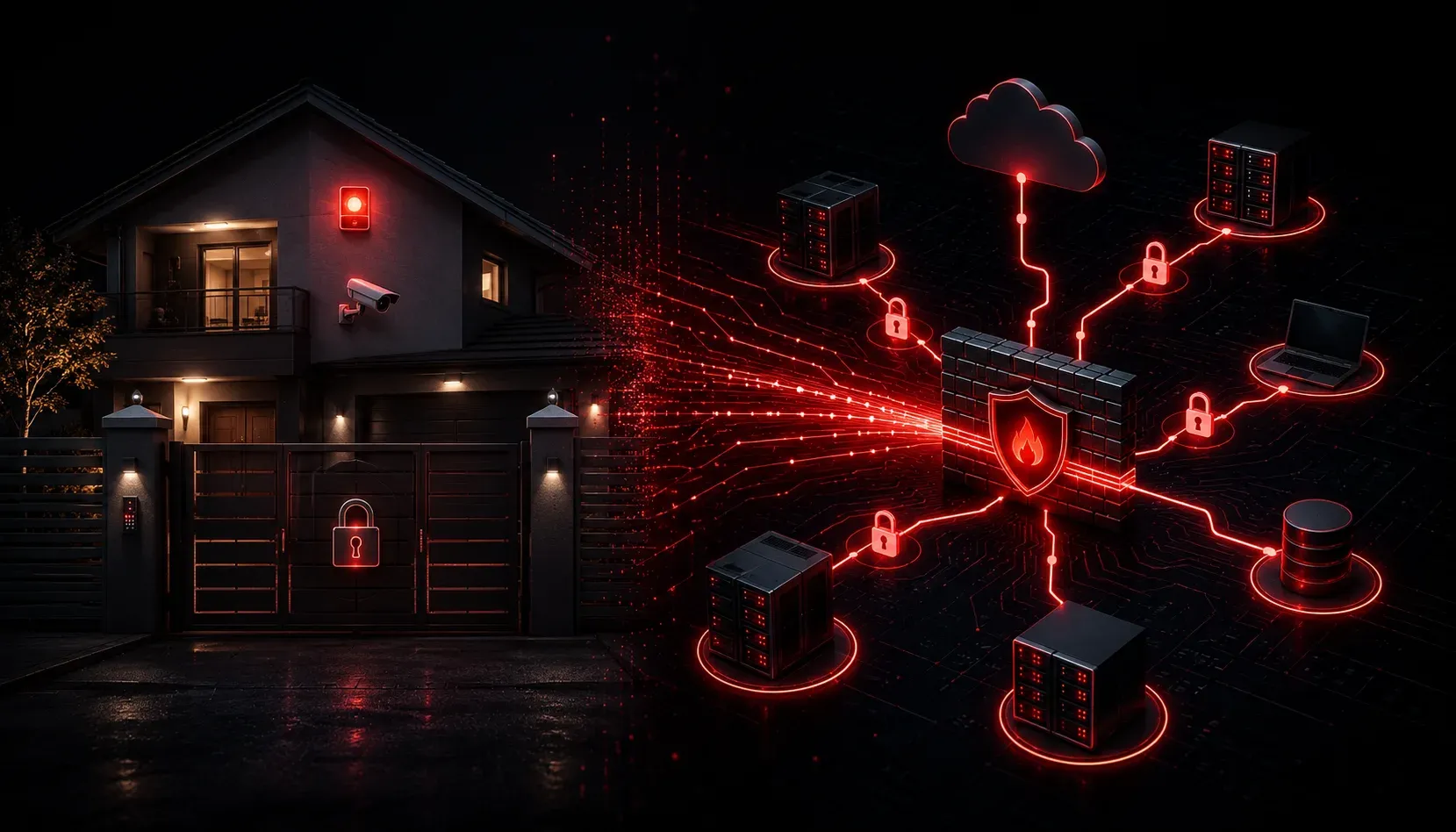
Cybersecurity can feel overwhelming at first. Terms like encryption, firewall, and authentication get thrown around constantly, and it is easy to feel lost before you even get started. The good news is that most core security concepts map almost perfectly to things you already understand from everyday life. Once you see the analogy, the technical idea clicks into place.
This post walks through some of the most important beginner explanations using simple, relatable comparisons. Think of it as your first mental model for cybersecurity, built on things you already know.
Your House as a Network
The most useful cybersecurity analogy for beginners is your home. Almost every fundamental security concept has a direct parallel to how you protect a physical house.
- Locks on your doors: These represent
authentication. Only people with the right key (password, PIN, or biometric) get in. - Windows and doors: These are your
ports. You open them when needed and close them when not in use. Leaving too many open is a security risk. - A security alarm: This represents an
IDS(Intrusion Detection System). It does not stop an intruder, but it alerts you when something suspicious happens. - A fence around the yard: This is your
firewall. It creates a boundary, controlling what can come in and what can go out. - A deadbolt plus an alarm: This is
defense in depth. No single layer of security is perfect, so you use multiple overlapping controls.
Encryption is a Locked Safe
Imagine you write a letter and leave it on the kitchen table. Anyone who walks by can read it. Now imagine you put that letter in a combination safe and send the safe to your friend. Even if someone intercepts the safe, they cannot read the letter without the combination.
That is exactly what encryption does. It scrambles your data using a mathematical algorithm so that only someone with the correct key can read it. Without the key, the data is unreadable gibberish. This is why online banking feels safe even over a public network: the data is locked in a digital safe the whole time it travels.
Passwords and Locks Have the Same Weaknesses
Think about the most common door locks. A basic knob lock is easy to pick. A deadbolt is harder. A deadbolt plus a chain is harder still. But none of them matter if you hide a spare key under the welcome mat.
Passwords work the same way. A simple, short password is like a cheap lock: trivial to bypass. A long, complex, unique password is a much stronger lock. And no matter how strong your password is, writing it on a sticky note under your keyboard (the digital equivalent of the welcome mat) defeats the whole point.
This is why security concepts like multi-factor authentication (MFA) exist. MFA is like requiring both a key and a fingerprint to open a door. Even if someone steals your key, they still cannot get in without your fingerprint.
Social Engineering is a Con Artist at the Front Door
Imagine someone knocks on your door wearing a utility company uniform and says they need to check your meter. You let them in without verifying their ID. They walk around, take note of your valuables, and leave. You were not hacked through the lock. You were tricked.
This is social engineering: manipulating people rather than technology to gain access. Phishing emails, fake IT support calls, and impersonation attacks all follow this same pattern. The attacker bypasses your technical defenses entirely by targeting the human layer. It is one of the most effective attack methods precisely because it does not need to break any locks.
Why Analogies Matter in Security
These cybersecurity analogies are not just for making you feel comfortable. They build the mental models you need to make good security decisions. When you understand that leaving unnecessary ports open is like leaving windows unlocked, you naturally start thinking about minimizing attack surface. When you understand that encryption is a locked safe, you understand why sending sensitive data over an unencrypted connection is risky.
Simple cybersecurity is really just applied common sense, mapped to a digital environment. The rules you already use to keep your home and belongings safe apply directly to keeping your data and systems secure.
What's Next
Now that you have a solid foundation of mental models, the next step is understanding the specific types of threats that exist in cybersecurity. In the next post, we will break down the most common categories of cyber threats, including malware, phishing, and denial-of-service attacks, so you know exactly what you are defending against.