
Common Use Cases for Generative AI Models
This post explores the most practical generative AI use cases for technical professionals, including content creation, code generation, text summarization, and research assistance. It includes real prompt examples and working code to illustrate each use case. Readers come away with a clear mental m

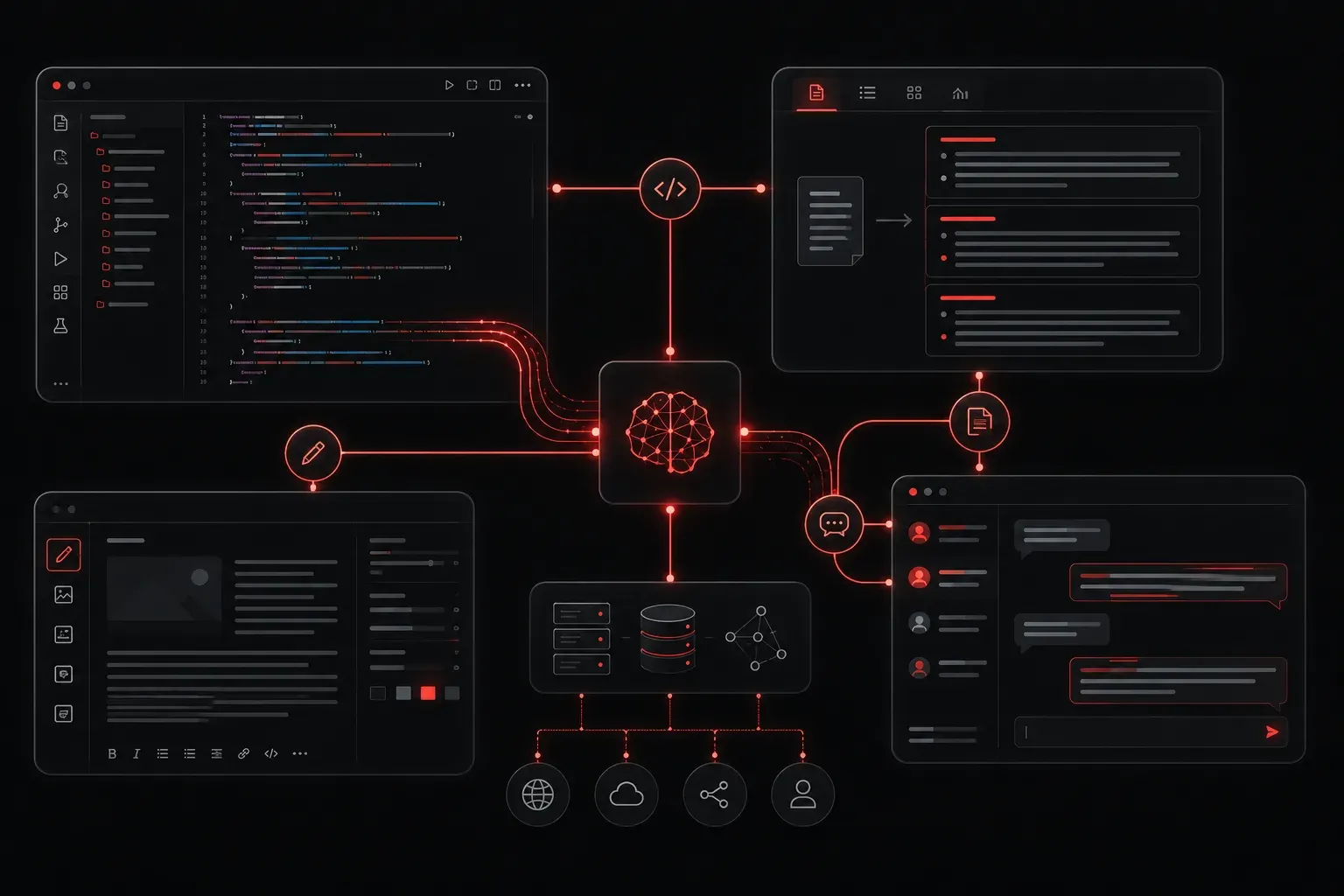
Generative AI has moved well beyond research labs and into everyday workflows. Whether you're writing documentation, debugging Python scripts, or summarizing a 40-page report, there's a good chance a generative AI model can help you do it faster and better. This post walks through the most practical generative AI use cases you'll encounter in the real world, and the kinds of tools built around them.
What Is Generative AI, Briefly?
Generative AI refers to models that can produce new content (text, code, images, audio) based on a prompt. They've been trained on massive datasets and learn to predict what a useful, relevant response looks like. The most widely used generative AI examples today are large language models (LLMs) like OpenAI's GPT-4, Google's Gemini, and Anthropic's Claude.
Understanding their use cases is less about memorizing a list and more about recognizing where these tools genuinely save time and reduce friction.
Core Use Cases for Generative AI
1. Content Creation
This is the most visible AI application in the wild. Generative AI models can draft blog posts, marketing copy, emails, social media content, and technical documentation. The key word is draft; a human still needs to review and refine the output.
For example, a network engineer might prompt a model like this:
Write a professional email to a customer explaining that their BGP
session was dropping due to an MTU mismatch, and that the issue
has been resolved.
The model produces a polished, jargon-appropriate response in seconds. That's not replacing the engineer; it's removing the blank-page problem.
2. Code Generation and Debugging
This is arguably the highest-value use case for technical professionals. Tools like GitHub Copilot (copilot.github.com) and ChatGPT (chat.openai.com) can generate working code from a natural language description, explain what existing code does, find bugs, and suggest fixes.
Ask a model to write a Python script that pings a list of IP addresses and logs failures, and you'll get a functional starting point in under 10 seconds:
import subprocess

hosts = ["192.168.1.1", "10.0.0.1", "8.8.8.8"]

for host in hosts:
    result = subprocess.run(["ping", "-c", "1", host], capture_output=True)
    if result.returncode != 0:
        print(f"Host unreachable: {host}")
The code isn't always perfect on the first try, but it gives you a solid scaffold to build from.
3. Text Summarization
LLMs are excellent at condensing long documents into digestible summaries. This is hugely practical when dealing with vendor release notes, RFCs, long email threads, or compliance documents.
A simple prompt like Summarize this document in 5 bullet points for a non-technical audience can turn a 20-page PDF into something actionable in seconds. Tools like Claude (claude.ai) are particularly well-suited for this kind of document-level work. Claude supports a context window of up to 200,000 tokens, which is significantly larger than many competing models and allows it to process lengthy documents (such as full RFCs or lengthy compliance reports) in a single pass without chunking.
4. Question Answering and Research Assistance
Generative AI models act as on-demand research assistants. Instead of searching through documentation and piecing together answers, you can ask direct questions and get synthesized responses. This works well for exploring unfamiliar technologies, understanding protocol behavior, or comparing options.
Keep in mind that LLMs can occasionally produce incorrect information (called hallucinations), so always verify critical facts against authoritative sources.
5. Translation and Rewriting
Beyond language translation (which models handle well), generative AI is excellent at rewriting content for different audiences. Technical content can be simplified for executives. Casual notes can be rewritten as formal documentation. A verbose explanation can be tightened into a concise summary. This kind of tone and style adjustment used to require a skilled editor; now it's a prompt away.
A Quick Reference
- Content creation: drafts, emails, documentation
- Code generation: scripts, functions, boilerplate, debugging
- Summarization: long documents, meeting notes, reports
- Q&A / Research: exploring concepts, comparing options
- Translation / Rewriting: tone adjustment, language conversion
What's Next
Now that you have a solid picture of what generative AI can do, the next logical step is understanding how these models actually work, specifically, what makes an LLM different from traditional software. In the next post, we'll look at the architecture behind large language models and why that matters for using them effectively.