
What Are Threat Vectors in Cybersecurity?
Threat vectors are the pathways attackers use to infiltrate systems and networks. This post explains the concept, covers common types like email and web-based vectors, and discusses how to identify and mitigate these security risks.

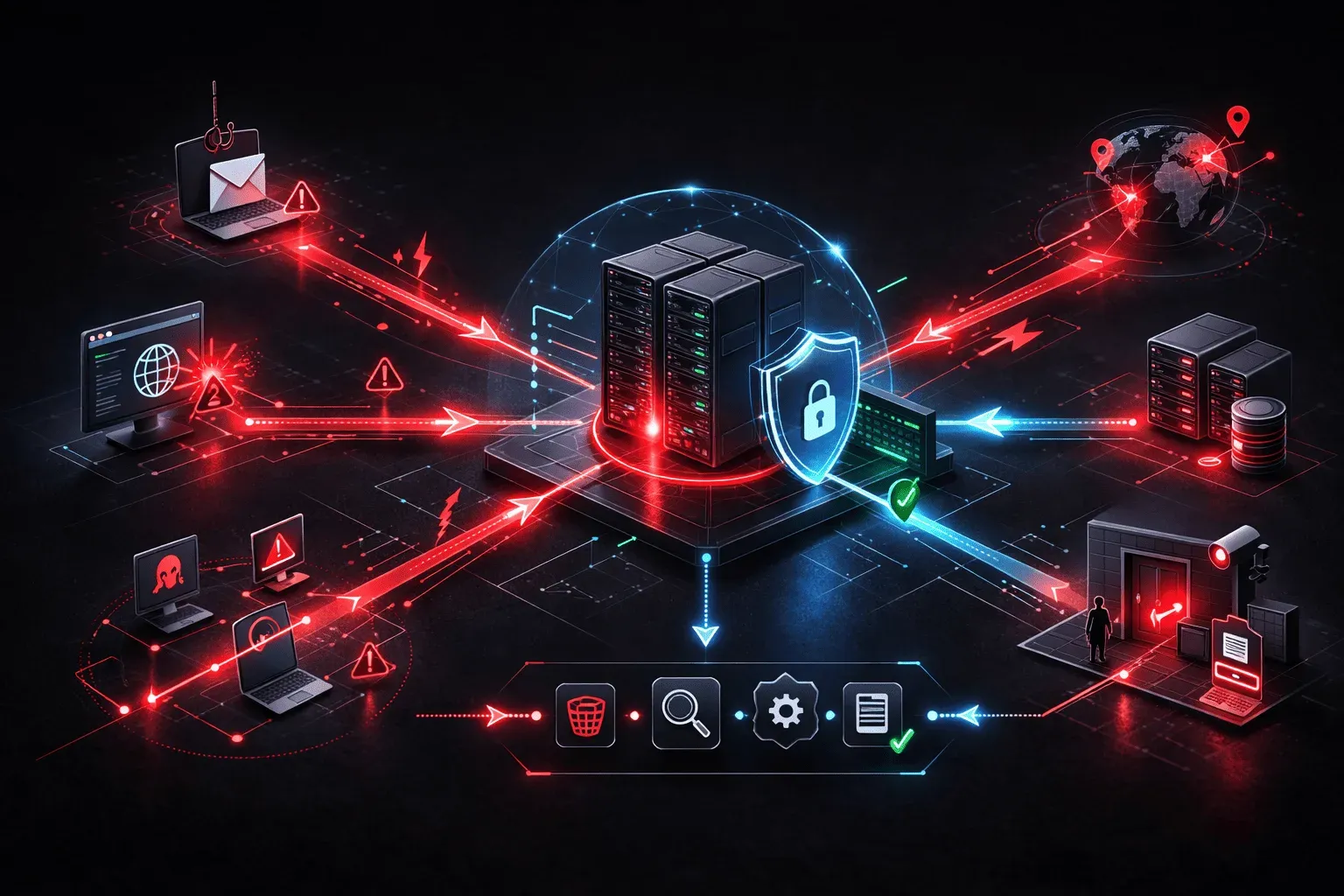
In cybersecurity, understanding how attackers can reach your systems is fundamental to building effective defenses. This is where threat vectors come into play, they represent the pathways or methods that cybercriminals use to gain unauthorized access to networks, systems, or data.
Think of threat vectors as the "highways" that attackers travel to reach their targets. Just as you need to secure all entrances to your home, organizations must identify and protect against all possible threat vectors to maintain a strong security posture.
What Exactly Are Threat Vectors?
A threat vector is any avenue or method through which an attacker can infiltrate a system or network to deliver malicious payloads or gain unauthorized access. These vectors represent the initial point of compromise, the first step in what could become a larger security incident.
The terms "threat vector" and "attack vector" are often used interchangeably in the industry, and in practice the distinction is subtle. A threat vector is the broader pathway that makes an attack possible, for example, an organisation's reliance on email for internal communication. An attack vector is the specific method used to exploit that pathway, such as a spear-phishing email containing a malicious Word document macro. In other words, the threat vector is the opportunity, and the attack vector is the technique. For the Security+ exam, both terms appear and understanding this relationship helps when answering scenario-based questions.
Common Types of Threat Vectors
Understanding the most prevalent threat vectors helps security professionals prioritize their defensive strategies:
Email-Based Vectors
Email remains one of the most effective threat vectors. Attackers use phishing emails, malicious attachments, and social engineering to trick users into compromising their own systems. These attack methods exploit the human element, which is often considered the weakest link in security. A well-known example is business email compromise (BEC), where attackers impersonate executives or suppliers to trick employees into transferring funds or disclosing credentials. The 2020 Twitter hack began with a phone-based social engineering attack on employees, demonstrating that even technically sophisticated organisations are vulnerable through this vector.
Web-Based Vectors
Malicious websites, compromised legitimate sites, and web-based exploits represent significant security risks. Drive-by downloads, malicious advertisements (malvertising), and watering hole attacks all fall under this category. A watering hole attack compromises a website that the target organisation's employees are known to visit regularly, so the attacker does not need to reach victims directly.
Network-Based Vectors
These involve direct attacks against network infrastructure, including:
- Man-in-the-middle attacks on unsecured connections
- Exploitation of network protocol vulnerabilities
- Attacks against wireless networks and Bluetooth connections
Physical Vectors
Sometimes the most direct path is physical access. USB drives, unauthorized device access, and social engineering of physical security controls can bypass many technical safeguards. The Stuxnet worm, which targeted industrial control systems in Iran, is believed to have been introduced via an infected USB drive into an air-gapped network, illustrating that physical vectors can defeat even networks deliberately isolated from the internet.
Application-Based Vectors
Software vulnerabilities in applications provide another pathway for attackers. This includes everything from unpatched operating systems to vulnerable third-party applications and browser plugins. Supply chain attacks, where an attacker compromises a software vendor to distribute malicious updates to downstream customers, have grown significantly in recent years.
Identifying Threat Vectors in Your Environment
To effectively defend against cybersecurity threats, organisations must conduct regular threat vector analysis. This process involves:
- Asset Inventory: Catalog all systems, applications, and data that need protection
- Entry Point Mapping: Identify all possible ways attackers could access these assets
- Risk Assessment: Evaluate the likelihood and potential impact of each threat vector
- Control Implementation: Deploy appropriate security measures for each identified vector
For example, if your organisation uses email heavily, you might implement email security gateways, conduct phishing awareness training, and establish incident response procedures for email-based attacks.
Mitigating Threat Vector Risks
Effective threat vector management requires a layered approach:
Prevention: Deploy security controls that address specific vectors rather than relying on a single tool. Email security gateways with sandboxing (such as Proofpoint or Microsoft Defender for Office 365) inspect attachments before they reach users. Endpoint Detection and Response (EDR) tools like CrowdStrike Falcon or SentinelOne block malicious execution at the device level. Network Access Control (NAC) prevents unauthorised or non-compliant devices from connecting to the network, reducing the physical and network vector risk. Multi-factor authentication (MFA) significantly reduces the impact of credential theft regardless of which vector delivered it.
Detection: Implement monitoring systems that can identify when threat vectors are being exploited. SIEM (Security Information and Event Management) platforms such as Splunk or Microsoft Sentinel aggregate logs from across the environment and correlate events that individually might appear benign. IDS (Intrusion Detection Systems) and IPS (Intrusion Prevention Systems) monitor network traffic for known attack signatures and anomalous behaviour. User and Entity Behaviour Analytics (UEBA) can detect compromised accounts by flagging behaviour that deviates from a user's established baseline.
Response: Develop incident response plans that address how to contain and remediate attacks that successfully exploit threat vectors. Playbooks for common scenarios such as ransomware delivery via email or credential stuffing attacks ensure that responders follow a consistent process under pressure.
Remember that threat vectors are constantly evolving. New technologies create new pathways for attackers, while security improvements in one area often drive criminals to focus on others.
What's Next
Now that you understand what threat vectors are and why they matter, the next step is diving deeper into specific types of attacks. In our next post, we'll explore social engineering techniques in detail, one of the most effective methods attackers use to exploit the human element in your security defenses.
Security+ study resources
- CompTIA Security+ Study Guide - Full SY0-701 exam coverage including threats, vulnerabilities, architecture, and operations.