
What is Test-Driven Development?
Test-driven development (TDD) is a software development approach where you write tests before implementing functionality, following a Red-Green-Refactor cycle. This methodology improves code quality, provides living documentation, and is particularly valuable for network automation projects where r

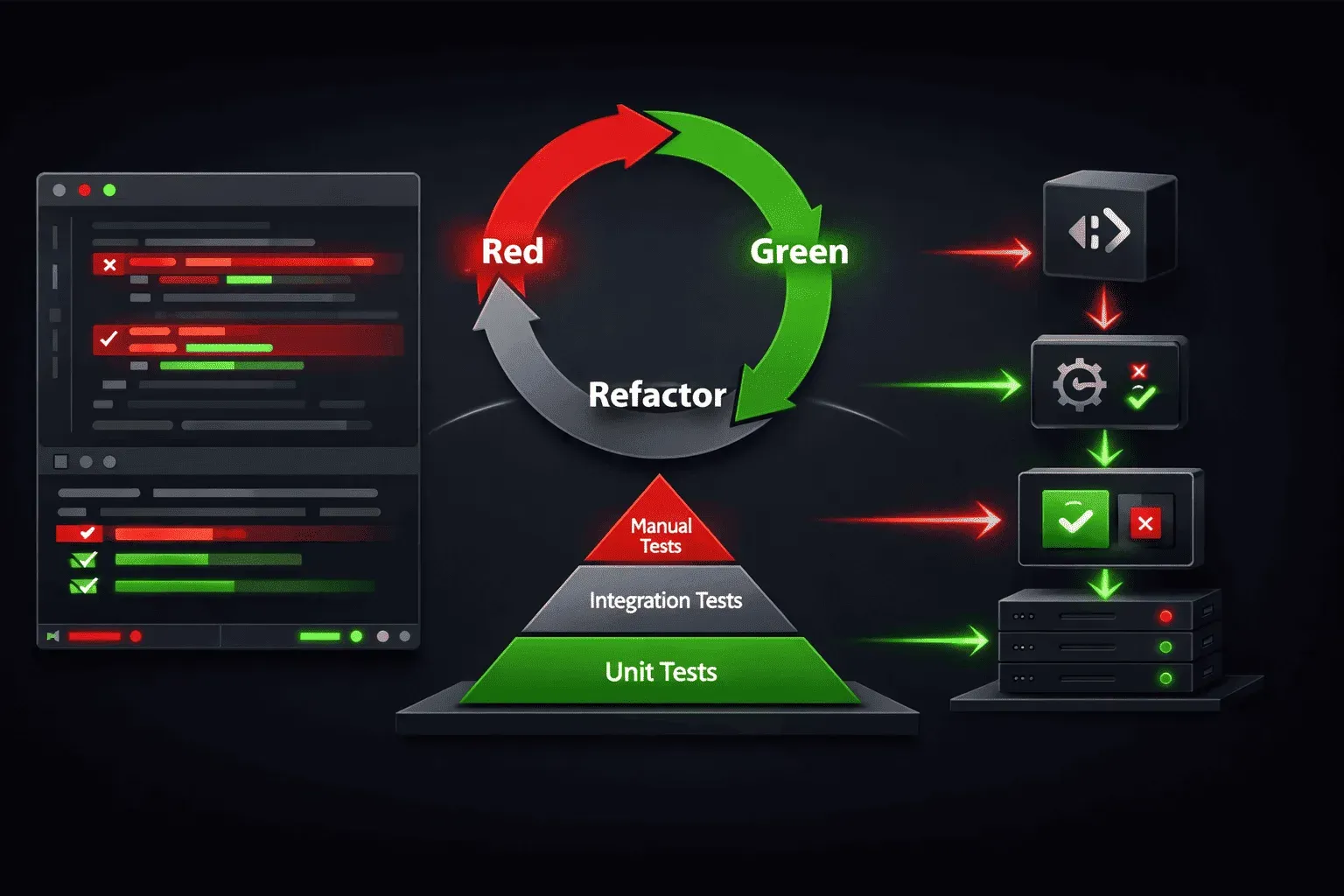
Test-driven development (TDD) is a software development approach that flips the traditional coding process on its head. Instead of writing code first and then testing it, TDD requires you to write tests before writing any functional code. This methodology has become increasingly important in network automation and modern software development practices.
The TDD Process: Red, Green, Refactor
TDD follows a simple three-step cycle that forms the foundation of this development process:
- Red: Write a failing test for the functionality you want to implement
- Green: Write the minimum amount of code needed to make the test pass
- Refactor: Clean up and improve the code while keeping tests passing
This cycle repeats for each piece of functionality you add to your application. The beauty of this approach lies in its simplicity and the confidence it builds as you develop.
Why Write Tests First?
Writing tests before code might seem counterintuitive, but it serves several crucial purposes. First, it forces you to think about what your code should actually do before you start implementing it. This clarity of purpose leads to better design decisions and more focused development.
Second, TDD basics emphasize that your tests become living documentation of your code's intended behavior. When someone else (or future you) looks at your code, the tests clearly show what each function or module is supposed to accomplish.
TDD in Network Automation Context
For network engineers learning automation, TDD becomes particularly valuable when developing scripts or applications. Consider this simple example of testing a function that validates IP addresses:
import unittest
import ipaddress

def is_valid_ip(ip_string):
    """Check if a string is a valid IP address"""
    # We haven't implemented this yet!
    pass

class TestIPValidation(unittest.TestCase):
    def test_valid_ipv4(self):
        self.assertTrue(is_valid_ip("192.168.1.1"))

    def test_invalid_ip(self):
        self.assertFalse(is_valid_ip("256.1.1.1"))

    def test_empty_string(self):
        self.assertFalse(is_valid_ip(""))
At this stage, running the tests would fail (Red phase) because our function doesn't do anything yet. Now we implement just enough code to make the tests pass:
def is_valid_ip(ip_string):
    """Check if a string is a valid IP address"""
    try:
        ipaddress.ip_address(ip_string)
        return True
    except ValueError:
        return False
Benefits for Network Automation Projects
In network automation, software testing through TDD provides several advantages. Your automation scripts often interact with critical network infrastructure, so having comprehensive tests helps prevent configuration errors that could impact network operations.
TDD also makes your code more maintainable. As network requirements change and you need to modify your automation scripts, the existing tests act as a safety net, catching regressions before they reach production networks.
Additionally, the development process becomes more predictable. You know exactly what functionality you're building and when it's complete. The tests tell you. This clarity is especially valuable when working in teams or when returning to code after time away.
Common Misconceptions
Many developers initially worry that TDD slows down development because you're writing more code. However, the time invested in writing tests upfront typically saves much more time during debugging and maintenance phases. The tests catch issues early when they're cheaper and easier to fix.
Another misconception is that TDD guarantees bug-free code. While TDD significantly reduces defects, it's not magic; you can still write inadequate tests or miss edge cases. The key is viewing TDD as one tool in your software quality toolkit.
What's Next
Now that you understand the fundamentals of test-driven development, the next step is learning about different types of software testing. Understanding unit tests, integration tests, and system tests will help you build a comprehensive testing strategy for your network automation projects.
CCNA Automation study resources
- Cisco Certified DevNet Associate DEVASC 200-901 Official Cert Guide — The official Cisco study guide for automation and programmability. Covers Python, APIs, and network automation fundamentals.