
Agentic vs Generative AI: Choosing the Right Tool for Your IT Needs
This post compares agentic and generative AI, explaining how each works and when to use them in IT environments. Generative AI excels at content creation and explanation, while agentic AI is suited for autonomous, multi-step workflows that interact with live systems. IT professionals will come away

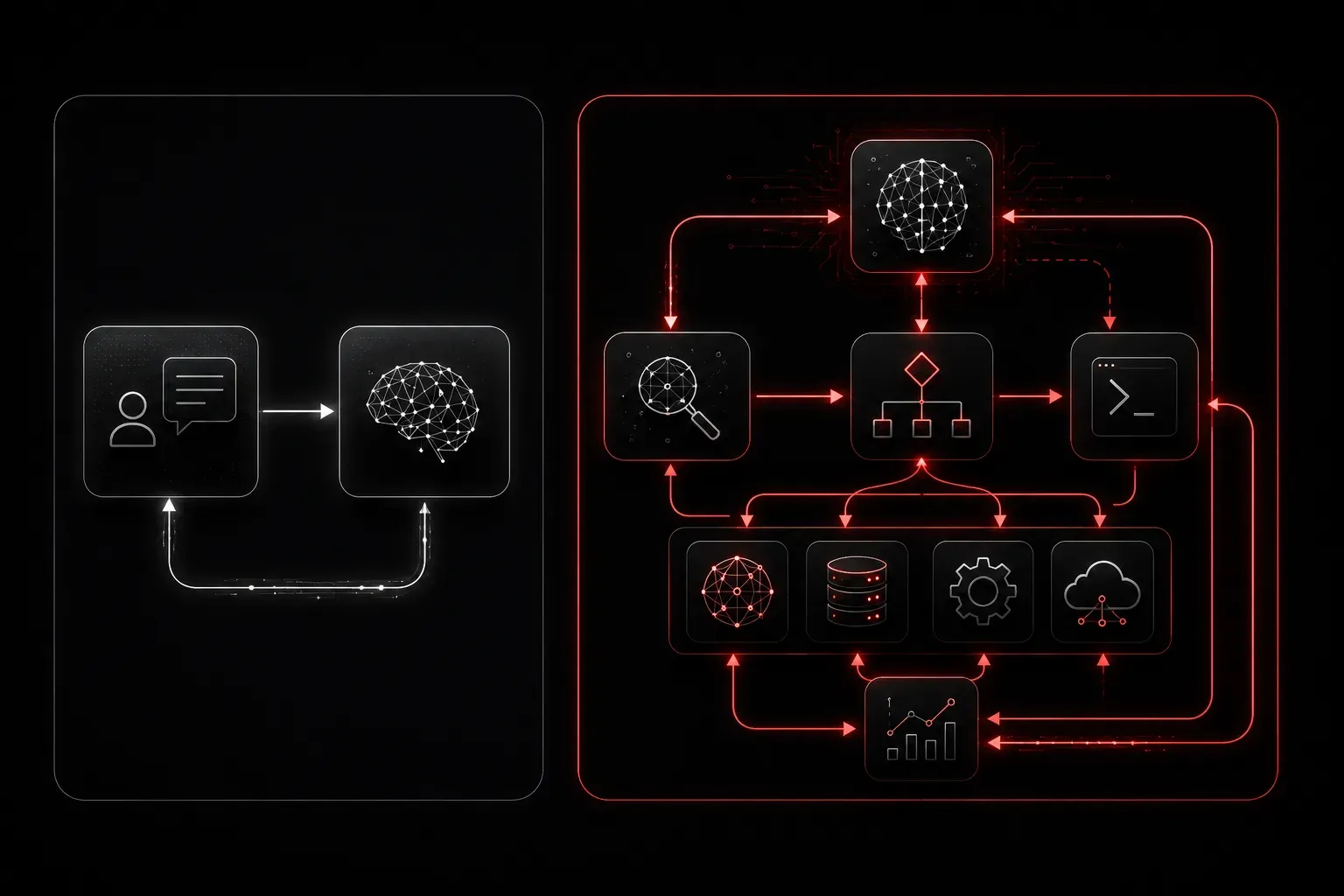
If you have spent any time exploring AI tools for IT work, you have probably noticed that not all AI systems behave the same way. Some answer questions and generate content. Others seem to take actions, make decisions, and work toward a goal without being constantly hand-held. That distinction matters enormously when you are trying to figure out which AI approach to adopt for a given problem.
This post breaks down the core differences between agentic and generative AI, and helps you decide which one fits your IT use case.
What Is Generative AI?
Generative AI refers to models that produce new content based on a prompt. You ask, it responds. The interaction is typically a single exchange: you provide input, the model generates output, and the session ends or continues as a back-and-forth conversation.
Tools like ChatGPT, Claude, and Gemini are examples of generative AI systems. They excel at tasks like:
- Drafting documentation or runbooks
- Explaining a complex concept or error message
- Writing or reviewing code snippets
- Summarizing a log file you paste in
- Generating configuration templates based on your description
The key characteristic: generative AI responds to your input. It does not go out and take action in the world on its own. You are always in the driver's seat.
What Is Agentic AI?
Agentic AI refers to systems designed to pursue a goal autonomously, often using tools, making multi-step decisions, and taking real actions in connected systems. Instead of just answering a question, an agentic system might query an API, analyze the result, decide on a next step, and execute it, all without you prompting each individual action.
Think of it as the difference between asking a colleague for advice versus handing a project to someone and saying "get it done." Agentic AI frameworks like LangChain, AutoGen, and CrewAI are built around this model.
Agentic AI excels at tasks like:
- Automatically monitoring logs and triggering remediation workflows
- Running network audits by pulling device data, analyzing it, and generating a report
- Orchestrating multi-step IT provisioning tasks across multiple systems
- Researching a topic across multiple sources and producing a synthesized output
The Core Differences Side by Side
Here is a quick reference comparing the two approaches across key dimensions:
| Dimension | Generative AI | Agentic AI |
|---|---|---|
| Interaction model | Prompt and response | Goal-driven, autonomous execution |
| Decision-making | Single step | Multi-step, iterative |
| Tool use | Limited or none | Calls APIs, runs scripts, queries databases |
| Human involvement | Required at each step | Minimal, often asynchronous |
| Risk level | Low (content only) | Higher (real-world actions) |
| Best for | Content, explanation, code drafts | Automation, workflows, monitoring |
Choosing the Right Approach for IT Scenarios
The agentic vs generative AI decision often comes down to two questions: Does the task require taking action in a live system? And does it involve multiple dependent steps?
Use generative AI when:
- You need a quick answer, explanation, or draft
- The task is creative, analytical, or advisory
- You want to stay in direct control of every output before it is applied
Use agentic AI when:
- A workflow has multiple steps that depend on each other
- You want automation that can react dynamically to intermediate results
- The task involves reading from or writing to external systems like APIs, databases, or ticketing platforms
A practical example: if you want to understand what a Cisco IOS error means, a generative AI tool is perfect. If you want a system to detect that error in a Syslog stream, correlate it with interface state, and automatically open a ServiceNow ticket, that is an agentic workflow.
A Note on Risk and Oversight
With agentic AI, the stakes are higher because actions have real-world consequences. A well-designed agentic system includes guardrails: human approval steps for destructive actions, logging of every decision, and clearly defined scope. Never deploy an agent with write access to production systems without testing it thoroughly in a sandbox first.
What's Next
Now that you understand the distinction between these two approaches, the next step is understanding how agentic systems are actually built. In the next post, we will dig into the anatomy of an AI agent: goals, tools, memory, and the reasoning loop that connects them all. That foundation will set you up to start building and evaluating agentic workflows for real IT scenarios.