
How AI Enhances Automated Data Quality Checks
Learn how AI-powered tools automate data quality checks, going beyond traditional rule-based validation to detect patterns, anomalies, and quality issues intelligently. Explore practical tools like Great Expectations and cloud-based solutions for maintaining data integrity.

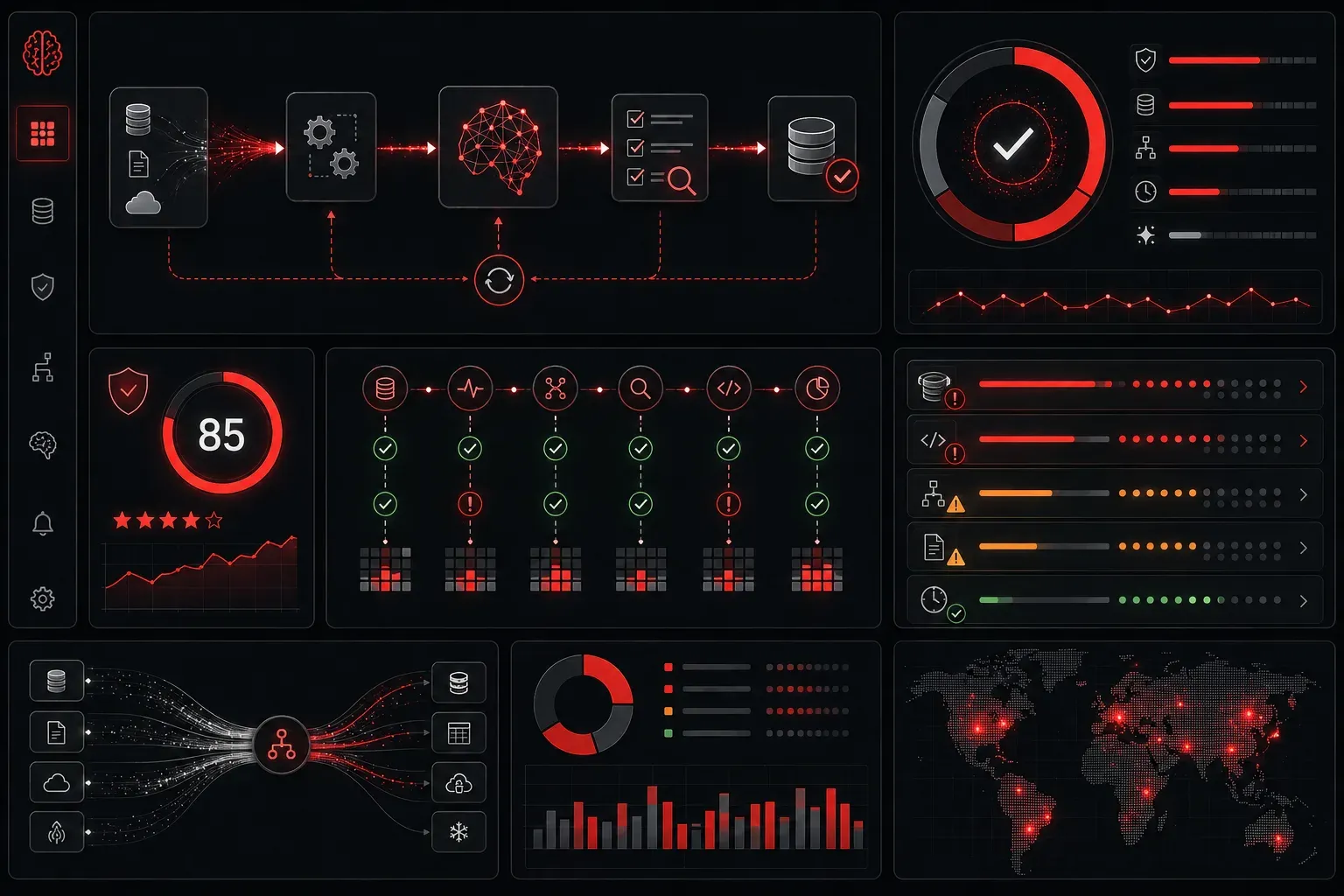
Data quality issues can derail even the most sophisticated AI projects. A single dataset with missing values, inconsistent formats, or outliers can lead to unreliable models and faulty insights. Traditionally, data quality checks required manual inspection and custom scripts. Today, AI-powered tools are transforming this process, making automated data quality checks faster, more comprehensive, and increasingly intelligent.
Understanding AI-Powered Data Quality Checks
AI data quality checks go beyond simple rule-based validation. While traditional approaches might flag missing values or check data types, AI tools can identify subtle patterns, detect anomalies, and help assess potential quality issues that could impact your analysis. However, it's important to note that AI predictions are probabilistic rather than guaranteed; these systems provide insights that require human validation.
These systems use machine learning algorithms to learn what "good" data looks like in your specific context. They can spot inconsistencies that rigid rules might miss, such as:
- Unusual patterns in customer behavior data
- Subtle formatting inconsistencies across data sources
- Statistical outliers that may indicate measurement errors
- Semantic inconsistencies in text data
Key AI Tools for Automated Data Quality
Several AI tools for data quality have emerged as industry leaders. Great Expectations combines traditional data validation with machine learning capabilities, allowing you to create intelligent data pipelines that adapt to your data patterns.
Amazon Deequ leverages machine learning to suggest data quality constraints based on your historical data patterns. While it can identify potential constraints like null value patterns and appropriate value ranges, human oversight is essential to ensure these suggestions align with business context and requirements.
For those working with cloud platforms, Google Cloud Data Quality provides AI-powered profiling that automatically discovers data patterns and suggests quality rules. Similarly, Microsoft Purview uses machine learning to classify data and identify quality issues across your entire data estate.
Real-World Implementation Examples
In practice, AI-driven data quality checks prove valuable across various scenarios. For instance, in financial services, AI tools can detect unusual transaction patterns that might indicate data collection errors or fraudulent entries. In healthcare, these systems can identify inconsistencies in patient records across different departments or time periods.
Here's a practical example using a Python-based approach:
import pandas as pd
from great_expectations import DataContext

# Load your dataset
df = pd.read_csv('customer_data.csv')

# Initialize Great Expectations context
context = DataContext()

# Create expectations suite
suite = context.create_expectation_suite("customer_data_quality")

# AI-powered expectation generation
validator = context.get_validator(
    batch_request=batch_request,
    expectation_suite_name="customer_data_quality"
)

# Generate automatic expectations with human review
validator.expect_column_values_to_not_be_null("customer_id")
validator.expect_column_values_to_be_unique("email")
validator.expect_column_mean_to_be_between("age", min_value=18, max_value=100)
The strength of data integrity AI lies in its ability to learn from your data patterns and suggest meaningful constraints, though human oversight remains crucial to validate these suggestions against business requirements and domain expertise.
Advanced AI Quality Techniques
Modern AI data quality systems employ several sophisticated techniques. Anomaly detection algorithms can identify records that deviate significantly from expected patterns, even when you haven't explicitly defined what "normal" looks like.
Natural Language Processing (NLP) can validate text data quality by checking for consistent terminology, proper formatting, and semantic correctness. For example, an AI system might flag customer records where the city name doesn't match the ZIP code or state.
Time series analysis helps identify data quality issues in temporal datasets. AI can detect sudden drops in data volume, unexpected spikes, or gradual drift in data characteristics that might indicate collection problems.
Limitations and Challenges
While AI-powered data quality tools offer significant advantages, they come with important limitations. These systems require substantial training data to establish baseline patterns, may struggle with rapidly changing data schemas, and can produce false positives in dynamic business environments.
Additionally, AI recommendations require human validation to ensure they align with the business context. Overreliance on automated suggestions without domain-expert review can lead to inappropriate quality constraints that reject valid but unusual data.
The Critical Role of Human Oversight
Successful AI-driven data quality processes require ongoing human oversight. Data professionals must review AI-generated quality rules, validate flagged anomalies, and adjust thresholds based on business requirements. This human-AI collaboration ensures that automated systems enhance rather than replace critical thinking and domain expertise.
Measuring Success
Effective automated data quality monitoring requires establishing clear metrics. Track your data quality score over time, monitor the percentage of records that pass validation, and measure the time saved compared to manual checks.
Set up automated alerts when quality scores drop below acceptable thresholds. Most AI tools for data provide dashboards that visualize quality trends and highlight areas requiring attention.
What's Next
Now that you understand how AI enhances automated data quality checks, the next step is implementing data formatting and transformation workflows. In our upcoming post, we'll explore how AI can automatically standardize data formats and handle complex transformation tasks, building on the quality foundation you've established here.