
Using AI for Pattern Recognition in Data Analysis
AI pattern recognition transforms data analysis by automatically identifying hidden patterns, trends, and anomalies in datasets. This guide covers core algorithms like clustering and neural networks, practical applications including anomaly detection, and getting started with cloud-based AI service

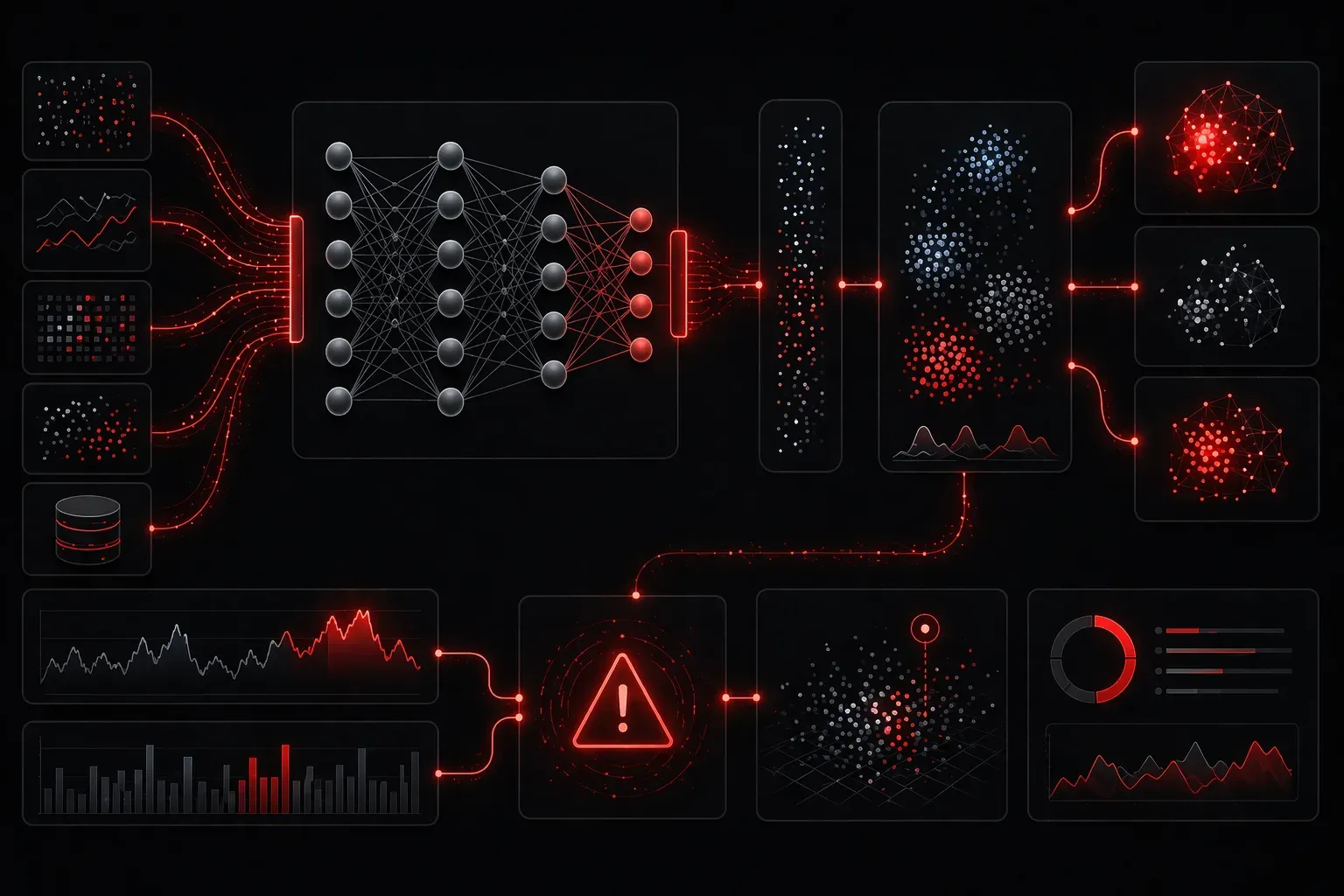
AI pattern recognition has revolutionized how we analyze data, transforming overwhelming datasets into actionable insights. Whether you're examining network traffic, user behavior, or business metrics, AI algorithms can identify hidden patterns that would be nearly impossible to spot manually.
What is AI Pattern Recognition?
Pattern recognition is the ability to identify regularities, trends, or anomalies within data. Traditional data analysis often relies on predetermined queries and human intuition, but AI algorithms can discover unexpected correlations and patterns across massive datasets in real-time.
Modern AI pattern recognition systems use machine learning techniques including clustering, classification, and neural networks to automatically detect meaningful structures in your data. These systems excel at finding patterns across multiple dimensions simultaneously, something that becomes exponentially difficult for human analysts as data complexity increases.
Core AI Algorithms for Pattern Recognition
Clustering Algorithms
Clustering groups similar data points together without prior knowledge of categories. The K-means algorithm, for example, can automatically segment your customer base by behavior patterns or identify distinct network usage profiles.
Example: An e-commerce company uses clustering to discover that customers fall into five distinct purchasing patterns, revealing previously unknown market segments.
Classification Algorithms
These algorithms learn to categorize data based on training examples. Random Forest and Support Vector Machines are popular choices for pattern classification tasks.
Example: A security system uses classification to distinguish between normal and suspicious network traffic patterns, automatically flagging potential threats.
Neural Networks
Deep learning models excel at recognizing complex, non-linear patterns. Convolutional Neural Networks (CNNs) are particularly effective for image and time-series pattern recognition.
Practical Applications in Data Analysis
Anomaly Detection
AI algorithms continuously monitor your data streams, learning what "normal" looks like and immediately flagging deviations. This is invaluable for fraud detection, system monitoring, and quality control.
# Example: Using Isolation Forest for anomaly detection
from sklearn.ensemble import IsolationForest
import pandas as pd

# Load your dataset
data = pd.read_csv('network_traffic.csv')

# Initialize the model
model = IsolationForest(contamination=0.1)

# Fit and predict anomalies
anomalies = model.fit_predict(data[['bandwidth', 'latency', 'packet_loss']])

# Identify anomalous records
anomalous_data = data[anomalies == -1]
Trend Analysis
AI algorithms can identify subtle trends that traditional statistical methods might miss. They excel at recognizing seasonal patterns, cyclical behaviors, and emerging trends in complex datasets.
Predictive Insights
By recognizing patterns in historical data, AI systems can predict future outcomes. This enables proactive decision-making rather than reactive responses.
Getting Started with AI Pattern Recognition
Begin with cloud-based AI services that require minimal setup. Google Cloud AI Platform, Azure Machine Learning, and AWS SageMaker all offer pre-built pattern recognition models you can apply to your data immediately.
For hands-on learning, Python libraries like scikit-learn and pandas provide accessible entry points. Start with simple clustering or classification tasks on small datasets to build your understanding.
Key Success Factors:
- Clean, well-structured data is essential for accurate pattern recognition
- Start with clear business questions or hypotheses
- Validate AI-discovered patterns with domain expertise
- Iterate and refine your approach based on results
The power of AI pattern recognition lies not just in automation, but in its ability to reveal insights that transform how you understand your data. As these algorithms continue evolving, they're becoming essential tools for anyone serious about data-driven decision making.
What's Next
Now that you understand the fundamentals of AI pattern recognition, the next step is exploring specific tools and platforms that make these capabilities accessible. We'll dive into popular AI-powered data analysis platforms and walk through setting up your first pattern recognition project.