
Using AI for Requirements Gathering in Software Development
This post explores how AI tools are transforming requirements gathering in software development, covering automated discovery, validation, and refinement techniques. Learn practical strategies for using AI to capture clearer, more complete requirements and integrate them into workflow automation sy

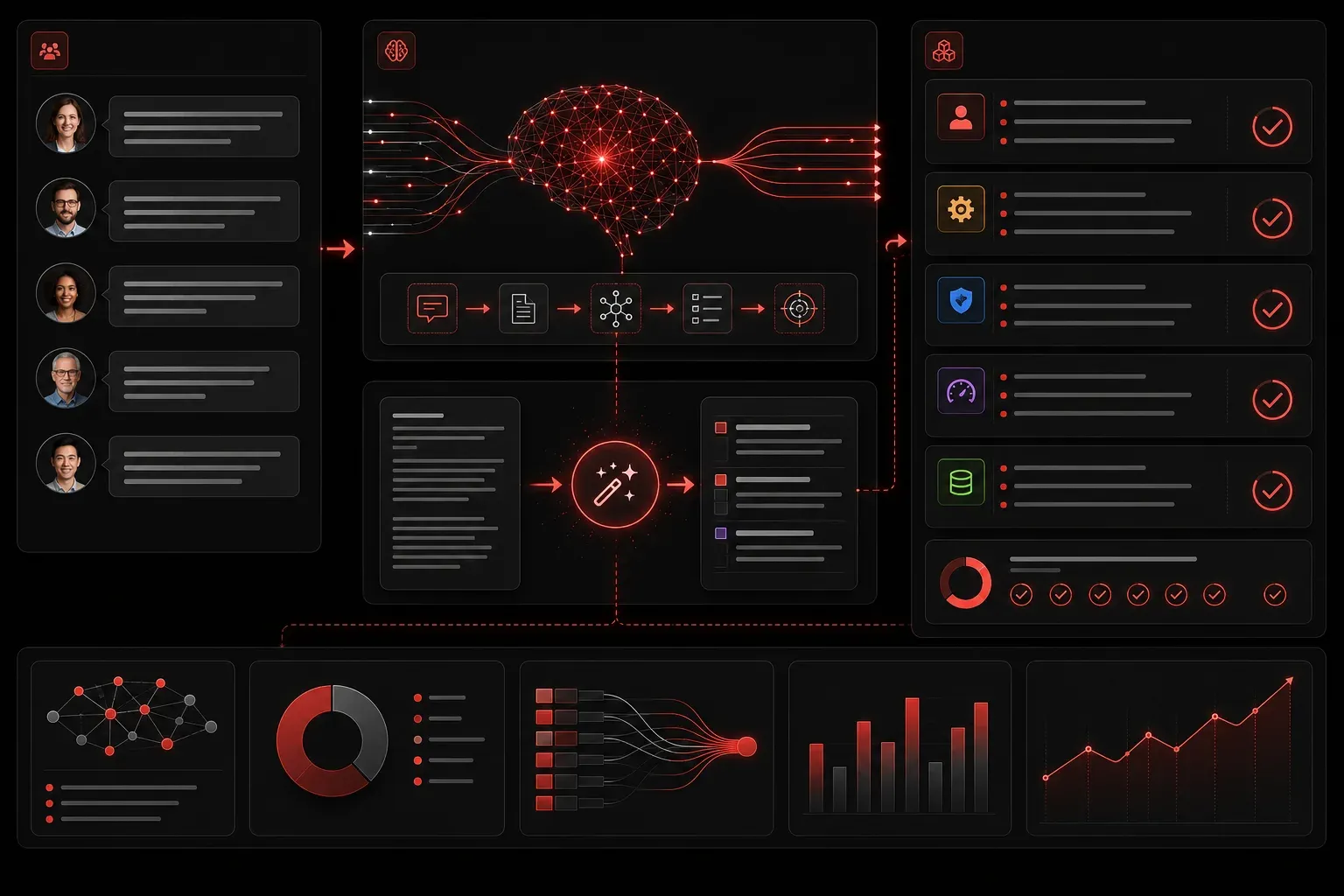
Requirements gathering has always been one of the most challenging aspects of software development. Miscommunication between stakeholders and developers can derail entire projects before they even begin. But AI is transforming this critical phase, offering powerful tools to capture, clarify, and refine requirements more effectively than traditional methods.
The Traditional Requirements Challenge
Anyone who's worked in software development knows the frustration of vague requirements. Stakeholders often struggle to articulate exactly what they need, while developers work with incomplete or contradictory information. This disconnect leads to costly revisions, missed deadlines, and products that don't meet user expectations.
AI requirements gathering tools are changing this dynamic by acting as intelligent assistants that can help extract, structure, and analyze requirements through natural language processing and automated analysis.
AI-Powered Requirements Discovery
Modern AI tools can analyze existing documentation, meeting transcripts, and user feedback to help identify implicit requirements that might otherwise be overlooked. Tools like Notion AI and ChatGPT can assist in processing lengthy stakeholder interviews and help structure requirement lists, though they require human guidance and oversight to ensure accuracy.
For example, you might work with an AI tool to process this raw stakeholder input: "We need the system to be fast and handle lots of users, and it should work on mobile devices too."
With proper prompting and human oversight, an AI requirements gathering system can help you refine this into more specific requirements:
Functional Requirements:
- System must support mobile-responsive design
- API response times must be under 200ms
- System must handle 1000 concurrent users

Non-Functional Requirements:
- Cross-platform compatibility (iOS/Android)
- 99.9% uptime SLA
- Progressive Web App capabilities
Note that the specific metrics and technical details still require human domain expertise and stakeholder input to validate.
AI-Assisted Requirements Validation
AI tools can help identify potential inconsistencies and gaps in requirements, though human review remains essential for complex or nuanced scenarios. Platforms like Requirements.io use natural language processing to help flag conflicting statements, incomplete specifications, and missing edge cases.
These tools can assist in checking for:
- Potentially contradictory requirements across different documents
- Missing acceptance criteria for user stories
- Ambiguous language that could lead to misinterpretation
- Dependencies between requirements that haven't been explicitly stated
However, final validation of requirements, especially for business logic and technical feasibility, requires human expertise and stakeholder confirmation.
Interactive Requirements Refinement
AI-powered chatbots can help conduct structured interviews with stakeholders, asking follow-up questions to clarify vague requirements. Tools like Microsoft Power Virtual Agents can be configured to gather specific information about user workflows, technical constraints, and business objectives, though they work best when supervised by experienced analysts.
A typical AI-assisted requirements session might look like this:
AI: "You mentioned the need for 'real-time updates.' Can you specify the maximum acceptable delay?"
Stakeholder: "Users should see changes immediately."
AI: "By 'immediately,' do you mean under 1 second, or is a 2-3 second delay acceptable?"
Stakeholder: "2-3 seconds is fine for most features."
This interactive approach helps transform vague concepts into measurable specifications, though the conversation should be guided by someone with requirements engineering experience.
Workflow Automation Integration
The real power of AI requirements gathering emerges when integrated with workflow automation platforms. Tools like Zapier and Make can help automate the creation of user stories, update project management systems, and notify relevant team members when requirements change.
You might set up an automation that:
- Processes requirements documents uploaded to a shared folder
- Assists in extracting key requirements using AI analysis
- Creates corresponding tickets in your project management system
- Assigns appropriate team members based on requirement type
Best Practices for AI Requirements Gathering
To maximize the effectiveness of AI tools in requirements gathering, focus on these strategies:
Start with structured prompts: Train your AI tools with examples of well-written requirements to improve output quality. Provide templates and formats that align with your development methodology.
Maintain human oversight: While AI can process and structure information efficiently, human domain expertise remains crucial for validating business logic, technical feasibility, and ensuring requirements align with organizational goals. Always review and validate AI-generated requirements before implementation.
Iterate continuously: Use AI tools to help refine requirements throughout the development process, not just at the beginning. Requirements naturally evolve, and AI can help track and manage these changes while humans make the final decisions.
Limitations and Considerations
While AI tools offer significant advantages in requirements gathering, it's important to understand their limitations:
- Context understanding: AI tools may miss important business context or domain-specific nuances that human analysts would catch
- Stakeholder relationships: Building trust and understanding stakeholder needs often requires human empathy and communication skills
- Complex requirements: Highly technical or interdependent requirements may require expert analysis that goes beyond AI capabilities
- Quality depends on input: AI tools are only as good as the data and prompts they receive, requiring skilled practitioners to guide them effectively
Real-World Success Example
A mid-sized fintech company recently used AI-assisted requirements gathering for their mobile banking app redesign. By combining ChatGPT for initial requirement structuring with human business analysts for validation, they reduced their requirements gathering phase from 6 weeks to 3 weeks. The AI helped identify 23% more edge cases in user scenarios compared to their previous manual process, though all final requirements still required stakeholder approval and technical review.
What's Next
Now that you understand how AI can streamline requirements gathering while maintaining necessary human oversight, the next step is exploring how these same AI tools can accelerate the prototyping phase. In our next post, we'll examine AI-assisted rapid prototyping techniques that can turn your refined requirements into working mockups in hours instead of weeks.