
Benefits and Limitations of Cisco Catalyst SD-WAN
Comprehensive analysis of Cisco Catalyst SD-WAN benefits including centralized management and intelligent path selection, balanced against limitations like vendor lock-in, implementation complexity, and internet dependency challenges.

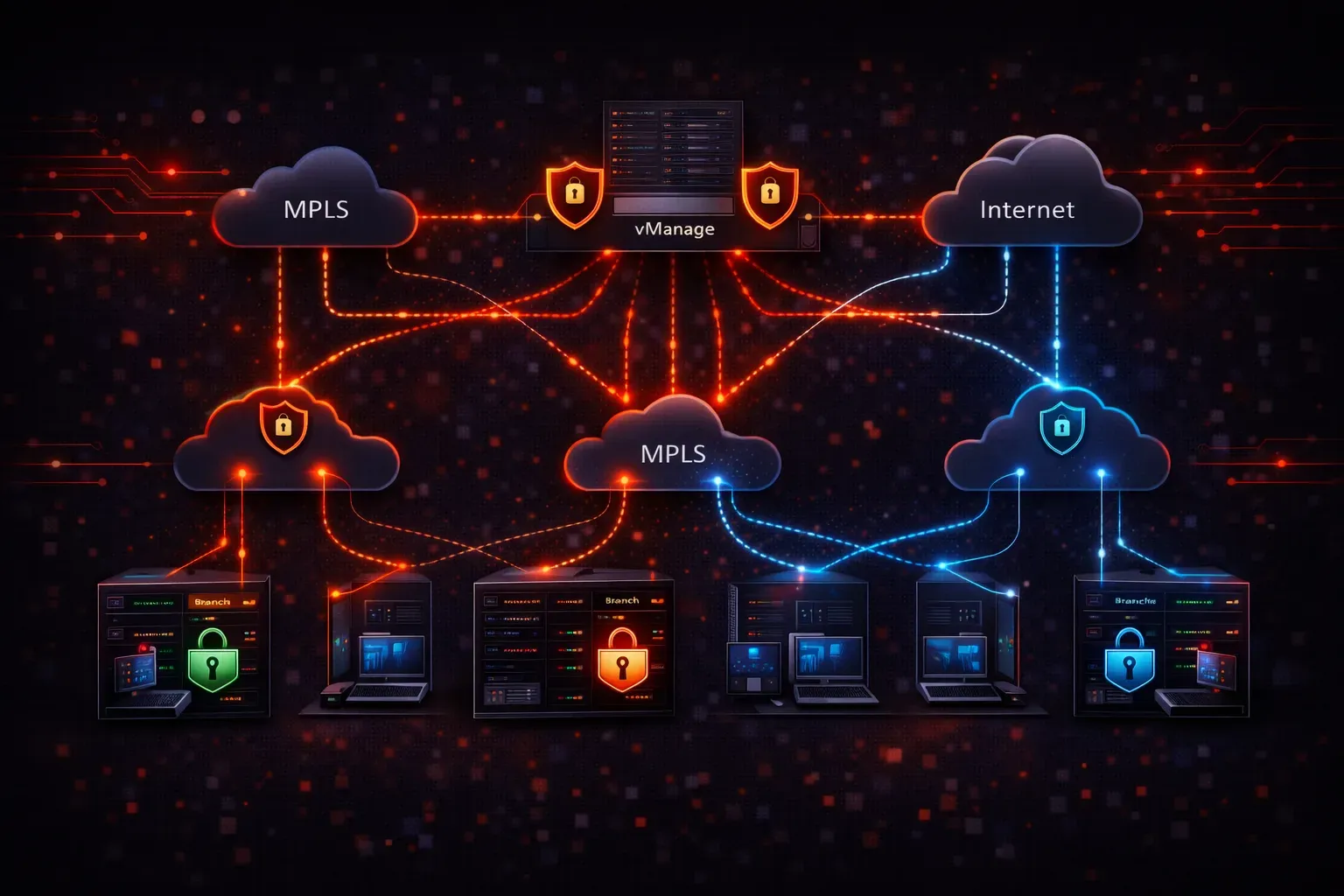
Understanding the real-world implications of Cisco Catalyst SD-WAN deployment requires an honest assessment of both its transformative capabilities and inherent limitations. As enterprise networks evolve toward cloud-first architectures and distributed workforce models, SD-WAN solutions promise significant operational improvements while introducing new complexities that demand careful consideration.
Core Benefits of Catalyst SD-WAN
Centralized Policy Management and Orchestration
The vManage controller provides unified policy orchestration across the entire WAN fabric, eliminating the need for device-by-device configuration management. Policy templates allow consistent application of security, QoS, and routing policies across thousands of sites simultaneously.
policy
 data-policy BRANCH_POLICY
  vpn-list CORPORATE_VPN
   sequence 10
    match
     destination-data-prefix-list CRITICAL_APPS
    action accept
     set
      dscp 46
      policer VOICE_POLICER
   sequence 20
    match
     destination-data-prefix-list VIDEO_APPS
    action accept
     set
      dscp 34
      policer VIDEO_POLICER
This centralized approach reduces configuration errors and accelerates deployment timelines from weeks to hours for new branch locations.
Intelligent Path Selection and Application Awareness
Catalyst SD-WAN's application-aware routing engine makes real-time forwarding decisions based on application SLA requirements, link performance metrics, and business intent policies. The solution continuously monitors jitter, latency, and loss across all available paths.
policy
 app-route-policy CRITICAL_APP_POLICY
  vpn-list CORPORATE_VPN
   sequence 10
    match
     app-list VOICE_APPS
    action
     sla-class VOICE_SLA strict
   sequence 20
    match
     app-list VIDEO_APPS
    action
     sla-class VIDEO_SLA strict
     backup-sla-preferred-color gold
This intelligence enables automatic failover to alternate paths when primary circuits degrade, maintaining application performance without manual intervention.
Integrated Security Architecture
The platform embeds security functions directly into the fabric through integrated firewalling, intrusion prevention, and URL filtering. Umbrella DNS security and advanced malware protection operate natively within the data plane, eliminating the need for separate security appliances at branch locations.
Zero-touch provisioning with certificate-based authentication ensures secure device onboarding without pre-shared keys or manual certificate distribution.
Cloud and SaaS Optimization
Direct internet access and cloud onramps reduce latency for SaaS applications by bypassing traditional hub-and-spoke traffic patterns. Regional internet gateways and cloud interconnects through Cisco's Cloud onRamp provide optimized paths to major cloud providers.
Significant Limitations and Challenges
Vendor Lock-in and Ecosystem Dependencies
Catalyst SD-WAN's proprietary control plane protocols create substantial vendor dependency. The OMP (Overlay Management Protocol) and DTLS/IPsec overlay architecture tie organizations exclusively to Cisco's ecosystem, making migration to alternative solutions complex and costly.
Third-party integration capabilities remain limited compared to vendor-agnostic solutions, potentially constraining future technology choices and negotiating leverage.
Implementation Complexity and Learning Curve
Despite promises of simplification, Catalyst SD-WAN introduces significant complexity in design and troubleshooting. The multi-controller architecture requires deep understanding of control plane interactions between vManage, vBond, and vSmart controllers.
# Complex troubleshooting across multiple control plane components
show control connections
show omp peers
show bfd sessions
show policy from-vsmart
show tunnel-interface bfd
Network engineers must master new CLI syntax, policy language constructs, and troubleshooting methodologies that differ substantially from traditional routing protocols.
Licensing Cost Structure
The subscription-based licensing model can result in higher total cost of ownership compared to traditional MPLS networks, particularly for stable environments with predictable traffic patterns. DNA licensing requirements for advanced features add ongoing operational expenses.
Bandwidth-based licensing tiers may create constraints on traffic growth and require frequent license adjustments as network utilization increases.
Internet Dependency and Quality Variability
SD-WAN's reliance on internet connectivity introduces performance variability that MPLS circuits traditionally avoided. Broadband internet circuits lack the SLA guarantees that many enterprise applications require, particularly for real-time voice and video communications.
Network administrators must carefully evaluate local internet service quality and may need to maintain MPLS circuits for critical applications, thereby reducing the potential for cost savings.
Scale and Performance Considerations
Controller Scaling Limitations
While Catalyst SD-WAN supports large-scale deployments, controller performance can become a bottleneck in massive environments. The vManage cluster architecture requires careful capacity planning and may need multiple regional clusters for global deployments.
Policy computation overhead increases exponentially with the complexity of policy sets and the number of sites, potentially affecting convergence times and configuration push performance.
Troubleshooting at Scale
Traditional network troubleshooting methodologies become insufficient in large SD-WAN deployments. The overlay abstraction can obscure underlying connectivity issues, requiring new diagnostic approaches and tools.
Correlation of application performance issues with specific underlay problems becomes complex when traffic dynamically shifts across multiple transport paths.
Strategic Decision Framework
Organizations considering Catalyst SD-WAN deployment should evaluate their specific requirements against these benefits and limitations. The solution excels in environments requiring rapid branch deployment, cloud-first architectures, and centralized policy management.
However, organizations with extensive investments in alternative vendor ecosystems, highly regulated environments with strict SLA requirements, or limited internet infrastructure may find traditional WAN architectures more suitable.
The decision ultimately depends on balancing operational agility gains against increased complexity and vendor dependency in the context of specific business requirements and technical constraints.
What's Next
With a clear understanding of SD-WAN trade-offs, the next critical step is examining the specific architecture components that deliver these capabilities. We'll dive into the control plane architecture, exploring how vManage, vBond, and vSmart controllers orchestrate the overlay fabric and handle the complex policy distribution that makes centralized management possible.
Tools and resources for this topic
- CCNP ENCOR 350-401 Official Cert Guide — The definitive ENCOR study resource by Brad Edgeworth. Covers enterprise infrastructure, virtualisation, and automation.