
Comparing AI Workflow Monitoring Tools: Which is Best for You?
A comprehensive comparison of AI workflow monitoring tools including MLflow, Weights & Biases, Neptune, and cloud-native solutions. Helps IT professionals choose the right monitoring solution based on team size, infrastructure, and technical requirements.

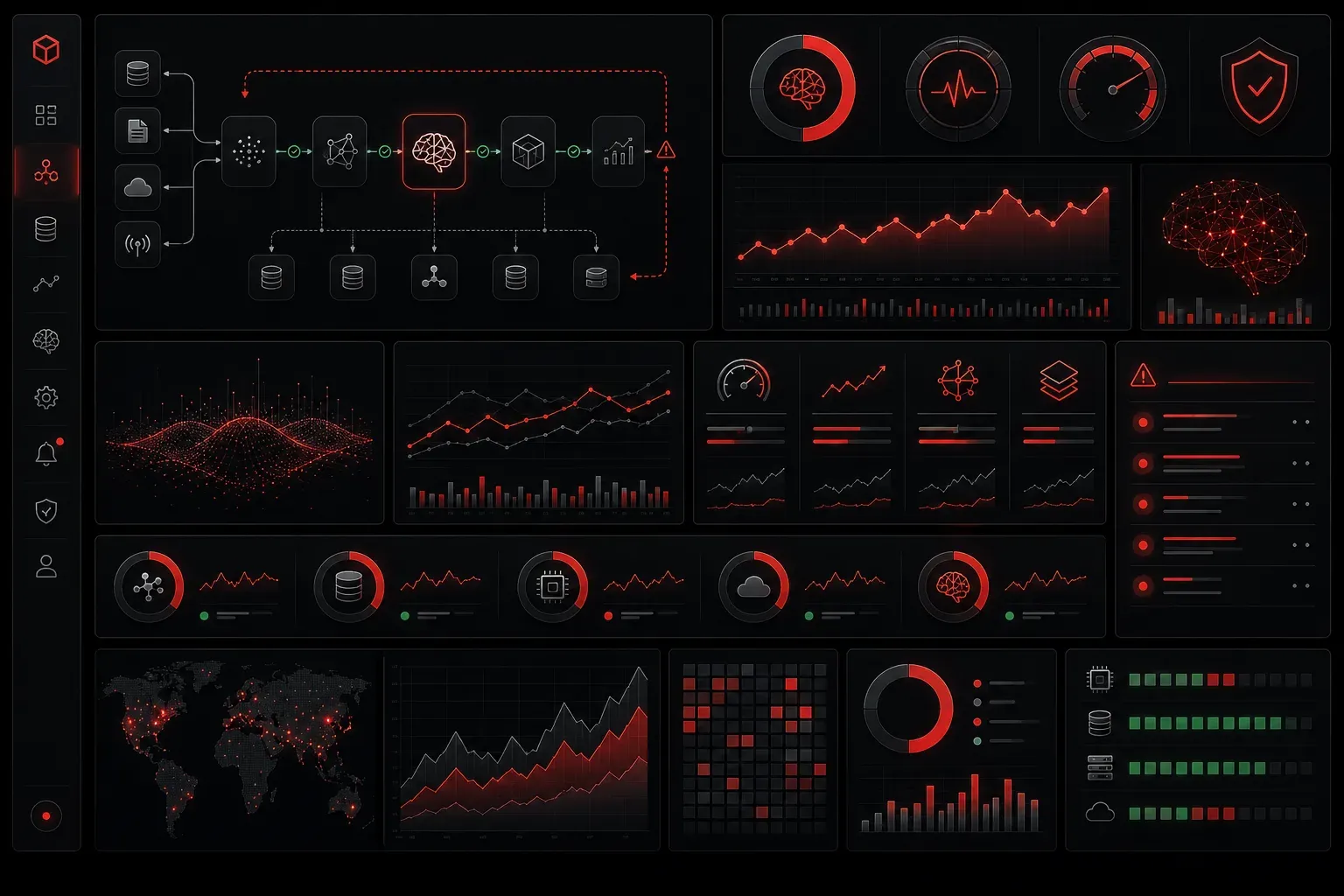
When managing AI workflows in production environments, having the right monitoring tools can make the difference between smooth operations and costly downtime. With dozens of AI monitoring solutions available, choosing the right one for your organization requires understanding your specific needs and how different tools address them.
Let's examine the leading AI workflow monitoring tools and help you make an informed decision for your environment.
Understanding Your Monitoring Needs
Before diving into specific tools, consider what aspects of your AI workflows need monitoring:
- Model Performance: Accuracy, latency, and throughput metrics
- Data Quality: Input validation and drift detection
- Resource Utilization: GPU/CPU usage and memory consumption
- Operational Health: System uptime and error rates
- Agentic AI Behavior: Multi-step reasoning, tool usage, and autonomous decision patterns
- Prompt Engineering Metrics: Token usage, response quality, and prompt effectiveness
Enterprise-Grade Solutions
MLflow
MLflow stands out as an open-source platform that excels in experiment tracking and model lifecycle management. It's particularly strong for teams already using Python-based ML workflows and supports tracking of LLM interactions and prompt experiments.
Best for: Teams needing comprehensive experiment tracking with model versioning
Strengths: Free, extensive integrations, strong community support, LLM tracking capabilities
Considerations: Requires more setup and maintenance than SaaS alternatives
Real-world example: A fintech company uses MLflow to track their fraud detection model's performance across different customer segments, monitoring both traditional ML metrics and LLM-powered explanation quality.
Weights & Biases (W&B)
W&B provides excellent visualization capabilities and real-time monitoring dashboards. Their platform makes it easy to track experiments across distributed teams and offers specialized features for LLM monitoring and prompt engineering workflows.
Best for: Research teams and organizations prioritizing collaboration, especially in AI-assisted development
Strengths: Intuitive interface, powerful visualization, strong team features, prompt tracking
Considerations: Can become expensive as team size grows
Real-world example: An AI research team at a healthcare startup uses W&B to track their medical question-answering system, monitoring prompt variations, model responses, and accuracy across different medical specialties.
Neptune
Neptune focuses on metadata management and provides robust tracking for large-scale ML operations. It integrates well with existing MLOps pipelines and supports comprehensive logging of AI-assisted coding workflows and agentic AI systems.
Best for: Large organizations with complex ML pipelines and multi-agent systems
Strengths: Excellent metadata tracking, enterprise security features, agentic AI monitoring
Considerations: Learning curve for advanced features
Real-world example: A software development company monitors their AI code generation pipeline, tracking everything from initial prompts to final code quality metrics and developer acceptance rates.
Agentic AI Specialized Tools
LangSmith
LangSmith specializes in monitoring LLM applications and agentic AI workflows. It provides detailed tracing of multi-step AI processes and tool usage patterns.
Best for: Teams building complex agentic AI systems with multiple reasoning steps
Strengths: Deep LLM observability, agent behavior tracking, prompt optimization tools
Considerations: Focused primarily on LangChain ecosystem
Arize AI
Arize offers comprehensive monitoring for production ML and AI systems, with strong capabilities for drift detection in LLM applications and prompt performance tracking.
Best for: Production environments running both traditional ML and modern LLM applications
Strengths: Advanced drift detection, LLM-specific metrics, prompt engineering analytics
Considerations: Premium pricing for advanced features
Cloud-Native Options
Amazon SageMaker Model Monitor
If you're already in the AWS ecosystem, SageMaker Model Monitor provides seamless integration with other AWS services. It automatically detects data drift and model performance degradation, with growing support for LLM monitoring through Amazon Bedrock integration.
Best for: AWS-heavy environments with existing SageMaker workflows
Strengths: Native AWS integration, automatic drift detection, Bedrock LLM monitoring
Considerations: Vendor lock-in, limited customization options
Google Cloud AI Platform
Google's offering provides comprehensive monitoring within the GCP ecosystem, with strong integration to BigQuery and other Google services. Vertex AI includes specialized monitoring for generative AI applications.
Best for: Google Cloud users leveraging Vertex AI and PaLM models
Strengths: Tight GCP integration, scalable infrastructure, generative AI monitoring
Considerations: Most effective when fully committed to GCP
Feature Comparison Table
| Tool | Open Source | LLM Monitoring | Prompt Engineering | Agentic AI | Best For |
|---|---|---|---|---|---|
| MLflow | ✓ | Basic | ✓ | Limited | Experiment tracking |
| W&B | ✗ | ✓ | ✓ | ✓ | Team collaboration |
| Neptune | ✗ | ✓ | ✓ | ✓ | Enterprise MLOps |
| LangSmith | ✗ | ✓✓ | ✓✓ | ✓✓ | LLM applications |
| Arize AI | ✗ | ✓✓ | ✓ | ✓ | Production monitoring |
| SageMaker | ✗ | ✓ | Limited | Limited | AWS ecosystem |
Integration with AI-Assisted Development Workflows
Modern AI monitoring tools increasingly support integration with prompt engineering and AI-assisted coding workflows:
- Code Generation Tracking: Monitor AI-generated code quality, acceptance rates, and developer productivity metrics
- Prompt Version Control: Track prompt iterations, A/B test different approaches, and measure effectiveness
- Multi-Agent Coordination: Monitor interactions between different AI agents in complex workflows
- Tool Usage Analytics: Track which tools agentic AI systems use most frequently and successfully
Making Your Decision
When conducting your AI tools analysis, consider these key factors:
- AI System Complexity: Simple models need basic monitoring, while agentic AI systems require specialized observability
- Team Size and Budget: Open-source solutions like MLflow work well for smaller teams, while enterprise platforms offer better support for larger organizations
- Existing Infrastructure: Cloud-native solutions integrate better if you're already committed to a specific cloud provider
- Technical Expertise: Self-hosted solutions require more DevOps knowledge but offer greater control
- Compliance Requirements: Enterprise solutions typically offer better security and audit features
- LLM Usage: Teams heavily using LLMs should prioritize tools with strong prompt engineering and agentic AI features
Getting Started
Most organizations benefit from starting with a proof of concept using one or two tools. Here's a practical approach:
# Example: Setting up basic MLflow tracking with LLM monitoring
import mlflow
import mlflow.sklearn
from mlflow.tracking import MlflowClient

# Start tracking
mlflow.start_run()
mlflow.log_param("learning_rate", 0.01)
mlflow.log_param("prompt_template", "Analyze the following text: {input}")
mlflow.log_metric("accuracy", 0.95)
mlflow.log_metric("avg_tokens_used", 150)
mlflow.log_metric("prompt_effectiveness", 0.87)
mlflow.sklearn.log_model(model, "model")

# Log LLM-specific metrics
mlflow.log_text("sample_prompt.txt", "Your sample prompt here")
mlflow.log_artifact("prompt_variations.json")
mlflow.end_run()
Begin with basic metrics tracking, then gradually expand to more sophisticated monitoring as your needs grow. For teams working with LLMs and agentic AI, start by tracking prompt effectiveness and response quality before moving to complex multi-agent workflows.
What's Next
Once you've selected your monitoring tools, the next step is implementing effective alerting and response strategies. We'll explore how to set up intelligent alerts that help you catch issues before they impact users, including threshold setting for both traditional ML metrics and LLM-specific indicators like prompt injection attempts and response quality degradation.