
Comparing Data Encryption and Tokenization
This post explains the key differences between data encryption and tokenization, two popular data protection methods. It covers when to use each approach and their respective security considerations for comprehensive data protection strategies.

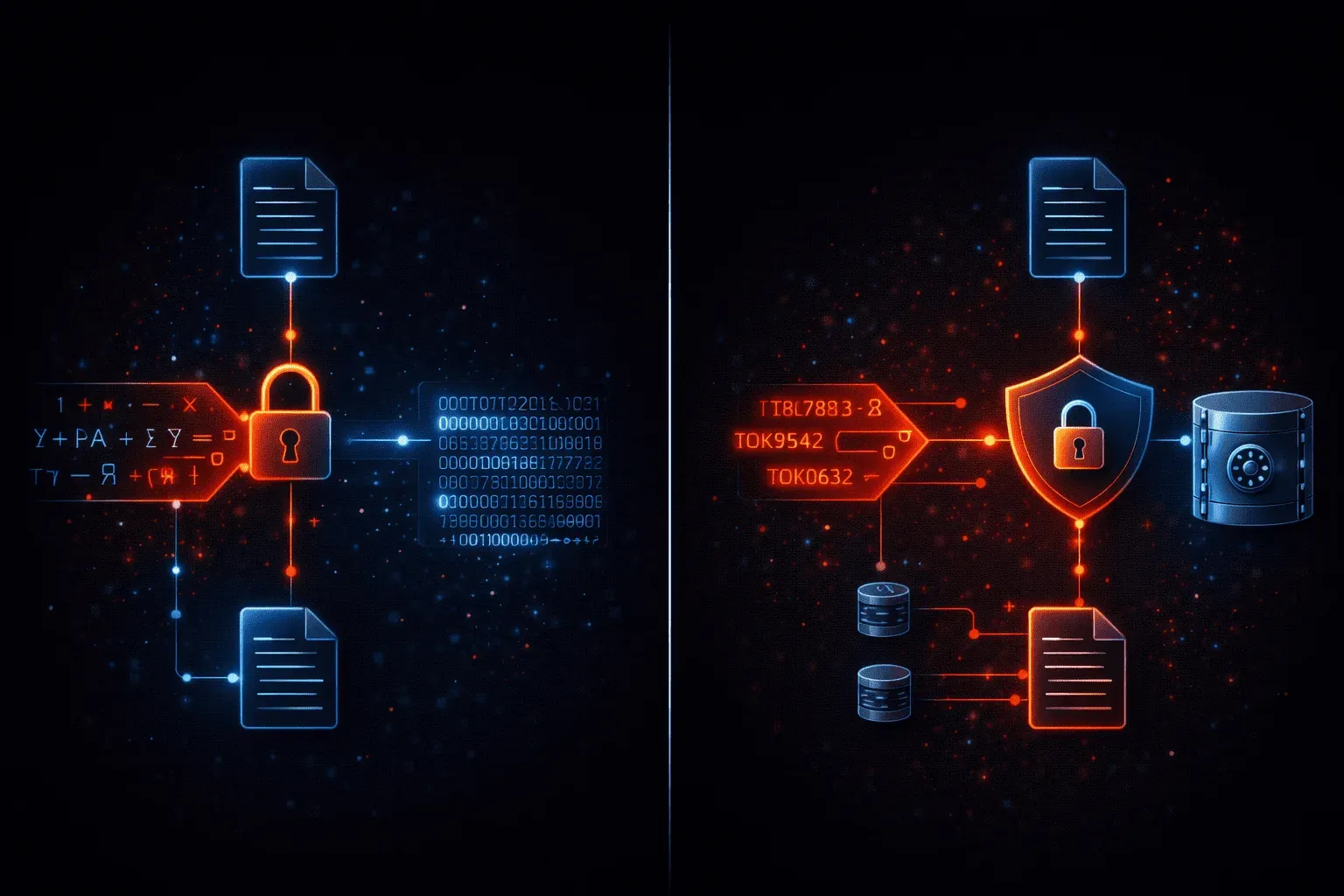
When protecting sensitive data, organizations have several options at their disposal. Two of the most commonly discussed methods are data encryption and tokenization. While both serve to protect information from unauthorized access, they work in fundamentally different ways and are suited for different scenarios. Understanding these differences is crucial for Security+ candidates and anyone working in data protection.
What is Data Encryption?
Data encryption transforms readable information (plaintext) into an unreadable format (ciphertext) using mathematical algorithms and encryption keys. The encrypted data can only be converted back to its original form by someone who possesses the correct decryption key.
For example, when you encrypt the credit card number 4532-1234-5678-9012 using AES-256 encryption, it might become something like 8f3e9a2b7c1d4e6f8a9b2c3d4e5f6789. The original data still exists within the encrypted format, it's just scrambled in a way that requires the proper key to unlock.
Key characteristics of encryption:
- Original data remains mathematically present in encrypted form
- Requires cryptographic keys for encryption and decryption
- Can be applied to data at rest, in transit, or in use
- Reversible process when you have the correct key
What is Tokenization?
Tokenization replaces sensitive data with non-sensitive placeholder values called tokens. Unlike encryption, the original data is completely removed from the system and stored separately in a secure token vault. The token has no mathematical relationship to the original data.
Using our credit card example, tokenization might replace 4532-1234-5678-9012 with a token like TOK_98765432. This token is meaningless by itself and cannot be reverse-engineered to reveal the original card number.
Key characteristics of tokenization:
- Original data is physically separated from the token
- Tokens have no mathematical relationship to original data
- Requires a secure token vault to store the mapping
- Tokens are typically format-preserving (same length and data type)
Encryption vs Tokenization: When to Use Each
The choice between these data protection methods depends on your specific use case and requirements.
Use Encryption When:
- Data needs to travel: Protecting information in transit across networks
- Offline access required: Systems that need to work without network connectivity
- Performance is critical: Encryption typically has lower latency than token vault lookups
- Regulatory compliance allows: Some standards accept encrypted data as sufficient protection
Use Tokenization When:
- PCI DSS compliance: Credit card processing environments often prefer tokenization
- Reducing scope: Want to minimize systems that handle sensitive data
- Legacy system integration: Older applications that can't handle encryption overhead
- Maximum security: When you want complete separation of sensitive data from business systems
Security Considerations
Both methods have different risk profiles. Encrypted data is vulnerable if encryption keys are compromised, but it can function independently. Tokenized systems are highly dependent on the token vault's availability and security, but offer better data isolation.
Many organizations implement hybrid approaches, using encryption for data in transit and tokenization for data at rest in certain high-risk applications. This layered approach provides comprehensive protection across different use cases.
What's Next
Now that you understand the fundamental differences between encryption and tokenization, the next step is diving deeper into specific encryption algorithms and their applications. We'll explore symmetric vs asymmetric encryption and examine common encryption standards used in enterprise environments.
Security+ study resources
- CompTIA Security+ Study Guide — Full SY0-701 exam coverage including threats, vulnerabilities, architecture, and operations.