
Understanding Model Poisoning in AI: Risks and Mitigation
Model poisoning is a critical AI security threat where attackers corrupt machine learning models through malicious training data or direct manipulation. This post explains how these attacks work and provides practical strategies for detection, prevention, and mitigation in AI systems.

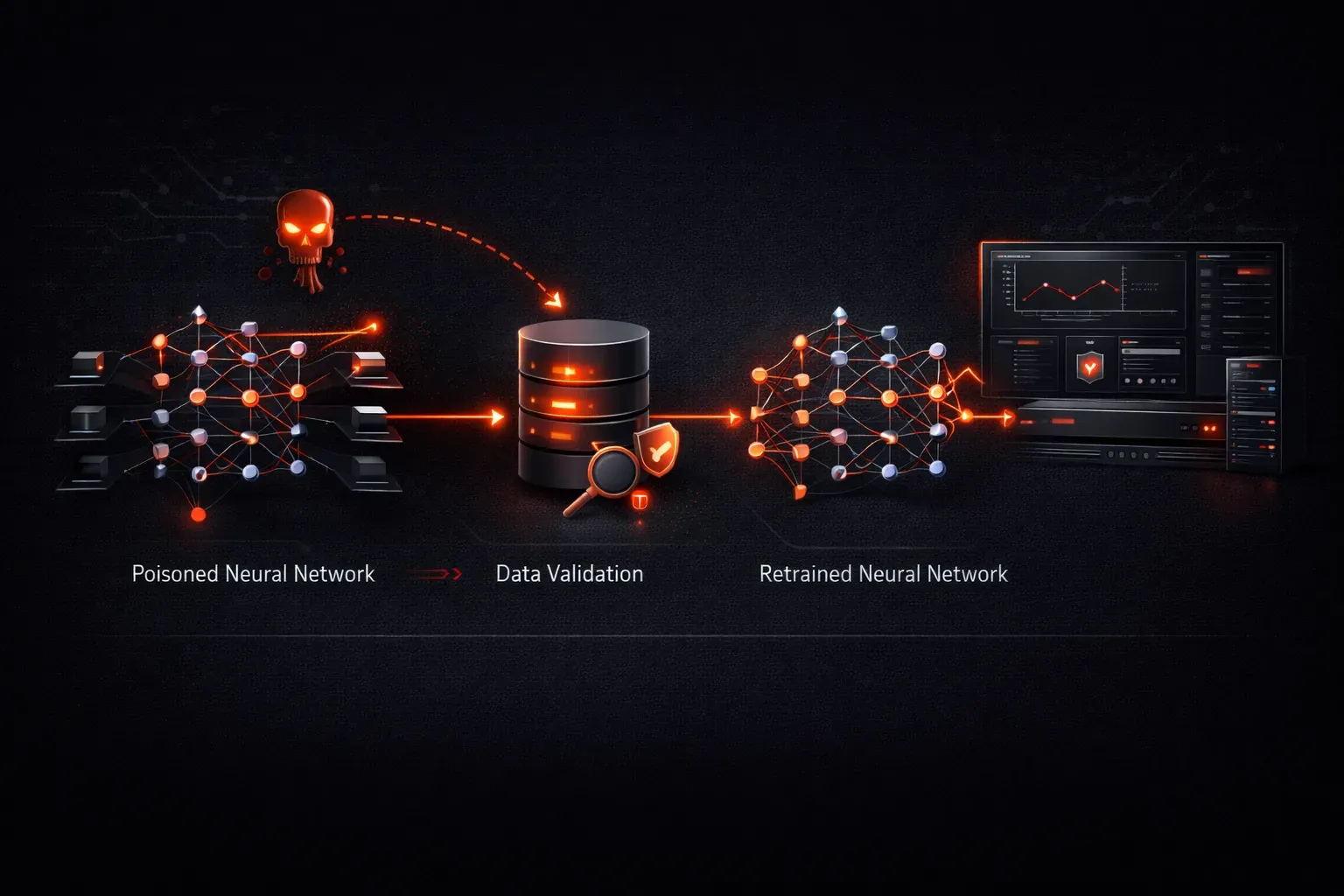
Model poisoning represents one of the most insidious threats facing AI systems today. Unlike traditional cybersecurity attacks that target infrastructure or data, model poisoning AI attacks specifically target the machine learning models themselves, corrupting their decision-making capabilities from within.
What is Model Poisoning?
Model poisoning occurs when an attacker introduces malicious data into a machine learning model's training dataset, manipulates the training process itself, or compromises the model during deployment. The goal is to degrade the model's performance or cause it to behave incorrectly in specific situations while appearing to function normally under most circumstances.
Think of it like contaminating a recipe. If someone secretly adds the wrong ingredients to a cooking recipe that gets shared widely, everyone who follows that recipe will produce a flawed dish, even though they followed the instructions perfectly.
How Model Poisoning Works
There are three primary methods attackers use to poison AI models:
Data Poisoning
In data poisoning attacks, malicious actors inject corrupted or misleading examples into the training dataset. For instance, an attacker might:
- Add mislabeled images to an image recognition dataset
- Insert biased text samples into a language model's training data
- Introduce fake financial records into a fraud detection system's dataset
Model Manipulation
More sophisticated attacks target the model's parameters or architecture directly during training. This might involve:
- Modifying neural network weights during training
- Altering the model's learning algorithms
- Introducing backdoors that activate under specific conditions
Deployment-Phase Attacks
Model poisoning can also occur after deployment through:
- Compromising model update mechanisms
- Injecting malicious code into model inference pipelines
- Exploiting continuous learning systems to introduce poisoned data
Real-World Impact and Risks
The consequences of model poisoning can be severe, particularly in critical applications. Consider these scenarios:
Autonomous Vehicles: A poisoned computer vision model might fail to recognize stop signs under certain lighting conditions, leading to accidents.
Medical Diagnosis: A compromised diagnostic AI might misclassify certain types of tumors, resulting in delayed or incorrect treatment.
Financial Services: A poisoned fraud detection system might fail to identify specific types of fraudulent transactions, leading to significant financial losses.
Real-World Examples: Security researchers have demonstrated successful poisoning attacks against commercial spam filters, where carefully crafted emails in training data caused the filters to misclassify future spam messages. In another case, researchers showed how poisoned training data could cause image classifiers to consistently misidentify certain objects when specific trigger patterns were present.
Essential AI Security Measures
Protecting against model poisoning requires a multi-layered approach to AI security. Here are the key strategies:
Data Validation and Sanitization
Implement robust data validation processes before training:
# Example data validation check
def validate_training_data(dataset):
    # Check for unusual patterns or outliers
    outliers = detect_statistical_outliers(dataset)

    # Verify data source integrity using cryptographic hashes
    source_verified = verify_data_sources(dataset.sources)

    # Check for duplicate or suspicious entries
    duplicates = find_suspicious_duplicates(dataset)

    # Validate label consistency across similar samples
    label_consistency = check_label_consistency(dataset)

    return outliers, source_verified, duplicates, label_consistency
Model Monitoring and Anomaly Detection
Continuously monitor your models for unusual behavior patterns. Set up alerts for:
- Sudden drops in accuracy on validation datasets
- Unexpected prediction patterns
- Performance variations across different data subsets
- Changes in model confidence distributions
- Anomalous gradient patterns during training
Federated Learning Security
While federated learning can provide privacy benefits, it requires careful security implementation to prevent model poisoning:
- Client authentication and verification using digital certificates
- Gradient validation and clipping before aggregation
- Byzantine-resilient aggregation methods like FedAvg with robust aggregation
- Reputation systems to track client contribution quality
- Secure multi-party computation for sensitive updates
- Regular model validation on hold-out datasets
Modern federated learning frameworks implement defense mechanisms like differential privacy and secure aggregation protocols that can significantly reduce poisoning risks when properly configured.
Implementing AI Risk Management
Effective AI risk management for model poisoning includes establishing clear governance frameworks:
Training Data Lineage: Maintain detailed records of where your training data comes from and how it's processed. This helps identify potential contamination sources.
Model Versioning: Keep detailed version histories of your models, including training parameters and datasets used. This enables quick rollback if poisoning is detected.
Regular Security Audits: Conduct periodic assessments of your AI systems, including penetration testing specifically designed for machine learning models.
Prevention Best Practices
To prevent model poisoning, consider these technical measures:
- Differential Privacy: Add calibrated noise during training to prevent individual data points from significantly influencing the model
- Robust Training Algorithms: Use techniques like TRIM (Trimmed Inner Product) or Krum aggregation that can handle Byzantine failures
- Ensemble Methods: Deploy multiple diverse models trained on different data subsets, making it harder to poison all models simultaneously
- Data Provenance Tracking: Implement blockchain-based or cryptographic verification of data sources
- Gradient Compression and Verification: Use secure aggregation protocols that can detect malicious gradient submissions
- Adversarial Training: Include known poisoning patterns in training to improve model robustness
- Secure Enclaves: Use hardware-based security (like Intel SGX) for sensitive model training and inference
- Continuous Validation: Implement automated testing pipelines that regularly validate model behavior on curated test sets
Remember that model poisoning AI threats evolve constantly. What works as protection today may need enhancement tomorrow as attackers develop new techniques.
What's Next
Understanding model poisoning is just the beginning of AI security. Next, we'll explore adversarial attacks—another critical threat where attackers manipulate inputs to fool trained models into making incorrect predictions. This knowledge will help you build more comprehensive defenses for your AI systems.