
Observer Pattern in Automation: Benefits and Use Cases
Learn how the Observer pattern enhances network automation through immediate change notification, improved system responsiveness, and efficient event-driven design. Includes practical Python examples for configuration management and monitoring.

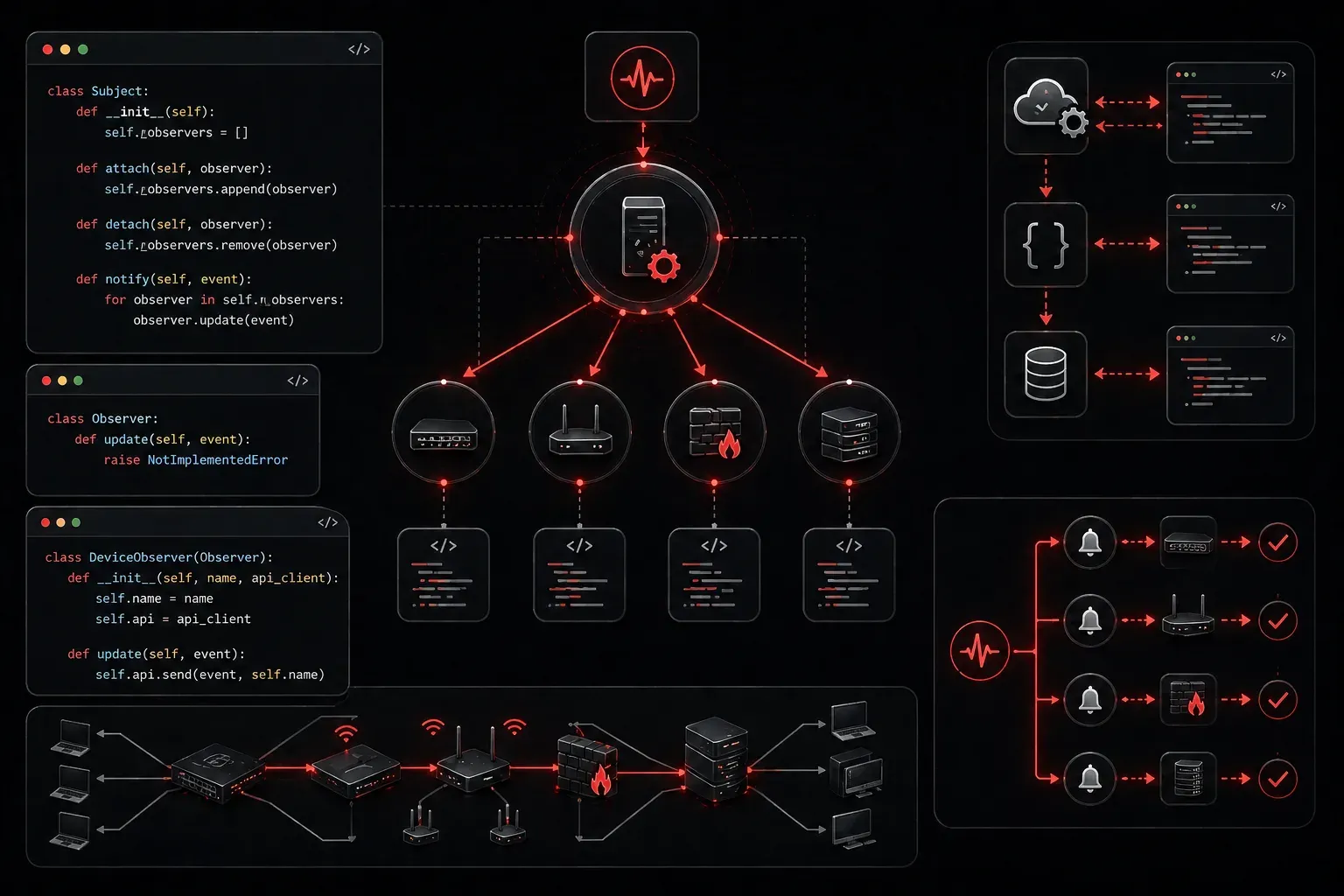
The Observer pattern is one of the most valuable design patterns in network automation, enabling systems to automatically respond to changes without constant polling or manual intervention. Understanding this pattern is crucial for CCNA automation professionals who want to build responsive, efficient systems that react intelligently to network events.
What is the Observer Pattern?
The Observer pattern establishes a one-to-many relationship where one object (the subject) maintains a list of dependents (observers) and automatically notifies them of state changes. In automation contexts, this means your systems can instantly react to network events, configuration changes, or monitoring alerts without continuously checking for updates.
Think of it like a network monitoring dashboard that automatically updates when interface status changes, rather than refreshing every few seconds to check for updates manually.
Key Benefits in Automation Design
Enhanced System Responsiveness
Traditional automation often relies on polling mechanisms that check system status at regular intervals. The Observer pattern eliminates this delay by providing immediate change notification. When a router interface goes down, configured observers can instantly trigger remediation scripts, send alerts, or update documentation systems.
class NetworkInterface:
    def __init__(self, name):
        self.name = name
        self.status = "up"
        self.observers = []

    def add_observer(self, observer):
        self.observers.append(observer)

    def notify_observers(self):
        for observer in self.observers:
            observer.update(self)

    def set_status(self, status):
        if self.status != status:
            self.status = status
            self.notify_observers()
Reduced System Load
Instead of multiple systems constantly polling network devices for status updates, the Observer pattern enables event-driven automation. This significantly reduces network traffic, CPU usage on managed devices, and overall system resource consumption.
Loose Coupling Between Components
The pattern promotes modular automation design where network monitoring, alerting, and remediation systems can operate independently while staying synchronized. You can add new automation workflows without modifying existing monitoring code.
Practical Use Cases in Network Automation
Configuration Management
When network configurations change, multiple systems need updates. Using the Observer pattern, a configuration change can automatically trigger backup systems, compliance checkers, and documentation generators:
class ConfigManager:
    def __init__(self):
        self.observers = []
        self.current_config = None

    def add_observer(self, observer):
        self.observers.append(observer)

    def update_config(self, new_config):
        self.current_config = new_config
        self.notify_observers()

    def notify_observers(self):
        for observer in self.observers:
            observer.config_changed(self.current_config)

# Observers automatically respond to config changes
backup_system = BackupObserver()
compliance_checker = ComplianceObserver()
config_manager.add_observer(backup_system)
config_manager.add_observer(compliance_checker)
Network Monitoring and Alerting
The Observer pattern excels in monitoring scenarios where different stakeholders need different responses to the same event. When a critical link fails, you might want to simultaneously send alerts, trigger failover procedures, and update network topology diagrams.
Service Discovery and Registration
In dynamic environments, services frequently join and leave the network. The Observer pattern enables automatic service registration updates, load balancer reconfiguration, and monitoring system adjustments without manual intervention.
Implementation Considerations
When implementing the Observer pattern in automation projects, consider using existing frameworks that provide built-in observer functionality. Python's asyncio library offers excellent support for event-driven programming, while network automation tools like Ansible can be configured to respond to external events.
Remember that system responsiveness improvements come with the responsibility to handle observer failures gracefully. Always implement error handling to prevent one failing observer from disrupting the entire notification chain.
What's Next
Now that you understand the Observer pattern benefits, the next step is exploring specific implementation techniques in Python. Our upcoming post will demonstrate building a complete network monitoring system using the Observer pattern with practical code examples and integration with common network automation tools.