
How Orchestration Enhances Security Operations
Security orchestration integrates automated security tasks and tools to create coordinated incident response workflows. It transforms manual, time-consuming security operations into streamlined, automated processes that improve response times and consistency while reducing analyst workload.

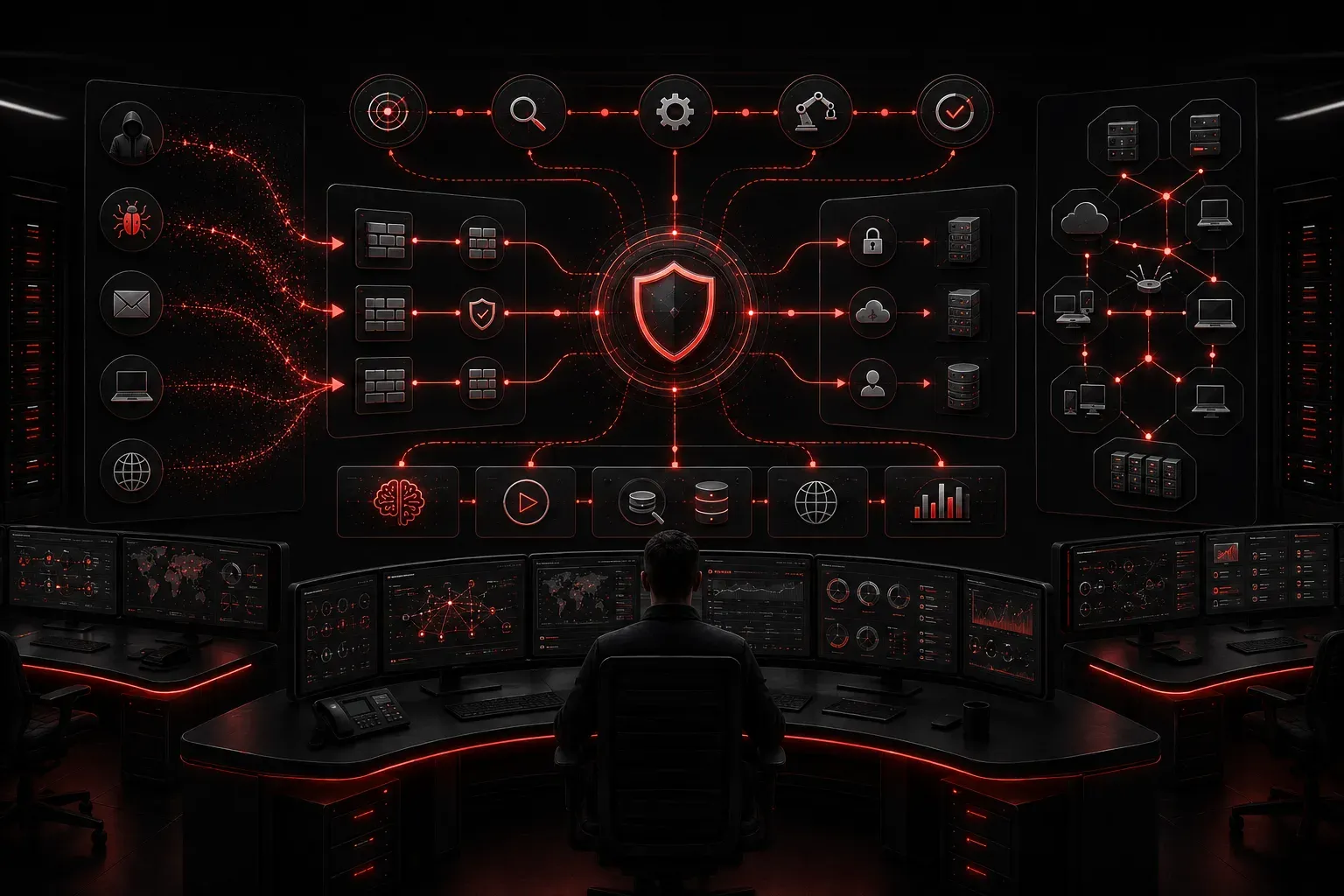
Modern security operations centers (SOCs) face an overwhelming challenge: managing hundreds of security alerts daily while coordinating responses across multiple tools and teams. This is where orchestration in security becomes a game-changer, transforming chaotic incident response into streamlined, automated workflows.
What is Security Orchestration?
Security orchestration is the process of connecting and automating security tools, processes, and workflows to create coordinated responses to security incidents. Think of it as the conductor of an orchestra, ensuring each security tool plays its part at the right time and in harmony with others.
Unlike simple automation that handles individual tasks, orchestration manages complex workflows that span multiple systems. When a security alert triggers, orchestration can automatically gather context from various sources, correlate threat intelligence, and execute appropriate response actions across your entire security stack.
How Task Integration Works
Effective task integration in security orchestration typically involves these components:
- Threat Detection Systems: SIEM platforms, intrusion detection systems, and endpoint detection tools
- Threat Intelligence Feeds: External sources providing indicators of compromise and threat actor information
- Response Tools: Firewalls, endpoint protection platforms, and network access control systems
- Communication Platforms: Ticketing systems, email, and messaging tools for team coordination
When these systems work in isolation, analysts must manually gather information from each tool, correlate findings, and execute responses across multiple interfaces. Orchestration eliminates these manual handoffs by creating automated workflows that connect these disparate systems.
Real-World Orchestration Example
Consider a phishing email detection scenario. Without orchestration, an analyst might spend 30-45 minutes on these manual tasks:
- Investigate the suspicious email in the email security gateway
- Check threat intelligence feeds for known malicious indicators
- Search the SIEM for related activity across the network
- Manually block malicious URLs in the web proxy
- Create and assign tickets for follow-up actions
With security orchestration, this entire workflow becomes automated. When the email security tool detects a suspicious message, the orchestration platform can automatically extract indicators, query threat intelligence sources, search for related network activity, implement containment measures, and notify the appropriate teams, all within minutes.
Key Benefits to Improve Efficiency
Organizations implementing security orchestration typically see significant improvements in several areas:
Faster Response Times: Automated workflows can execute in seconds what previously took analysts hours. Critical containment actions happen immediately rather than waiting for human intervention.
Consistent Response Quality: Orchestrated workflows ensure that the same thorough investigative steps are followed for every incident, regardless of which analyst is on duty or their experience level.
Reduced Alert Fatigue: By automatically handling routine incidents and enriching alerts with contextual information, orchestration helps analysts focus on genuinely sophisticated threats that require human expertise.
Improved Resource Utilization: Security teams can handle larger volumes of incidents without proportionally increasing staff, making better use of existing investments in security tools.
Implementation Considerations
Successful security orchestration requires careful planning. Start by mapping your current incident response processes and identifying repetitive tasks that consume significant analyst time. Focus on high-volume, low-complexity incidents for initial automation.
Ensure your security tools have APIs or integration capabilities that support orchestration platforms. Document your workflows clearly and test them thoroughly in a controlled environment before deploying to production.
Remember that orchestration complements human expertise rather than replacing it. Complex threats still require analyst judgment and creativity that automation cannot provide.
What's Next
Now that you understand how orchestration enhances security operations, the next step is to explore Security Orchestration, Automation, and Response (SOAR) platforms. These comprehensive solutions provide the frameworks and tools needed to implement enterprise-scale security orchestration, turning the concepts we've covered into practical, real-world deployments.
Tools and resources for this topic
- CompTIA Security+ Study Guide — Full SY0-701 exam coverage including threats, vulnerabilities, and mitigation.