
Understanding Cisco Wireless Architectures
This post explains Cisco wireless architectures, covering the key components like wireless controllers, lightweight access points, and CAPWAP protocol. It shows how centralized management improves wireless network performance and simplifies administration compared to older autonomous designs.

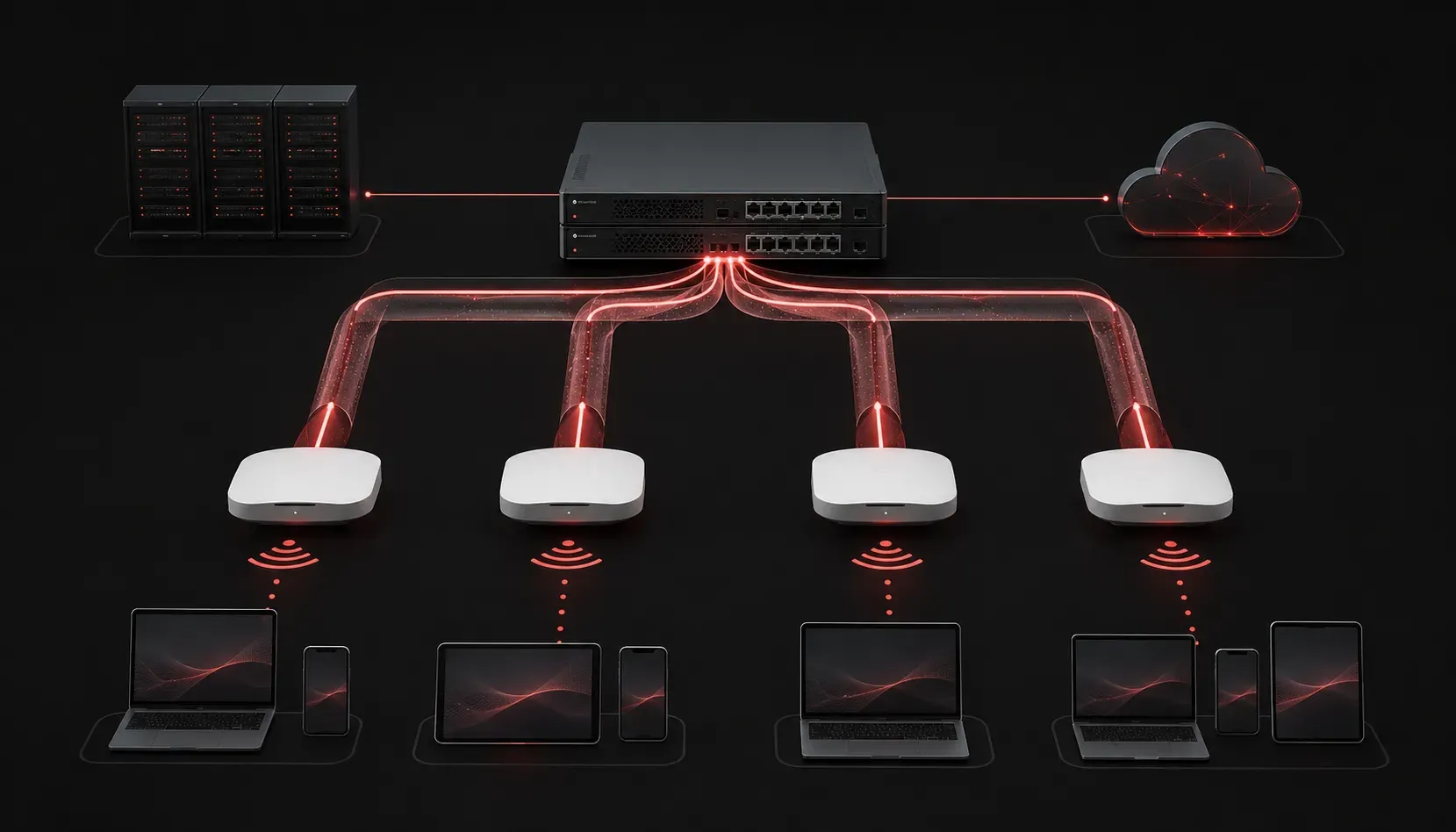
When you're starting your CCNA journey, understanding Cisco wireless architectures is essential for grasping how modern networks provide seamless wireless connectivity. Unlike the early days of standalone access points, today's wireless networks use sophisticated architectures that centralize management and improve performance across the entire network.
The Evolution of Wireless Network Design
Traditional wireless networks relied on autonomous access points that operated independently. Each access point managed its own configuration, security policies, and client connections. While this approach worked for small deployments, it became unmanageable as wireless networks grew larger.
Modern Cisco wireless architectures solve this problem through centralized control, where a wireless controller manages multiple access points from a single location. This fundamental shift in Cisco network structure provides consistency, easier management, and better performance optimization.
Key Components of Cisco Wireless Architecture
Wireless LAN Controller (WLC)
The Wireless LAN Controller is the brain of the wireless network. It handles all the complex decision-making processes, including:
- Client authentication and authorization
- RF management and optimization
- Security policy enforcement
- Load balancing across access points
- Roaming decisions for mobile clients
The WLC centralizes these functions, so you configure wireless policies once on the controller rather than on each access point.
Lightweight Access Points (LAPs)
In Cisco's architecture, access points are "lightweight," meaning they don't make independent decisions. Instead, they act as radio extensions of the wireless controller. When a client wants to connect, the access point forwards this request to the WLC, which makes the authentication decision.
This approach ensures consistent policy enforcement across your entire wireless network, regardless of which access point a client connects to.
Control and Provisioning of Wireless Access Points (CAPWAP)
CAPWAP is the protocol that enables communication between the wireless controller and access points. It creates secure tunnels that carry both control traffic (management commands) and data traffic (client data) between these components.
Understanding CAPWAP is crucial because it explains how wireless connectivity actually works behind the scenes. When you connect your laptop to a wireless network, your data travels through the access point, gets encapsulated in CAPWAP, and is forwarded to the wireless controller for processing.
How Data Flows in Cisco Wireless Networks
Let's trace what happens when a client connects to the network:
- The client sends an association request to the nearest access point
- The access point forwards this request through CAPWAP to the wireless controller
- The WLC authenticates the client and determines which VLAN to assign
- Once authenticated, client data flows from the access point to the WLC, then to the wired network
This centralized approach means all wireless traffic passes through the controller, giving network administrators complete visibility and control over wireless communications.
Benefits of Centralized Wireless Architecture
The wireless network basics you'll encounter in modern environments focus on these key advantages:
- Simplified Management: Configure hundreds of access points from a single interface
- Consistent Security: Apply uniform security policies across all wireless access points
- Seamless Roaming: Clients maintain connectivity as they move between access points
- RF Optimization: The controller automatically adjusts power levels and channel assignments
For CCNA candidates, understanding these benefits helps explain why modern wireless networks are designed this way and how they support business requirements for reliable, secure wireless connectivity.
What's Next
Now that you understand the foundational components of Cisco wireless architectures, the next step is learning about wireless security protocols and how WPA2/WPA3 encryption protects wireless communications. We'll explore how these security mechanisms integrate with the centralized architecture to provide enterprise-grade wireless security.
Tools and resources for this topic
- CCNA Official Cert Guide (Wendell Odom) — The definitive CCNA study resource. Both volumes cover the 200-301 exam blueprint in full.
- Wendell Odom CCNA Vol 2 — Covers advanced routing, WAN, infrastructure services, and security.