
Understanding Security Principles for Enterprise Infrastructure
Learn the essential security principles that form the foundation of enterprise cybersecurity, including the CIA Triad, defense in depth, least privilege, and Zero Trust architecture. Perfect for beginners building their security knowledge.

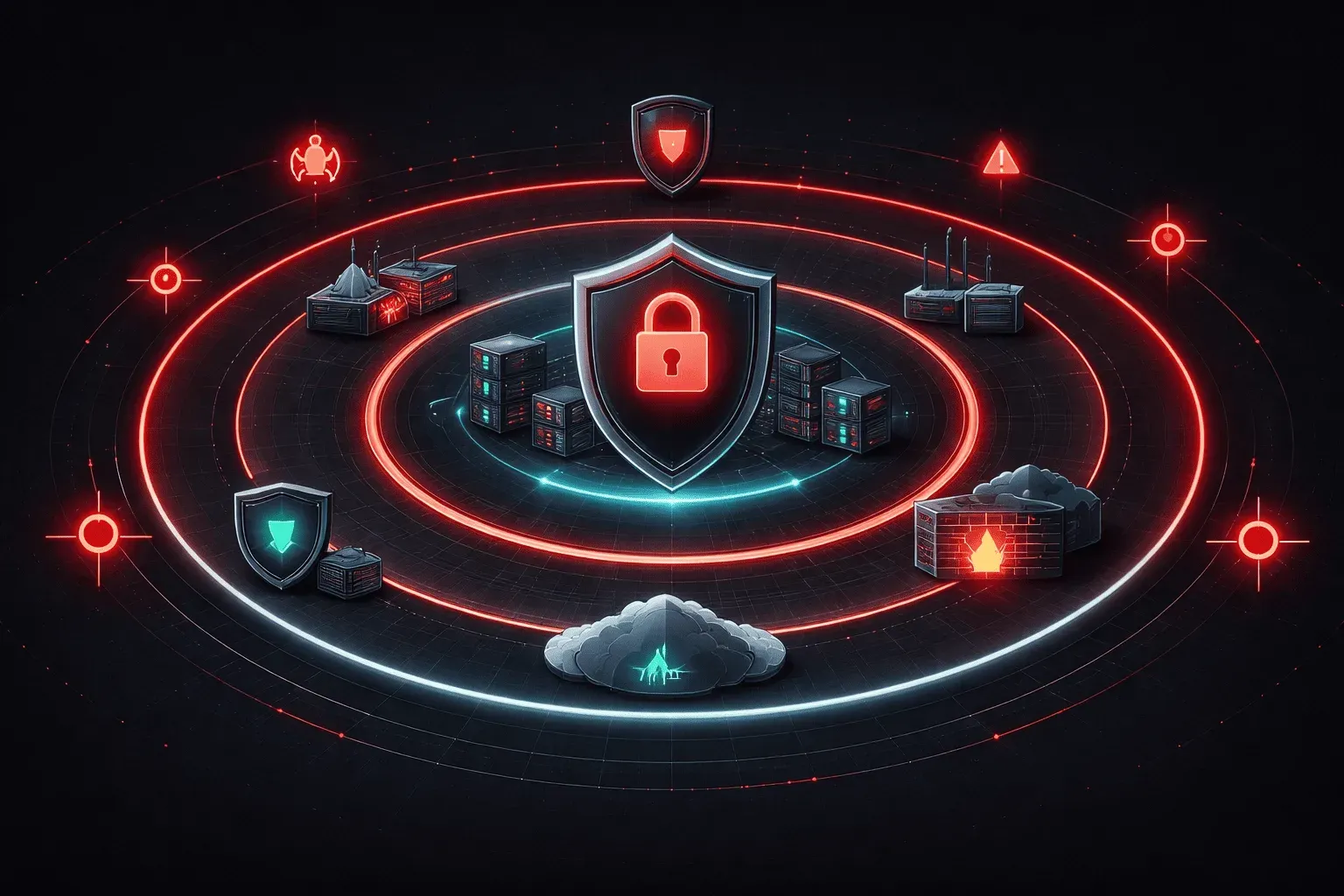
When you're starting your journey in cybersecurity, understanding the core security principles enterprise organizations rely on is absolutely essential. These fundamental concepts form the backbone of every security strategy, from small businesses to Fortune 500 companies. Let's explore the key principles that keep enterprise infrastructure secure.
The CIA Triad: Your Security Foundation
The most fundamental concept in cybersecurity basics is the CIA Triad. No, not the intelligence agency, this stands for Confidentiality, Integrity, and Availability.
Confidentiality
Confidentiality ensures that sensitive information is only accessible to authorized individuals. In enterprise environments, this means protecting customer data, financial records, and proprietary information from unauthorized access. Common confidentiality controls include:
- Encryption for data at rest and in transit
- Access controls and user permissions
- Network segmentation to isolate sensitive systems
- Multi-factor authentication (MFA)
Integrity
Integrity guarantees that data remains accurate and unaltered during storage and transmission. When a hacker modifies financial records or injects malicious code into software updates, they're attacking integrity. Protection methods include:
- Digital signatures and certificates
- Hash functions to verify data hasn't changed
- Version control systems
- Input validation and sanitization
Availability
Availability ensures systems and data are accessible when legitimate users need them. DDoS attacks and ransomware directly target availability. Common availability controls include:
- Redundant systems and failover mechanisms
- Regular backups and disaster recovery plans
- Load balancing and distributed architectures
- Network monitoring and incident response
Defense in Depth Strategy
One of the most critical security fundamentals is understanding that no single security control is perfect. Defense in depth, also called layered security, creates multiple barriers that attackers must overcome.
Think of it like protecting a castle. You wouldn't rely on just the main gate; you'd want walls, moats, guard towers, and armed defenders at multiple checkpoints. In enterprise security, this translates to:
- Perimeter Security: Firewalls, intrusion detection systems, and secure network architecture
- Network Security: Network segmentation, VPNs, and network access control
- Endpoint Security: Antivirus, Endpoint Detection and Response (EDR), and device management
- Application Security: Secure coding practices, web application firewalls, and regular security testing
- Data Security: Encryption, Data Loss Prevention (DLP), and access controls
Least Privilege and Need-to-Know
The principle of least privilege states that users should only have the minimum access necessary to perform their job functions. This dramatically reduces the potential impact of compromised accounts or insider threats.
For example, a marketing employee doesn't need access to the financial database, and a junior developer shouldn't have administrative privileges on production servers. Implementing least privilege involves:
- Regular access reviews and audits
- Role-based access control (RBAC)
- Privileged access management (PAM) solutions
- Just-in-time access for temporary needs
Zero Trust Architecture
Traditional security models assumed everything inside the network perimeter was trustworthy. Zero Trust flips this assumption: never trust, always verify. Every user, device, and application must be authenticated and authorized before accessing resources, regardless of their location.
This approach is particularly important as organizations embrace remote work, cloud computing, and bring-your-own-device (BYOD) policies. Zero Trust implementation includes:
- Continuous identity verification
- Micro-segmentation of networks
- Real-time risk assessment
- Comprehensive logging and monitoring
Risk Management and Business Continuity
Effective enterprise security isn't just about preventing attacks; it's about understanding and managing risk. Organizations must identify their most critical assets, assess potential threats, and implement appropriate controls based on risk tolerance and business impact.
This includes developing robust incident response plans, business continuity procedures, and disaster recovery strategies to ensure the organization can continue operating even during security incidents.
What's Next
Now that you understand these foundational security principles, the next step is learning how to implement them through specific security controls and technologies. In our next post, we'll dive into access controls and authentication mechanisms, exploring how to put these principles into practice with real-world examples and configurations.
Security+ study resources
- CompTIA Security+ Study Guide — Full SY0-701 exam coverage including threats, vulnerabilities, architecture, and operations.