
Understanding the Waterfall Model in Software Development
The waterfall model is a linear, sequential software development methodology where each phase must be completed before moving to the next. While considered traditional, it remains relevant for certain network automation projects with well-defined requirements.

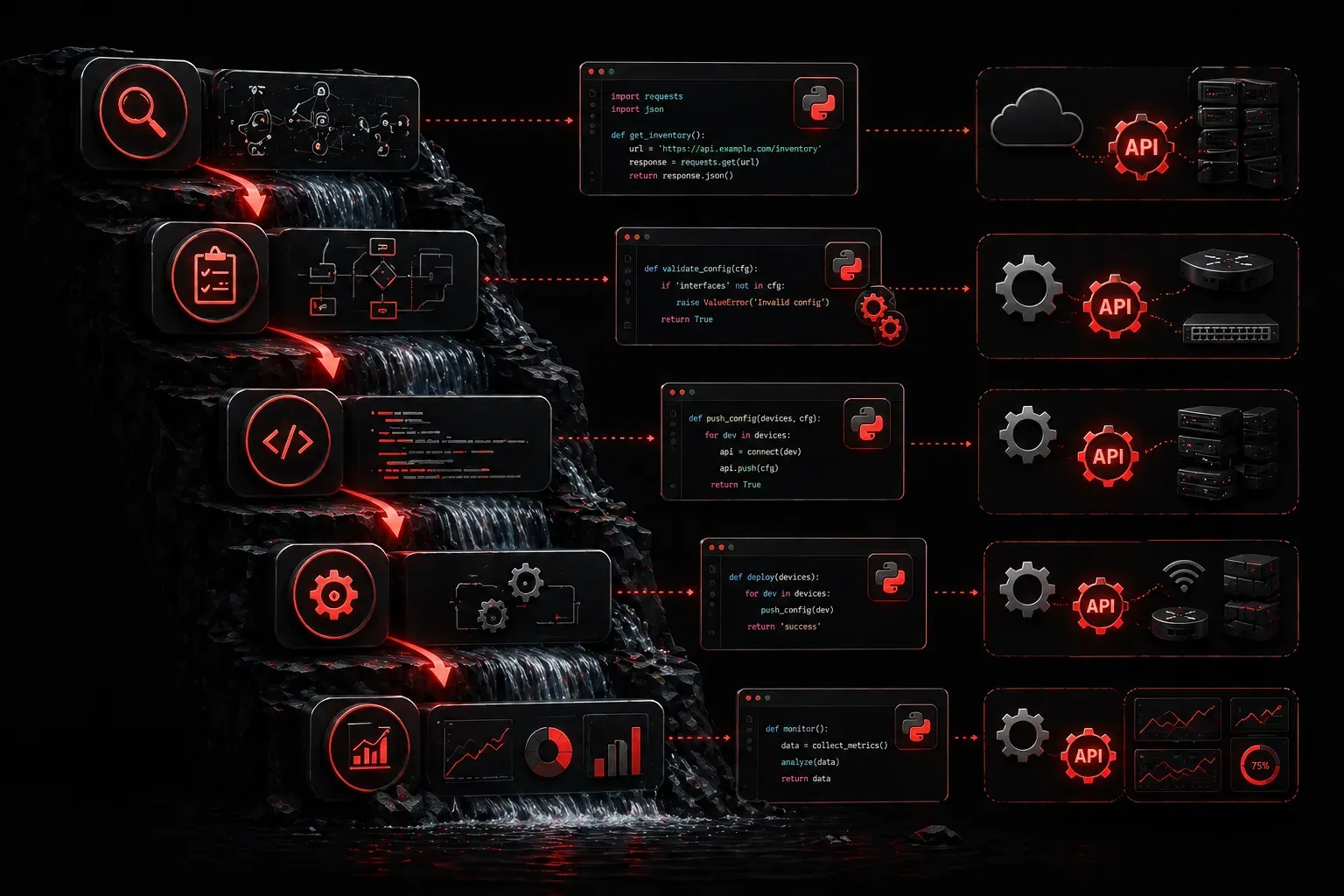
The waterfall model represents one of the most traditional and structured approaches to software development. As a network automation engineer preparing for your CCNA DevNet certification, understanding this sequential process helps you appreciate why modern development methodologies evolved and when waterfall principles might be adapted for certain network automation contexts.
What is the Waterfall Model?
The waterfall model is a linear, sequential software development methodology where each phase must be completed before moving to the next. Picture a waterfall flowing downward. Once water goes over the edge, it can't flow back up. Similarly, in traditional methods like waterfall, you typically don't return to previous phases once they're complete.
This approach contrasts sharply with modern agile methodologies. While network automation projects often benefit from iterative approaches due to their dynamic nature, understanding waterfall principles can inform your planning and documentation practices.
The Six Waterfall Stages
The waterfall stages follow a strict sequence, each building upon the previous phase's deliverables:
1. Requirements Analysis
Teams gather and document all project requirements upfront. For network automation projects, this might involve identifying which devices need configuration, what protocols to implement, and defining success criteria. However, network requirements often evolve as infrastructure changes.
2. System Design
Architects create detailed system specifications based on requirements. This includes network topology diagrams, API integrations, and defining how your Python scripts will interact with network devices. In network automation, designs must account for frequent configuration updates.
3. Implementation (Coding)
Developers write the actual code. In network automation, this means creating Ansible playbooks, Python scripts, or REST API calls to manage network infrastructure.
# Example: Simple network device configuration script
import requests

def configure_interface(device_ip, interface_config):
    url = f"https://{device_ip}/restconf/data/interfaces"
    response = requests.post(url, json=interface_config)
    return response.status_code == 200
4. Testing
Quality assurance teams verify that the software meets requirements through systematic testing. Network automation scripts undergo unit testing, integration testing with actual devices, and validation against network policies.
5. Deployment
The completed solution goes into production. For network automation, this means deploying scripts to production networks and integrating with existing management systems.
6. Maintenance
Ongoing support, bug fixes, and minor enhancements occur in this final phase.
Adapting Waterfall Principles for Network Automation
Pure waterfall methodology rarely suits network automation due to the dynamic nature of network environments. However, waterfall principles can be valuable in specific contexts:
- Regulatory compliance projects where requirements are fixed and documentation is critical
- Large-scale network migrations with well-understood scope, though these often require hybrid approaches
- Integration with legacy systems where extensive planning reduces risk
- Infrastructure standardization projects with clearly defined end states
Challenges in Network Automation Contexts
The waterfall model's rigid structure creates significant challenges in network automation:
- Network configuration changes: Networks require frequent updates that don't align with sequential phases
- Limited flexibility: Network requirements often change as business needs evolve
- Late feedback: Network issues aren't discovered until the testing phase, potentially requiring major rework
- Dynamic environments: Modern networks are software-defined and constantly evolving
- Integration complexity: Network automation involves multiple systems with interdependencies
Hybrid Approaches: Combining Waterfall with Agile
Many successful network automation projects combine waterfall planning with agile implementation:
- Waterfall for architecture: Use structured planning for network design and infrastructure decisions
- Agile for automation: Implement scripts and configurations using iterative sprints
- Staged deployments: Plan major phases using waterfall principles, execute using agile methods
- Documentation-driven development: Maintain the waterfall's emphasis on documentation while allowing iterative changes
For example, you might use a waterfall methodology to plan the overall architecture of a network segmentation project while implementing individual automation scripts in agile sprints that enable rapid testing and refinement.
Key Distinctions: Software Development vs. Network Automation
Understanding waterfall helps you appreciate why pure software development methodologies often require adaptation for network automation:
- Infrastructure dependency: Network automation operates on physical and virtual infrastructure that constrains development approaches
- Real-time requirements: Network changes often need immediate implementation and testing
- Rollback considerations: Network changes require careful rollback strategies that influence development methodology choice
- Continuous operation: Networks must remain operational during automation implementation
What's Next
Now that you understand the structured approach of the waterfall model and its limitations in network automation contexts, you're ready to explore agile methodologies. Our next post will dive into Scrum and how its iterative approach better accommodates the changing requirements and dynamic nature of network automation projects.