
What is SIEM and Why is it Important?
SIEM (Security Information and Event Management) is a platform that collects, correlates, and analyzes log data from across an organization's environment to detect security threats in real time. This post explains what SIEM does, how it works, and why it is a foundational tool in cybersecurity oper

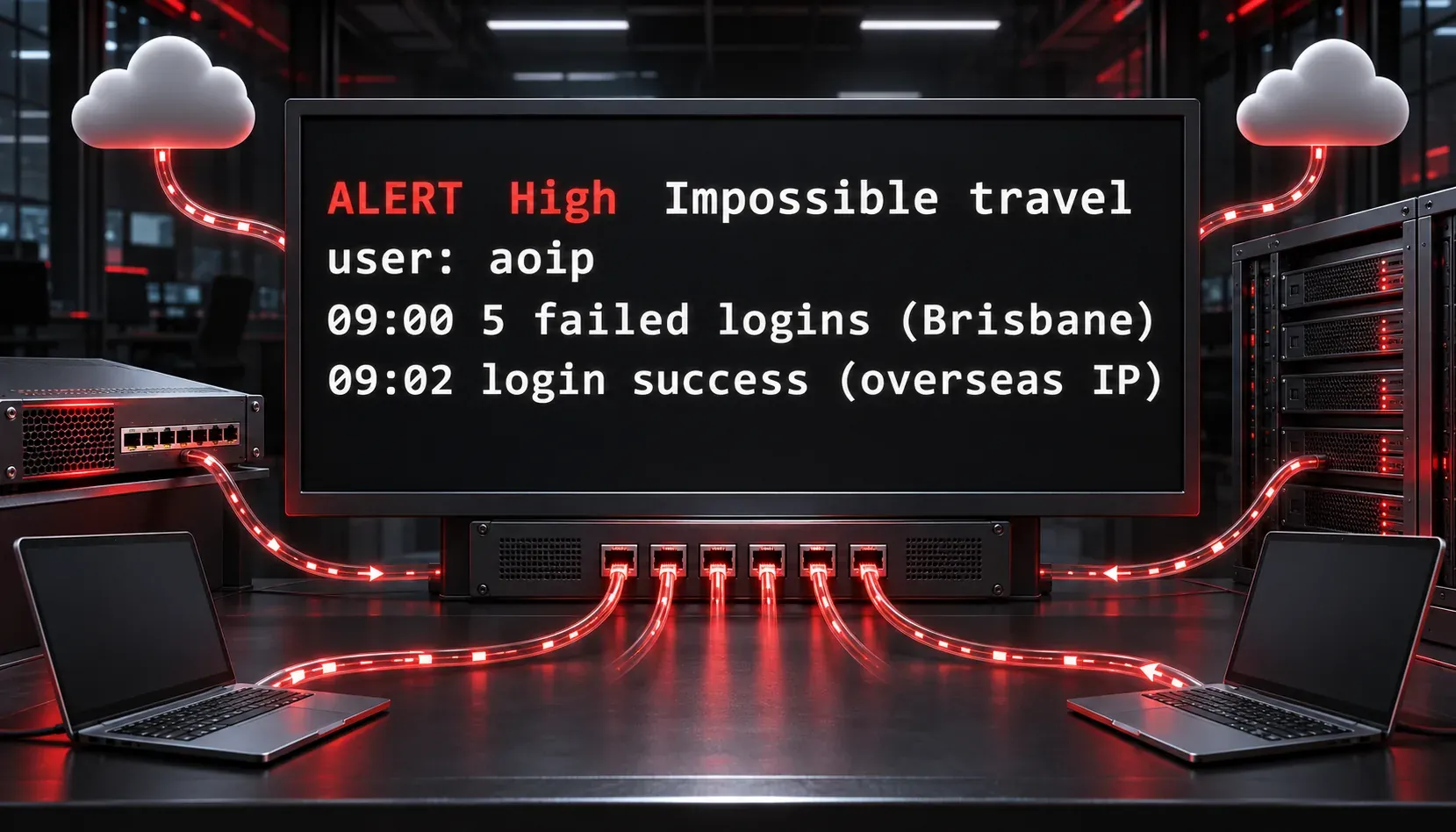
A SIEM (Security Information and Event Management) system collects logs from firewalls, servers, endpoints and cloud services, normalises them into one format, and correlates events across sources in real time. When a pattern matches a rule, such as repeated failed logins followed by a login from another country, it raises an alert for the security team.
If you have ever wondered how large organizations keep track of thousands of security events happening every second across their networks, the answer often comes down to one technology: SIEM. Understanding what SIEM is and how it fits into cybersecurity operations is a key concept covered in the CCST Cybersecurity exam, and it is also one of the most practical skills you can develop as you start your career in security.
What is SIEM?
SIEM stands for Security Information and Event Management. It is a system that collects, aggregates, and analyzes log data from across an organization's IT environment in real time. The name itself tells you a lot: it handles both security information (stored log data and historical context) and security event management (real-time monitoring and alerting).
Think of it like a central command center. Instead of a security analyst checking dozens of individual systems one by one, the SIEM pulls all of that data into a single platform, correlates it, and surfaces meaningful alerts when something suspicious is detected.
What Does a SIEM Actually Do?
A SIEM performs several key functions in cybersecurity operations:
- Log collection: It ingests log data from firewalls, servers, endpoints, applications, network devices, and cloud services.
- Normalization: Logs from different vendors come in different formats. The SIEM standardizes them so they can be compared and analyzed consistently.
- Correlation: This is where the magic happens. The SIEM applies rules to look for patterns across multiple log sources. For example, a failed login followed by a successful login followed by a large data transfer might trigger an alert even if each event alone looks harmless.
- Alerting: When a correlation rule is triggered, the SIEM generates an alert for the security team to investigate.
- Dashboards and reporting: SIEM tools provide visual dashboards and compliance reports, which are useful for both daily operations and regulatory requirements.
A Simple Example of SIEM in Action
Imagine a user account named jsmith attempts to log in from New York at 9:00 AM and fails five times. At 9:02 AM, that same account successfully logs in from an IP address in another country. Without a SIEM, those two events might sit in separate log files on separate systems and go unnoticed. With a SIEM, a correlation rule would match both events, recognize the impossible travel pattern, and immediately generate a high-priority alert.
This kind of detection is what makes security monitoring effective at scale.
Common SIEM Tools You Should Know
Several SIEM platforms are widely used in the industry. As you study for CCST Cybersecurity, it helps to be familiar with their names:
- Splunk: One of the most widely deployed SIEM platforms, known for its powerful search and query language.
- IBM QRadar: A popular enterprise SIEM with strong threat intelligence integration.
- Microsoft Sentinel: A cloud-native SIEM built on Microsoft Azure, increasingly common in modern environments.
- Elastic SIEM: An open-source-friendly option built on the Elastic Stack.
For the CCST exam, you do not need to be an expert in any specific SIEM platform. You need to understand what a SIEM does and why it matters in security operations.
Why SIEM is Critical to Cybersecurity Operations
No security analyst can manually review millions of log entries per day. SIEM systems make security monitoring scalable and consistent. They provide the visibility that security teams need to detect threats early, respond faster, and meet compliance requirements such as PCI-DSS, HIPAA, and SOC 2.
SIEM is also the foundation on which more advanced capabilities are built. As your studies progress, you will see how SIEM connects directly to incident response workflows and automated response tools.
SIEM: common questions
What does SIEM stand for?
Security Information and Event Management. Security information is the stored log data and history; security event management is the real-time monitoring and alerting.
What is log correlation in a SIEM?
Applying rules that look for patterns across several log sources at once. Events that look harmless on their own, such as a failed login, a successful login and a large data transfer, can together trigger an alert.
Why does a SIEM normalise logs?
Log formats and field names vary between products. Normalisation maps each source's fields into one common schema, so the SIEM can compare and correlate events from different devices.
Do I need to know a specific SIEM product for the CCST Cybersecurity exam?
No. You need to understand what a SIEM does and why it matters in security operations, not how to operate a particular platform.
How is SOAR different from a SIEM?
A SIEM detects and alerts. SOAR (Security Orchestration, Automation and Response) takes those alerts and automates the response actions.
What's Next
Now that you understand what SIEM is and why it plays such a central role in cybersecurity operations, the next logical step is understanding SOAR: Security Orchestration, Automation, and Response. SOAR takes the alerts generated by your SIEM and automates response actions, reducing the manual workload on your security team. We will cover that in the next post in this series.