
Building Accountability Frameworks for AI Systems
Learn how to build comprehensive AI accountability frameworks with clear governance structures, documentation standards, and monitoring systems. This guide covers implementation roadmaps and effectiveness metrics for responsible AI deployment.

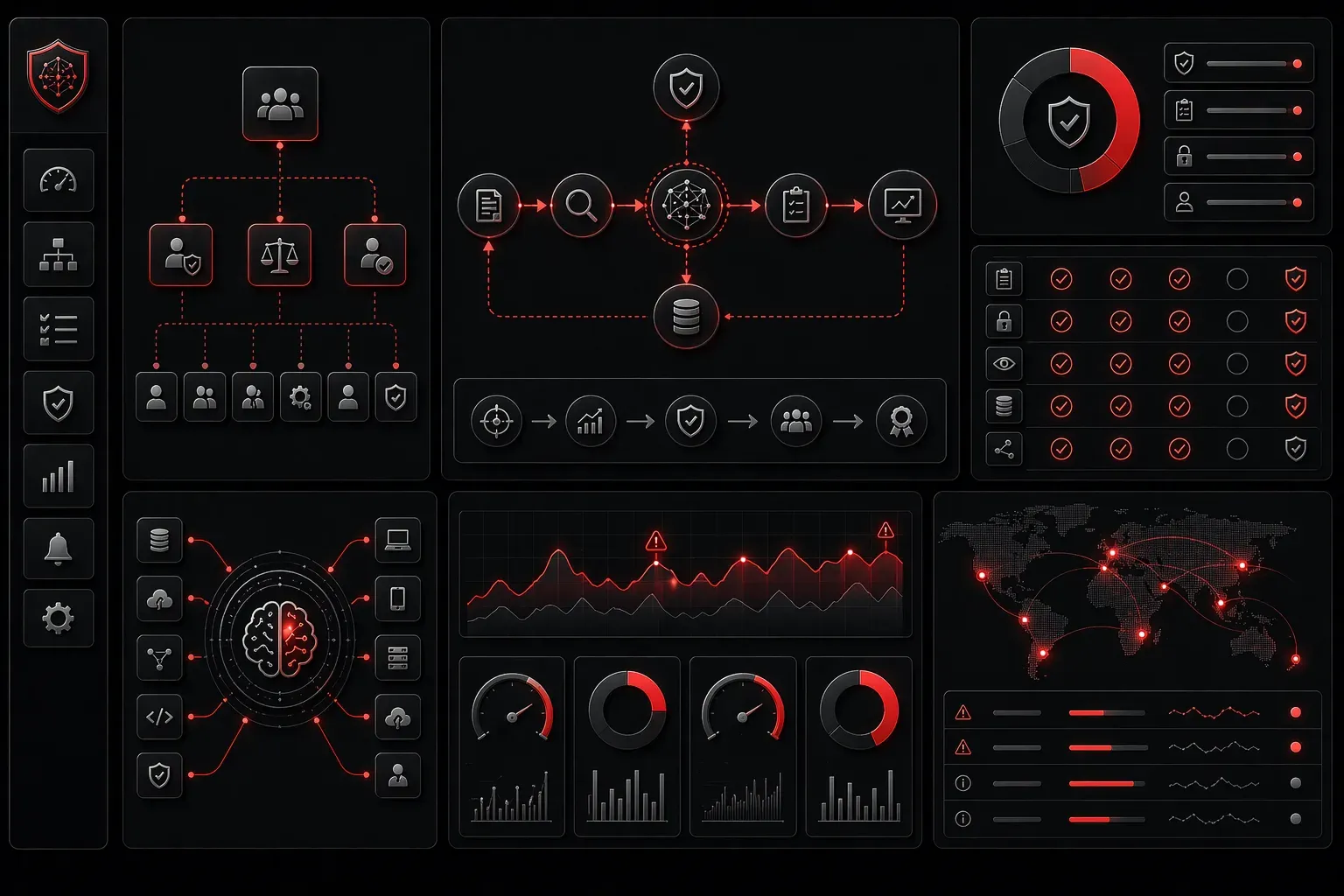
When deploying AI systems in production environments, establishing clear accountability frameworks isn't just good practice; it's becoming a regulatory requirement. Whether you're implementing chatbots, automated decision systems, or predictive analytics, you need structured approaches to ensure your AI operates ethically and remains auditable.
An AI accountability framework is a systematic approach that defines roles, responsibilities, and processes for monitoring AI system behavior throughout its lifecycle. Think of it as your organization's rulebook for responsible AI deployment.
Core Components of AI Accountability Frameworks
Every effective accountability framework needs four foundational elements that work together to create comprehensive oversight.
Governance Structure
Start by establishing clear roles and responsibilities. Your framework should define:
- AI Ethics Committee: Cross-functional team including technical, legal, and business stakeholders
- Data Stewards: Individuals responsible for data quality and bias monitoring
- Model Owners: Technical leads accountable for specific AI systems
- Compliance Officers: Personnel ensuring regulatory adherence
Document these roles in a responsibility matrix that clearly states who approves, implements, and monitors each aspect of your AI systems.
Documentation Standards
Comprehensive documentation forms the backbone of any accountability framework. Create standardized templates for:
AI Model Card Template:
- Model Purpose and Use Cases
- Training Data Sources and Characteristics
- Performance Metrics and Limitations
- Bias Assessment Results
- Monitoring and Maintenance Schedule
- Approval and Review History
This documentation serves as both internal reference and external audit trail, demonstrating your commitment to responsible AI practices.
Monitoring and Alerting Systems
Implement continuous monitoring to catch issues before they impact users. Your monitoring framework should track:
- Model Performance: Accuracy drift, prediction confidence levels
- Bias Indicators: Disparate impact across demographic groups
- Data Quality: Input distribution changes, missing values, outliers
- Usage Patterns: Query volume, response times, error rates
Set up automated alerts using tools like Evidently AI or Whylabs to notify stakeholders when metrics exceed predefined thresholds.
Implementation Roadmap
Building accountability frameworks requires a structured approach. Follow this step-by-step process to establish your framework effectively.
Phase 1: Assessment and Planning
Begin by auditing your current AI systems and identifying compliance requirements. Create an inventory that includes:
System Name: Customer Service Chatbot
Risk Level: Medium
Regulatory Requirements: GDPR, CCPA
Current Documentation: Incomplete
Monitoring Status: Manual only
This assessment reveals gaps and helps prioritize your framework implementation efforts.
Phase 2: Framework Design
Design your accountability framework based on your assessment findings. Consider existing standards like ISO/IEC 23053 for AI risk management or NIST's AI Risk Management Framework as starting points.
Your framework should address:
- Risk assessment procedures
- Approval workflows for AI deployments
- Regular review and audit schedules
- Incident response procedures
- Stakeholder communication protocols
Phase 3: Tool Integration
Select and implement tools that support your accountability objectives. Popular options include:
- MLflow: Model lifecycle management and experiment tracking
- Weights & Biases: Model monitoring and collaboration
- Arthur AI: Model monitoring and explainability
- Dataiku: End-to-end MLOps with governance features
Integrate these tools into your existing development workflows to minimize friction for your technical teams.
Measuring Framework Effectiveness
Establish key performance indicators (KPIs) to evaluate your accountability framework's success:
- Compliance Rate: Percentage of AI systems with complete documentation
- Issue Detection Time: Average time to identify model performance degradation
- Audit Readiness: Time required to compile audit materials
- Stakeholder Satisfaction: Internal surveys on framework usability
Review these metrics quarterly and adjust your framework based on the results and evolving regulatory landscape.
What's Next
With your accountability framework established, the next critical step is implementing robust AI security measures. Our upcoming post will cover security frameworks for AI systems, including threat modeling, secure model deployment, and protecting against adversarial attacks.