
Advantages of Using MVC in Network Automation
Learn how the Model-View-Controller (MVC) design pattern improves network automation code organization, maintainability, and team collaboration. Discover practical benefits with real examples.

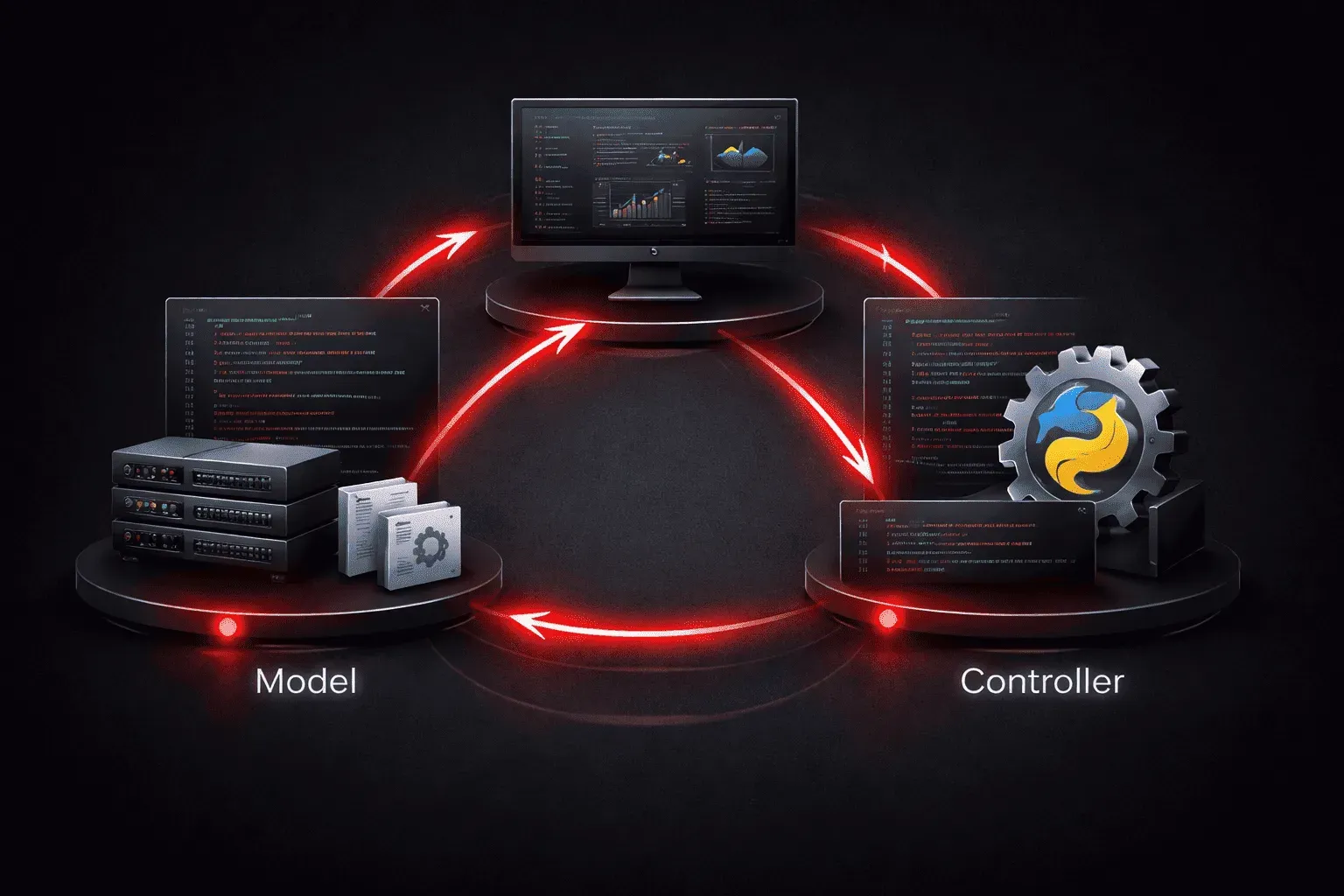
When you start building network automation scripts, you might begin with simple linear code that works perfectly for basic tasks. But as your automation projects grow more complex, you'll quickly discover that managing sprawling scripts becomes a nightmare. This is where the Model-View-Controller (MVC) design pattern becomes invaluable for network automation.
MVC is an architectural pattern that separates your application into three interconnected components, each with distinct responsibilities. Let's explore how this pattern transforms network automation development and why it's worth adopting from the start.
Understanding MVC in Network Automation Context
In network automation, MVC components map naturally to common tasks:
- Model: Handles network device data, configurations, and business logic
- View: Manages output formatting, reports, and user interfaces
- Controller: Orchestrates interactions between models and views, handling user input and API calls
Here's a simple example of how MVC might structure a network device configuration script:
# Model - handles device data and configuration logic
class NetworkDevice:
    def __init__(self, hostname, device_type):
        self.hostname = hostname
        self.device_type = device_type
        self.config = []

    def generate_vlan_config(self, vlan_id, vlan_name):
        config_lines = [
            f"vlan {vlan_id}",
            f" name {vlan_name}",
            " exit"
        ]
        self.config.extend(config_lines)
        return config_lines

# View - handles output formatting
class ConfigView:
    @staticmethod
    def display_config(device, config_lines):
        print(f"Configuration for {device.hostname}:")
        for line in config_lines:
            print(f"  {line}")

# Controller - orchestrates the process
class ConfigController:
    def __init__(self, device, view):
        self.device = device
        self.view = view

    def create_vlan(self, vlan_id, vlan_name):
        config = self.device.generate_vlan_config(vlan_id, vlan_name)
        self.view.display_config(self.device, config)
Key Benefits of MVC in Network Automation
Improved Code Organization
MVC forces you to think about separation of concerns from the beginning. Instead of mixing device connection logic, configuration generation, and output formatting in one massive function, each component has a clear purpose. This makes your codebase much easier to navigate, especially when you return to it months later.
Enhanced Maintainability
When network requirements change (and they always do), MVC makes updates straightforward. Need to support a new device type? Modify the model. Want to change how results are displayed? Update the view. Need to add API endpoints? Extend the controller. Changes in one component rarely require modifications in others.
Simplified Testing
Testing becomes significantly easier with MVC. You can unit test each component independently:
# Test the model logic without worrying about output formatting
def test_vlan_config_generation():
    device = NetworkDevice("sw01", "catalyst")
    config = device.generate_vlan_config(100, "production")
    assert "vlan 100" in config
    assert "name production" in config
Reusability Across Projects
Well-designed models and views can be reused across different automation projects. A device configuration model developed for one project can easily be imported into another, saving development time and ensuring consistency.
Team Collaboration
In team environments, MVC allows developers to work on different components simultaneously without stepping on each other's code. One team member can focus on device interaction models while another works on reporting views.
Real-World Application
Consider a network monitoring automation tool. Without MVC, you might have one script that connects to devices, pulls interface statistics, calculates utilization, generates alerts, and formats reports all in one place. With MVC:
- The model handles device connections and data collection
- The view creates different report formats (CLI output, HTML reports, JSON for APIs)
- The controller determines which devices to check, when to generate alerts, and which report format to use
This structure makes it trivial to add new monitoring metrics, support additional output formats, or integrate with different alerting systems.
Getting Started
Start small when implementing MVC in your network automation projects. Even simple scripts benefit from basic separation of data handling, business logic, and presentation. As your comfort with the pattern grows, you'll naturally develop more sophisticated implementations.
What's Next: Now that you understand the benefits of MVC in network automation, the next step is learning how to implement MVC patterns in Python specifically for network automation tasks, including practical examples with popular libraries like Netmiko and NAPALM.