
What is Resilience in Security Architecture?
Resilience in security architecture focuses on maintaining operations during and after security incidents rather than just preventing them. It combines redundancy, recovery capabilities, adaptation, and graceful degradation to ensure systems can bounce back from attacks and failures.

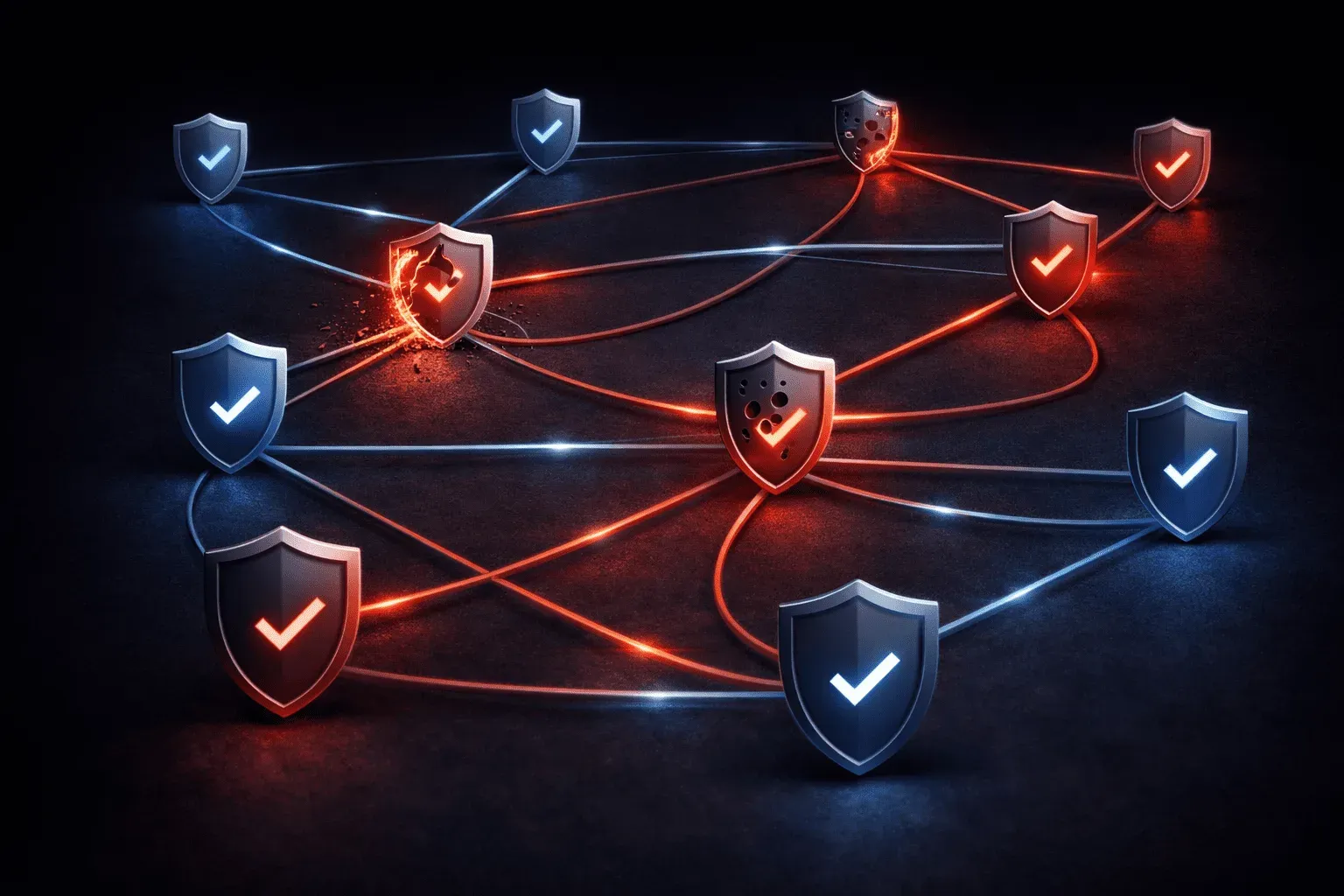
Resilience in security architecture is your system's ability to bounce back from attacks, failures, and unexpected disruptions while maintaining essential operations. Think of it as building a fortress that not only withstands attacks but can quickly repair itself and continue functioning even when parts of it are compromised.
Unlike traditional security that focuses primarily on prevention, resilience assumes that breaches and failures will happen. The goal shifts from "how do we keep everything out?" to "how do we keep operating when something gets through?"
Core Components of Security Resilience
Security resilience operates on four fundamental principles that work together to create robust system protection:
Redundancy
Build multiple layers and backup systems so that if one component fails, others can take over. This might include multiple firewalls, backup authentication systems, or geographically distributed data centers. When your primary web server goes down, a backup server automatically takes its place.
Recovery
Develop processes to quickly restore normal operations after an incident. This includes having tested backup procedures, incident response plans, and automated recovery systems. The faster you can get back online, the less impact an attack has on your business.
Adaptation
Learn from each incident and adjust your defenses accordingly. If attackers find a new way to exploit your network, your security systems should evolve to detect and prevent similar attacks in the future. Machine learning-based security tools excel at this adaptive behavior.
Graceful Degradation
When under attack or experiencing failures, systems should maintain critical functions even if some features become unavailable. For example, an e-commerce site might disable the recommendation engine during a DDoS attack but keep the shopping cart and checkout process running.
Real-World Examples of Resilient Design
Consider how major cloud providers implement resilience. Amazon Web Services uses availability zones - if one data center experiences problems, traffic automatically routes to healthy zones. Netflix takes this further with their chaos engineering approach, deliberately breaking parts of their system to test resilience and identify weak points before attackers do.
Why Resilience Matters More Than Ever
Today's threat landscape makes resilience essential for any organization. Cyber attacks are becoming more sophisticated, and even well-defended systems face breaches. The 2021 Colonial Pipeline ransomware attack demonstrated how disruptions can cascade beyond IT systems into real-world operations.
Resilient security architecture helps organizations:
- Minimize downtime by maintaining operations during incidents
- Reduce recovery costs through automated response and faster restoration
- Maintain customer trust by demonstrating reliability under pressure
- Meet compliance requirements that increasingly focus on operational resilience
Building Resilience into Your Security Strategy
Start by identifying your most critical systems and processes. What would happen if each component failed? Map out dependencies and create redundant paths for essential functions. Test your backup systems regularly - a backup that hasn't been tested is just an expensive hope.
Remember that resilience isn't just about technology. Your incident response team needs training, your communication plans need testing, and your recovery procedures need regular updates. The most resilient organizations combine robust technical architecture with well-prepared human processes.
What's Next
Understanding resilience gives you the foundation for building robust security architectures, but implementation requires specific techniques and tools. Next, we'll explore how to conduct risk assessments that identify where resilience measures provide the most value for your specific environment.
Tools and resources for this topic
- CompTIA Security+ Study Guide — Full SY0-701 exam coverage including threats, vulnerabilities, and mitigation.