
How AI Transforms Code Generation: Tools and Techniques
This post explores AI code generation tools like GitHub Copilot, ChatGPT, and CodeWhisperer, explaining how they work and providing practical techniques for integrating automated coding into IT workflows. It covers prompt engineering, iterative refinement, and best practices for AI-assisted develop

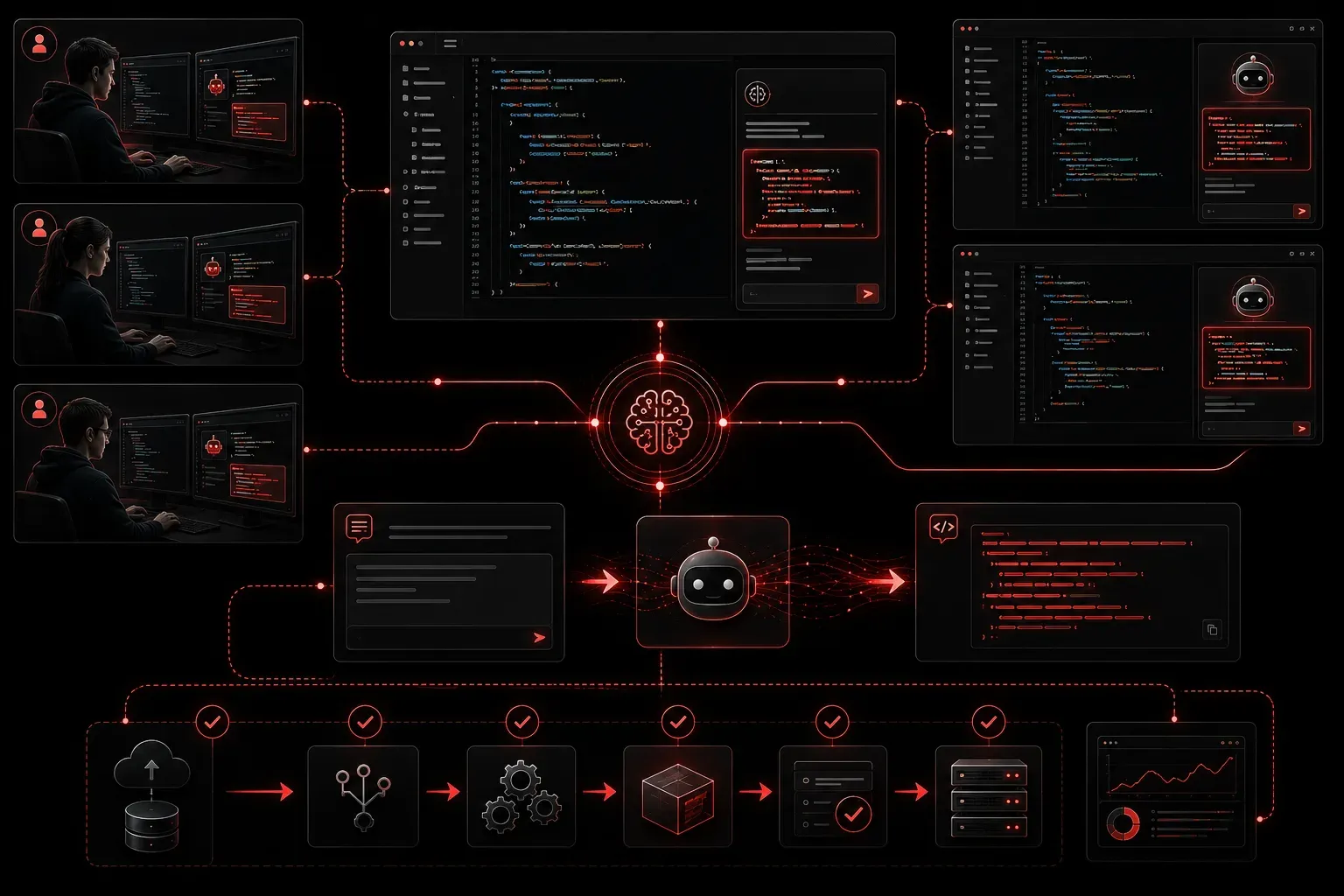
The landscape of software development is undergoing a fundamental shift as AI code-generation tools become increasingly sophisticated and accessible. For IT professionals, understanding these tools isn't just about keeping up with trends; it's about dramatically improving productivity and expanding what's possible in your daily workflows.
Understanding AI Code Generation
AI code generation uses machine learning models trained on millions of lines of code to understand programming patterns, syntax, and best practices. These AI programming tools can generate everything from simple functions to complex applications based on natural language descriptions or partial code snippets.
The technology works by analyzing your input, whether it's a comment describing what you want to accomplish, a function signature, or even existing code, and predicting the most likely and useful code completion. Think of it as an incredibly smart autocomplete that understands programming logic, not just syntax.
Essential AI Code Generation Tools
GitHub Copilot
Perhaps the most well-known AI code generation tool, GitHub Copilot integrates directly into popular IDEs like Visual Studio Code. It excels at suggesting entire functions based on comments or partial implementations:
# Generate a function to validate email addresses
def validate_email(email):
    # Copilot will suggest regex-based validation logic
    import re
    pattern = r'^[a-zA-Z0-9._%+-]+@[a-zA-Z0-9.-]+\.[a-zA-Z]{2,}$'
    return re.match(pattern, email) is not None
OpenAI Codex and ChatGPT
These tools excel at generating code from natural language descriptions. You can describe complex requirements in plain English and receive working code solutions. They're particularly effective for creating scripts, API integrations, and data processing functions.
Amazon CodeWhisperer
Integrated into AWS development workflows, CodeWhisperer provides real-time code suggestions and can generate entire functions optimized for AWS services. It's particularly valuable for cloud infrastructure automation.
Practical Techniques for Effective AI Development
Prompt Engineering for Code
The key to successful automated coding lies in crafting effective prompts. Be specific about your requirements:
- Include the programming language and framework
- Specify input and output formats
- Mention error handling requirements
- Describe performance constraints
Instead of "create a function to process data," try: "Create a Python function that accepts a list of dictionaries representing user data, validates email addresses, and returns only records with valid emails, handling TypeError exceptions."
Iterative Refinement
AI-generated code rarely works perfectly on the first attempt. Use these tools as starting points and refine through iteration. Ask for modifications: "Add error logging to the previous function" or "Optimize this code for better performance."
Code Review and Testing
Always review AI-generated code carefully. These tools can produce functional code that may have security vulnerabilities, efficiency issues, or logical flaws. Implement proper testing practices and use AI tools to help generate test cases as well.
Integration Strategies for IT Teams
Start small by using AI development tools for routine tasks like generating configuration files, creating boilerplate code, or writing documentation. As your team becomes comfortable, expand into more complex applications such as API development or data analysis scripts.
Establish coding standards that work well with AI tools. Consistent commenting styles and clear function-naming conventions help AI tools better understand your codebaseand generate more contextually appropriate suggestions.
Best Practices and Considerations
Remember that AI code generation tools are assistants, not replacements for programming knowledge. Understanding the fundamentals of programming logic, data structures, and system design remains crucial for effectively using these tools and catching potential issues in generated code.
Consider licensing and intellectual property implications when using AI-generated code in production environments. Review your organization's policies regarding AI-generated content and ensure compliance with relevant regulations.
What's Next
Now that you understand the landscape of AI code-generation tools, our next post will dive deep into prompt-engineering techniques specifically designed for development tasks. We'll explore advanced prompting strategies that help you get better, more targeted code from AI tools, including context management and multi-step problem-solving approaches.