
Creating Summarization Workflows with AI
Learn to build efficient AI summarization workflows that systematically process and condense large volumes of information. Covers essential components, practical implementation steps, and optimization strategies for transforming lengthy content into actionable insights.

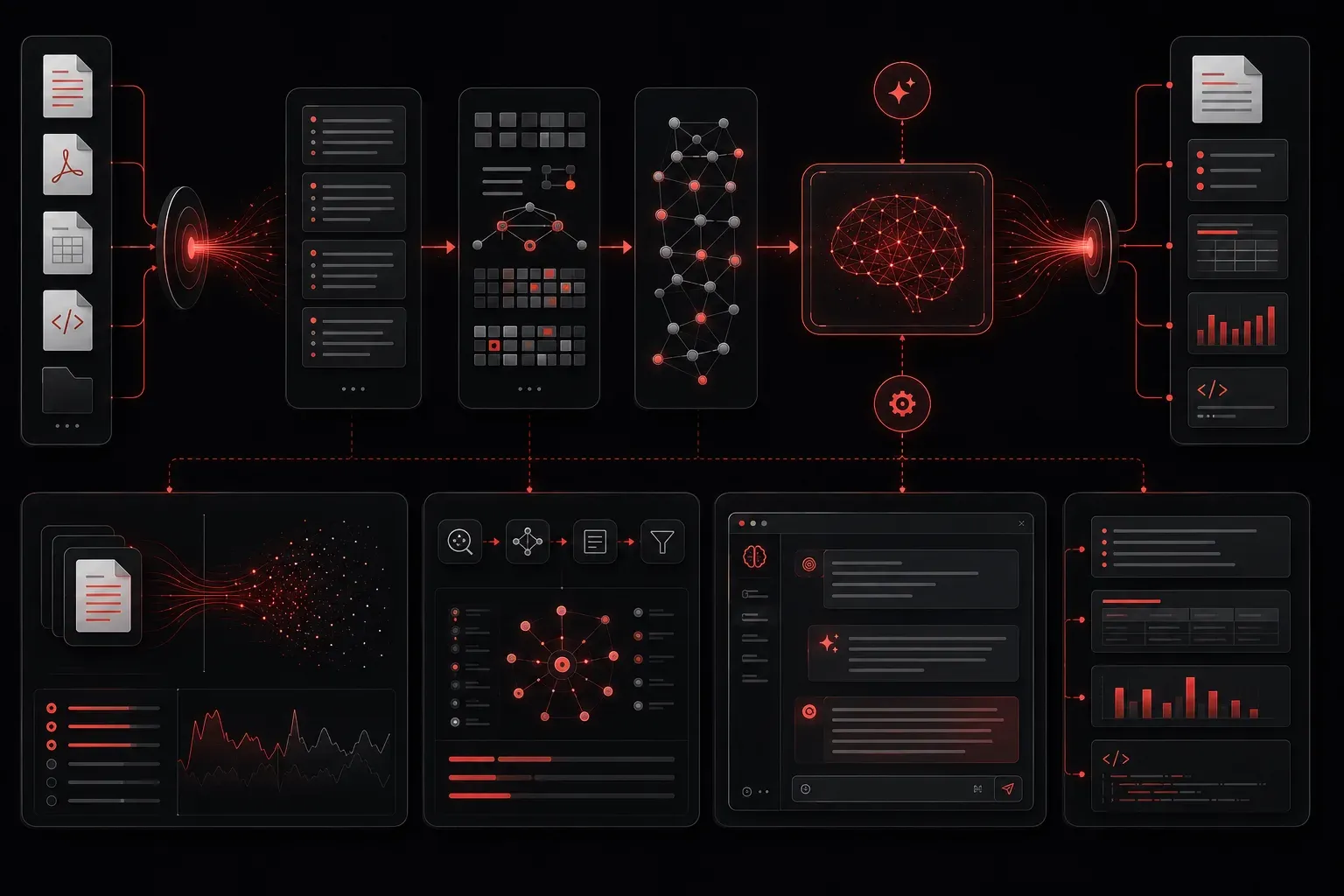
Understanding AI Summarization Workflows
In today's information-rich environment, professionals are drowning in documents, reports, emails, and research papers. AI summarization workflows offer a systematic approach to processing and condensing large volumes of information quickly and accurately. These workflows combine multiple AI tools and techniques to transform lengthy content into digestible insights.
Think of an AI summarization workflow as an assembly line for information processing. Raw content enters at one end, passes through various AI-powered stages, and emerges as structured, condensed insights that directly serve your decision-making needs.
Core Components of Effective Summarization Workflows
Every robust information summarization AI workflow contains four essential stages:
- Input Processing: Document ingestion and format standardization
- Content Analysis: Key information extraction and context understanding
- Summarization Engine: AI-powered condensation using appropriate techniques
- Output Formatting: Structured delivery of insights in actionable formats
The key to success lies in selecting the right AI tools for each stage and connecting them seamlessly. Modern Large Language Models (LLMs) like GPT-4, Claude 3, and Google's Gemini excel at understanding context and maintaining coherence across long documents, making them particularly effective for the analysis and summarization stages. However, specialized models like Facebook's BART or Google's Pegasus are often more efficient for pure summarization tasks with shorter processing times and lower computational costs.
Building Your First Summarization Workflow
Let's construct a practical AI workflows for summarization using readily available tools. This example processes research documents and generates executive summaries.
Stage 1: Document Ingestion
Start by establishing a consistent input method. Automation platforms like Zapier or Make.com excel at collecting and routing documents from email attachments, cloud storage, or web sources, but require integration with AI services through APIs for the actual processing. For manual processing, ensure your chosen AI platform accepts multiple file formats (PDF, DOCX, TXT).
Workflow Trigger: New document in designated folder
Action 1: Extract text content
Action 2: Validate document length and format
Action 3: Pass to summarization engine via API
Implementation Note: When using automation tools, you'll typically need to connect to AI services like OpenAI's API, Anthropic's Claude API, or Google's AI Platform for the actual text processing and summarization.
Stage 2: AI-Powered Analysis
Configure your LLM with specific prompts that guide the summarization process. Here's a proven prompt structure for GPT-4 or Claude:
You are an expert analyst. Please analyze this document and provide:
1. Main thesis or central argument
2. Three key supporting points
3. Any critical data or statistics
4. Actionable recommendations if present
5. A 150-word executive summary

Document: [CONTENT]
This structured approach ensures consistent output quality across different document types and maintains focus on actionable insights.
Stage 3: Output Standardization
Design templates that format AI outputs consistently. Whether you're using Claude 3, GPT-4, or specialized summarization APIs like Cohere Summarize, establish standard formats for different use cases:
- Executive Brief: 150-word summary with key metrics
- Technical Overview: Detailed analysis with methodology notes
- Action Items: Bulleted list of next steps and recommendations
Advanced Workflow Techniques
Data condensation with AI becomes more powerful when you implement these advanced strategies:
Multi-Pass Processing: Run documents through multiple AI models with different strengths. Use GPT-4 for comprehensive analysis and BART for concise factual extraction. This redundancy improves accuracy and catches nuances that single-pass systems might miss.
Context-Aware Summarization: Maintain context across related documents by feeding previous summaries into new analyses. This creates coherent insights across document series or ongoing projects.
Quality Validation: Implement automated checks that verify summary accuracy against source material. Simple keyword matching or more sophisticated semantic similarity scoring using models like Sentence-BERT can flag potential issues.
Common Implementation Challenges
Be aware of these potential limitations when implementing AI summarization workflows:
- Token Limits: Most LLMs have input length restrictions (e.g., GPT-4 has an 8K-32K token limit), requiring document chunking for longer texts
- Domain Specificity: General-purpose models may miss specialized terminology or context in technical documents
- Hallucination Risk: AI models can generate plausible-sounding but incorrect information
- Cost Management: API costs can escalate quickly with large document volumes or frequent processing
Measuring Workflow Effectiveness
Track these metrics to optimize your summarization workflows:
- Processing Time: Time from document input to final summary
- Accuracy Rate: Percentage of summaries that accurately capture key points
- User Satisfaction: Feedback on summary usefulness and clarity
- Cost per Summary: API costs divided by documents processed
- Coverage Score: How well the summary represents the original content's key themes
Regular monitoring helps identify bottlenecks and opportunities for improvement. Most users find that well-tuned workflows reduce information processing time by 70-80% while maintaining high accuracy, though initial setup and optimization typically require 2-4 weeks of testing.
What's Next
Once you've mastered basic summarization workflows, the next step is implementing advanced content analysis techniques. Our upcoming post will explore how to build AI systems that not only summarize but also identify patterns, trends, and anomalies across large document collections, taking your analytical capabilities to the next level.