
How to Choose the Right Cloud Deployment Model
Learn how to choose between public, private, and hybrid cloud deployment models by evaluating security requirements, budget constraints, and performance needs. Includes practical examples and a decision framework for organizations of all sizes.

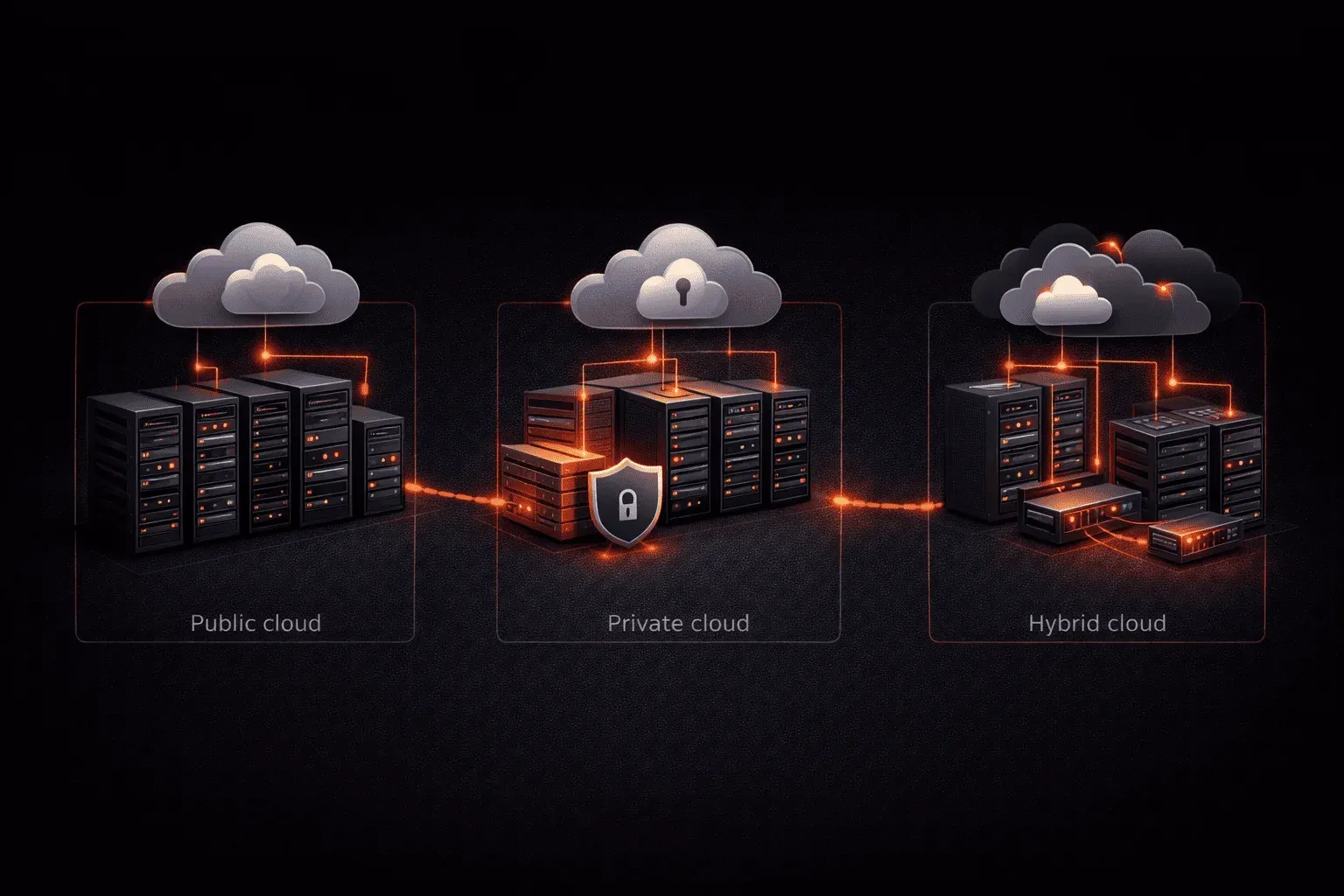
Choosing the right cloud deployment model can feel overwhelming with all the options available today. As organizations increasingly move their infrastructure to the cloud, understanding the differences between public cloud, private cloud, and hybrid cloud models becomes crucial for making informed decisions that align with your business needs, security requirements, and budget constraints.
Understanding the Three Core Cloud Deployment Models
Before diving into selection criteria, let's clarify what each model offers:
Public Cloud services are owned and operated by third-party providers like Amazon Web Services (AWS), Microsoft Azure, or Google Cloud Platform. Resources are shared among multiple customers, though your data remains isolated. Think of it like renting space in a shared office building.
Private Cloud infrastructure is dedicated exclusively to your organization. This can be hosted on-premises in your own data center or by a third-party provider. It's like owning your entire office building.
Hybrid Cloud combines both public and private clouds, allowing data and applications to move between them. This gives you the flexibility to keep sensitive workloads private while leveraging public cloud resources for less critical tasks.
Key Factors in Choosing Your Cloud Deployment Model
Security and Compliance Requirements
If your organization handles highly sensitive data like healthcare records (HIPAA), financial information (PCI DSS), or government data, a private cloud might be your best option. You maintain complete control over security measures and can implement custom compliance protocols.
For less sensitive workloads, public cloud providers offer robust security that often exceeds what smaller organizations can implement on their own. Major providers invest billions in security infrastructure and employ teams of security experts.
Budget and Resource Constraints
Public cloud typically offers the lowest upfront costs since you're sharing infrastructure expenses with other customers. You pay only for what you use, making it ideal for startups and small businesses.
Private cloud requires significant capital investment in hardware, software, and skilled personnel. However, for large organizations with predictable workloads, the long-term costs might be lower.
Hybrid cloud allows you to optimize costs by keeping baseline workloads on cost-effective private infrastructure while bursting to public cloud during peak demand periods.
Performance and Control Requirements
If you need guaranteed performance levels and complete control over your environment, private cloud delivers the highest level of customization. You can optimize hardware, network configurations, and software stacks specifically for your applications.
Public cloud offers excellent performance for most applications, with the added benefit of global presence and advanced services like machine learning and analytics platforms that would be expensive to build privately.
Practical Decision Framework
Start with these questions:
- What's your risk tolerance? High-risk industries often favor private or hybrid models
- How predictable are your workloads? Variable workloads benefit from public cloud scalability
- Do you have existing infrastructure? Hybrid models can extend current investments
- What's your technical expertise level? Public cloud reduces operational complexity
Real-World Examples
A healthcare provider might use a hybrid cloud approach: patient records stay in a private cloud for HIPAA compliance, while their public website and appointment scheduling system run on public cloud for cost efficiency and scalability.
A startup developing a mobile app would likely choose public cloud to minimize upfront costs and leverage services like push notifications, analytics, and global content delivery without building these capabilities from scratch.
A financial institution with strict regulatory requirements might opt for private cloud to maintain complete control over data processing and storage while meeting compliance mandates.
What's Next
Now that you understand how to choose between cloud deployment models, the next step is understanding the different service models available within your chosen deployment. We'll explore Infrastructure as a Service (IaaS), Platform as a Service (PaaS), and Software as a Service (SaaS) to help you determine which services best fit your application requirements.
Network+ study resources
- CompTIA Network+ Study Guide — Full N10-009 exam coverage across all five domains. Essential exam preparation.