
Comparing Different Network Process Models
This post compares major network process models including ITIL, PPDIOO, Agile/DevOps, and CompTIA's troubleshooting model. It helps beginners understand which frameworks are best suited for different organizational needs and how process effectiveness ties to the right model choice. Relevant to Comp

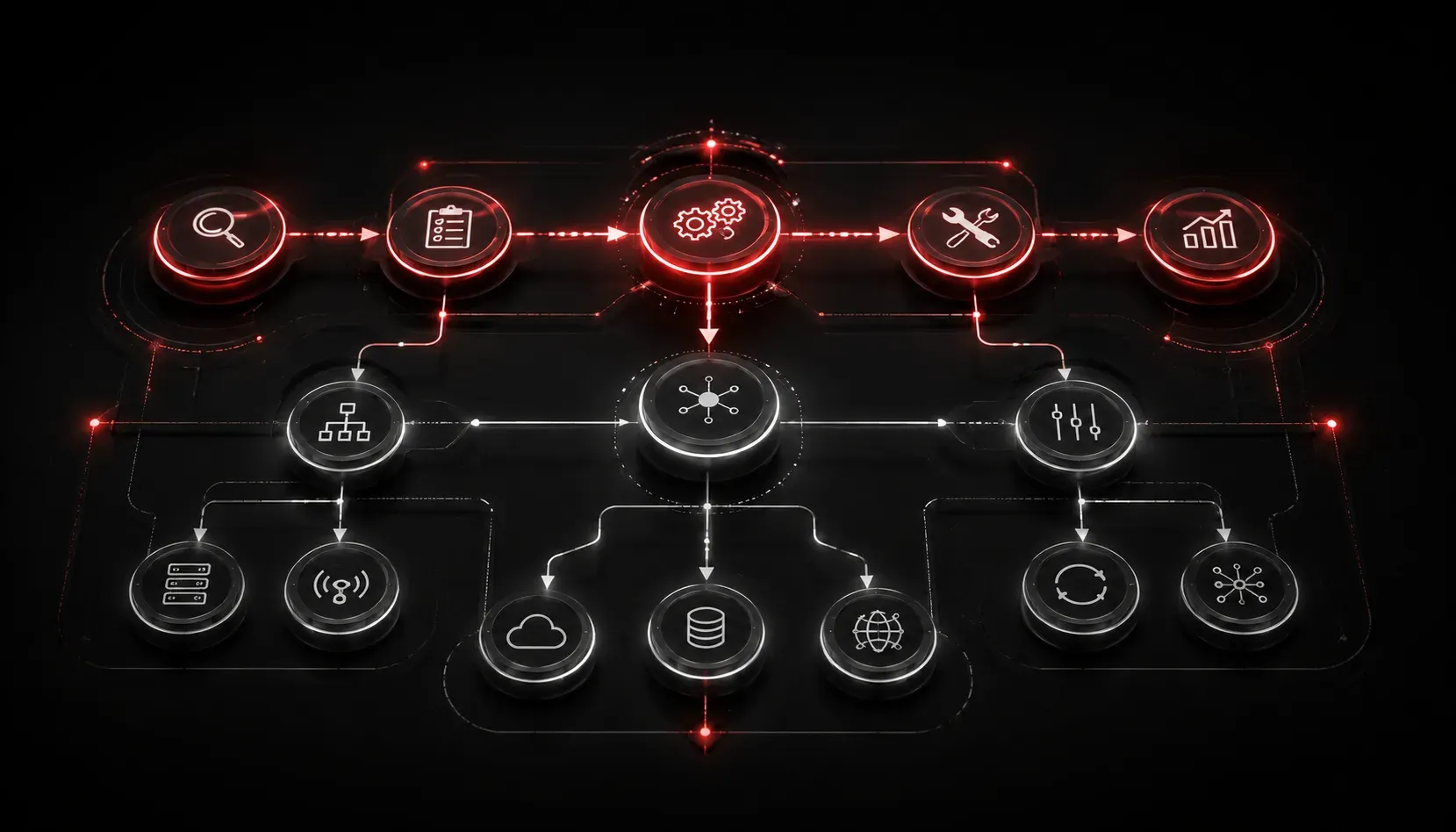
If you've spent any time studying for your Network+ exam or working in IT, you've probably heard terms like ITIL, DevOps, or agile thrown around in conversations about how teams manage network operations. These are all broader IT and software development frameworks that can be applied to network operations, providing structured approaches to planning, deploying, and maintaining infrastructure.
Understanding how these frameworks compare isn't just exam knowledge. Choosing the best-suited model for your organization's needs directly affects process effectiveness, team productivity, and how quickly you can recover from problems. Let's break down the major ones.
Why Process Models Matter
Without a defined process model, network teams tend to operate reactively, fixing things when they break, documenting after the fact (if at all), and repeating the same mistakes. A good framework gives your team a repeatable, scalable approach to managing change, incidents, and growth.
Think of a process model as the playbook your team follows. Different playbooks work better for different types of organizations.
The Major Frameworks Applied to Network Operations
ITIL (Information Technology Infrastructure Library)
ITIL is one of the most widely adopted frameworks in enterprise IT. It is a broad IT service management framework that organizes IT operations into a lifecycle: service strategy, service design, service transition, service operation, and continual service improvement. While it spans all of IT, its principles apply directly to network teams managing complex infrastructure.
ITIL shines in larger organizations where structured change management and service desk operations are critical. Its Change Advisory Board (CAB) process, for example, ensures that proposed changes are reviewed before they touch production systems.
Best suited for: Enterprise environments, regulated industries (finance, healthcare), organizations with dedicated IT service management teams.
Potential downside: Can feel heavy and slow for smaller teams. The documentation overhead is real.
Cisco Lifecycle Services (PPDIOO)
Cisco developed the PPDIOO model specifically for network planning and deployment. The acronym stands for Prepare, Plan, Design, Implement, Operate, and Optimize.
This model is highly practical for network engineers. It walks you through the entire lifecycle of a network solution, from understanding business requirements all the way through ongoing optimization after deployment.
Best suited for: Network-specific projects, Cisco-centric environments, organizations rolling out new infrastructure, or refreshing existing deployments.
Strength: It maps directly to what network engineers actually do, making it intuitive to apply in day-to-day work.
Agile and DevOps
Agile and DevOps originated in software development but have been increasingly adapted for network operations, especially as network automation and Infrastructure as Code (IaC) become mainstream.
Agile breaks work into short iterations called sprints, allowing teams to adapt quickly. In a network context, this might look like delivering automation scripts or configuration changes in two-week cycles rather than through lengthy waterfall-style projects. DevOps extends this by tearing down the wall between development and operations teams, emphasizing automation, continuous integration, and rapid deployment. Network teams apply DevOps principles through practices like automated configuration management using tools such as Ansible or Terraform, version-controlled network configs stored in Git, and CI/CD pipelines that validate and push network changes with minimal manual intervention.
Best suited for: Organizations embracing automation, cloud-native environments, smaller and more flexible teams where speed matters more than rigid documentation.
Potential downside: Without discipline, agile can become "do whatever feels right fast", bleshooting Model
For the Network+ exam specifically, you'll want to know CompTIA's seven-step troubleshooting model. It provides a systematic process for resolving network issues:
- Identify the problem
- Establish a theory of probable cause
- Test the theory
- Establish a plan of action
- Implement the solution or escalate
- Verify full system functionality
- Document findings and outcomes
This model operates at the individual technician level rather than at an organizational strategy level. It gives technicians a repeatable, logical approach to diagnosing problems without skipping steps or guessing randomly. In practice, it works alongside broader frameworks: an ITIL-aligned organization, for example, would use this model during the incident management phase, feeding documented findings back into the broader service management process.
Matching Models to Organizational Needs
Here's a quick reference for aligning process models with organizational needs:
- Large enterprise with strict compliance requirements - ITIL
- Network refresh or new infrastructure deployment - PPDIOO
- Automation-forward or cloud-heavy environment - DevOps/Agile
- Day-to-day troubleshooting, any environment - CompTIA's seven-step model
Real-world organizations often blend elements from multiple frameworks. A large enterprise might follow ITIL for change management while applying DevOps practices for automation pipelines. Process effectiveness comes from choosing what fits your team's size, culture, and goals, not from rigidly applying one framework everywhere.
What's Next
Now that you understand how different process models compare and when to apply them, the next logical step is diving deeper into change management, specifically how structured change control processes prevent outages and configuration errors in production environments. That's coming up next in our Network Operations series.
For deeper study on these concepts, check out the CompTIA Network+ Certification All-in-One Exam Guide by Mike Meyers, which covers operational procedures and process frameworks in excellent detail.
Tools and resources for this topic
- CompTIA Network+ Study Guide — Comprehensive N10-009 exam preparation covering all five domains.