
Defensive Prompting vs Traditional Prompting: Key Differences
Learn the key differences between defensive and traditional prompting methods, including when to use each approach and how defensive prompting provides better error prevention and consistency in AI applications.

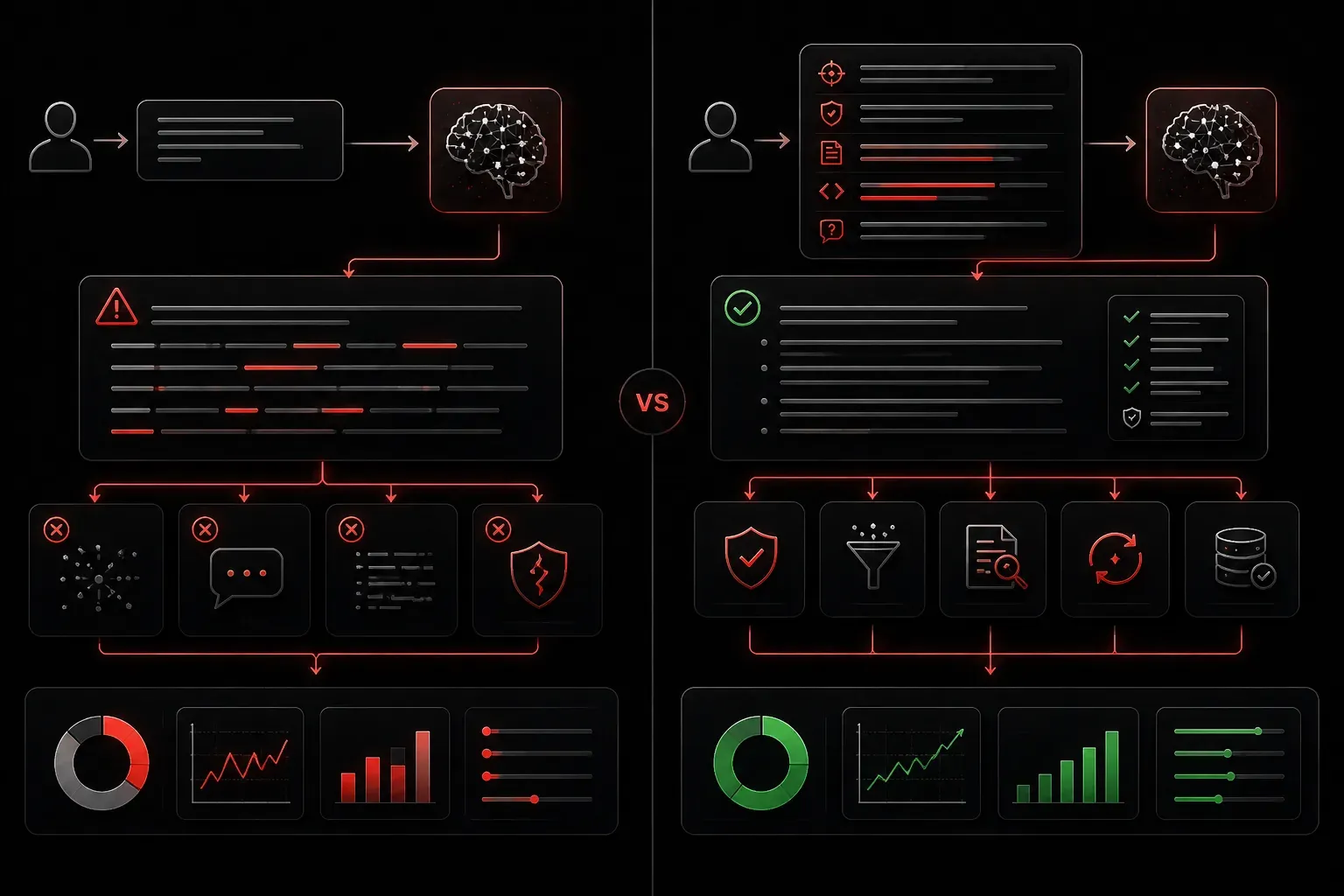
When working with AI systems, the way you craft your prompts can make the difference between getting reliable, accurate responses and encountering frustrating errors or unexpected outputs. Understanding defensive vs traditional prompting is crucial for anyone looking to build robust AI applications or simply get better results from AI tools.
What is Traditional Prompting?
Traditional prompting is the straightforward approach most people start with when using AI systems. You ask a question or give an instruction, expecting the AI to understand your intent and provide the desired response. This method assumes the AI will interpret your request correctly and handle edge cases gracefully.
Here's a typical traditional prompt:
Analyze this customer feedback and tell me if it's positive or negative:
"The product arrived late but the quality was amazing."
While this approach works well for simple, clear-cut scenarios, it can lead to inconsistent results when dealing with ambiguous inputs, edge cases, or complex requirements.
Understanding Defensive Prompting
Defensive prompting takes a more cautious, structured approach. It anticipates potential problems and builds safeguards directly into the prompt. This technique focuses on error prevention by explicitly defining expectations, handling edge cases, and providing clear guidelines for the AI to follow.
The same sentiment analysis task using defensive prompting might look like:
Analyze the following customer feedback for sentiment.

Rules:
1. Classify as "positive", "negative", or "mixed"
2. If the text contains both positive and negative elements, classify as "mixed"
3. If the input is empty or unclear, respond with "insufficient_data"
4. Provide a brief explanation for your classification

Customer feedback: "The product arrived late but the quality was amazing."

Response format:
Sentiment: [classification]
Explanation: [brief reasoning]
Key Differences Between the Approaches
Structure and Complexity
Traditional prompting tends to be concise and conversational, while defensive prompting is more structured and detailed. Traditional methods rely on the AI's training to fill in gaps, whereas defensive prompting explicitly states requirements and constraints.
Error Handling
One of the biggest differences lies in how each method handles unexpected inputs. Traditional prompting often fails silently or produces inconsistent results when faced with edge cases. Defensive prompting proactively addresses these scenarios by defining specific behaviors for unusual inputs.
Consistency and Reliability
Defensive prompting generally produces more consistent outputs across different scenarios. By providing clear guidelines and expected formats, it reduces the variability that can occur with traditional prompt methods.
When to Use Each Approach
Traditional Prompting Works Best For:
- Quick, one-off tasks where consistency isn't critical
- Brainstorming and creative applications
- Simple questions with clear contexts
- Exploratory conversations with AI assistants
Defensive Prompting is Essential For:
- Production applications requiring reliable outputs
- Processing user-generated content with unknown quality
- Automated workflows where errors could cascade
- Applications handling sensitive or critical information
Practical Implementation Tips
When implementing defensive prompting AI techniques, start by identifying potential failure points in your use case. Common areas to address include:
- Input validation: Define what constitutes valid input
- Output formatting: Specify exact response structures
- Edge case handling: Provide instructions for unusual scenarios
- Fallback behaviors: Define what to do when uncertain
Remember that defensive prompting requires more upfront effort but pays dividends in reliability and maintainability, especially in production environments.
What's Next
Now that you understand the fundamental differences between defensive and traditional prompting approaches, the next step is learning how to implement specific defensive prompting techniques. In our next post, we'll dive deep into practical defensive prompting strategies, including input validation, output formatting, and building robust error handling into your prompts.