
Understanding Ethical Considerations in AI Data Analysis
This post covers essential ethical principles for AI data analysis, including privacy controls, bias prevention, and responsible AI governance frameworks that IT professionals need to implement in their workflows.

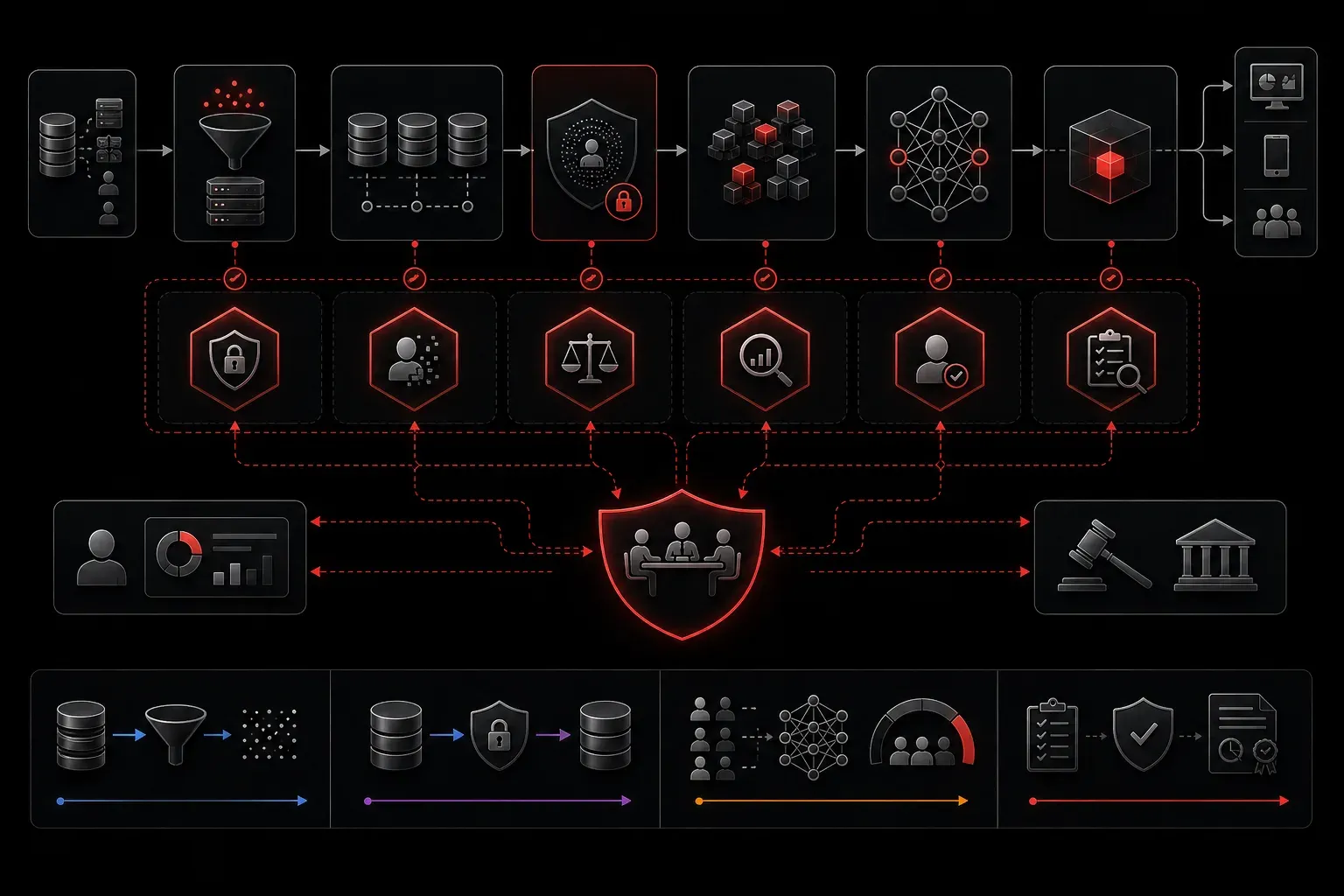
When implementing AI-driven data analysis in your organization, technical proficiency alone isn't enough. Today's IT professionals must understand and apply ethical principles to ensure their AI workflows are responsible, fair, and trustworthy. This foundation becomes critical as AI systems increasingly influence business decisions and customer experiences.
Core Ethical Principles in AI Data Analysis
Ethical AI data analysis begins with understanding five fundamental principles that should guide every AI implementation. Fairness ensures your AI systems don't discriminate against individuals or groups based on protected characteristics. When training models, this means actively checking for bias in your datasets and testing outputs across different demographic groups.
Transparency and explainability require that stakeholders can understand how your AI systems make decisions. Rather than using black-box models for critical decisions, consider techniques like LIME (Local Interpretable Model-agnostic Explanations) or SHAP (SHapley Additive exPlanations) to provide clear reasoning for AI outputs.
Privacy protection involves implementing technical controls to safeguard personal information throughout your AI pipeline. This includes data minimization (collecting only necessary data), anonymization techniques, and secure storage practices.
Implementing Privacy Controls in AI Workflows
Privacy controls must be built into every stage of your AI workflow. During data collection, implement role-based access controls using principles of least privilege. For example, configure your data pipeline so that only specific service accounts can access personally identifiable information (PII).
Consider using differential privacy techniques when working with sensitive datasets. This mathematical framework adds controlled noise to your data, allowing you to extract useful insights while protecting individual privacy. Tools like Google's differential privacy library or Microsoft's SmartNoise can help implement these controls.
# Example: Basic data anonymization check
import pandas as pd

def check_pii_columns(dataframe):
    potential_pii = ['email', 'phone', 'ssn', 'name', 'address']
    found_pii = [col for col in dataframe.columns
                 if any(pii in col.lower() for pii in potential_pii)]
    if found_pii:
        print(f"Warning: Potential PII columns found: {found_pii}")
    return found_pii
Preventing Data Exposure in AI Systems
Data exposure risks occur at multiple points in AI workflows. During model training, ensure your training data doesn't inadvertently leak into model outputs through memorization. Use techniques like k-anonymity or l-diversity to reduce the risk of individual identification in your datasets.
When deploying AI models, implement proper logging controls. Avoid logging sensitive inputs or outputs in plain text. Instead, log only metadata necessary for monitoring and debugging. Configure your AI services to automatically redact or mask sensitive information before it reaches log files.
For cloud-based AI services, enable encryption in transit and at rest. Most major cloud providers offer AI services with built-in privacy controls; leverage these rather than building custom solutions from scratch.
Building Responsible AI Governance
Establishing responsible AI practices requires creating clear governance frameworks within your organization. Develop an AI ethics review board that includes technical staff, legal representatives, and business stakeholders. This team should review AI projects for potential ethical risks before deployment.
Create standardized ethical checklists for your AI projects. These should include questions about data source legitimacy, bias testing procedures, privacy impact assessments, and monitoring plans for deployed models. Document these processes to ensure consistency across different teams and projects.
Implement continuous monitoring for ethical compliance. Set up automated alerts for unusual model behavior, accuracy drops across different demographic groups, or unexpected data access patterns. Regular auditing helps catch ethical issues before they impact users or violate regulations.
What's Next
Now that you understand the ethical foundations of AI data analysis, the next step is learning to identify and mitigate specific types of bias in AI systems. Our next post will cover practical techniques for detecting algorithmic bias and implementing fairness metrics in your AI workflows.