
Exploring Diffusion Models in AI
Diffusion models are AI systems that generate high-quality data by learning to reverse a noise-adding process, starting with random noise and gradually creating coherent images, audio, or other content. They're powering popular tools like DALL-E and Stable Diffusion across creative industries, heal

Diffusion models represent one of the most exciting breakthroughs in artificial intelligence, fundamentally changing how we think about generating high-quality images, audio, and other data. If you've used tools like DALL-E, Midjourney, or Stable Diffusion, you've experienced the power of diffusion models AI firsthand.
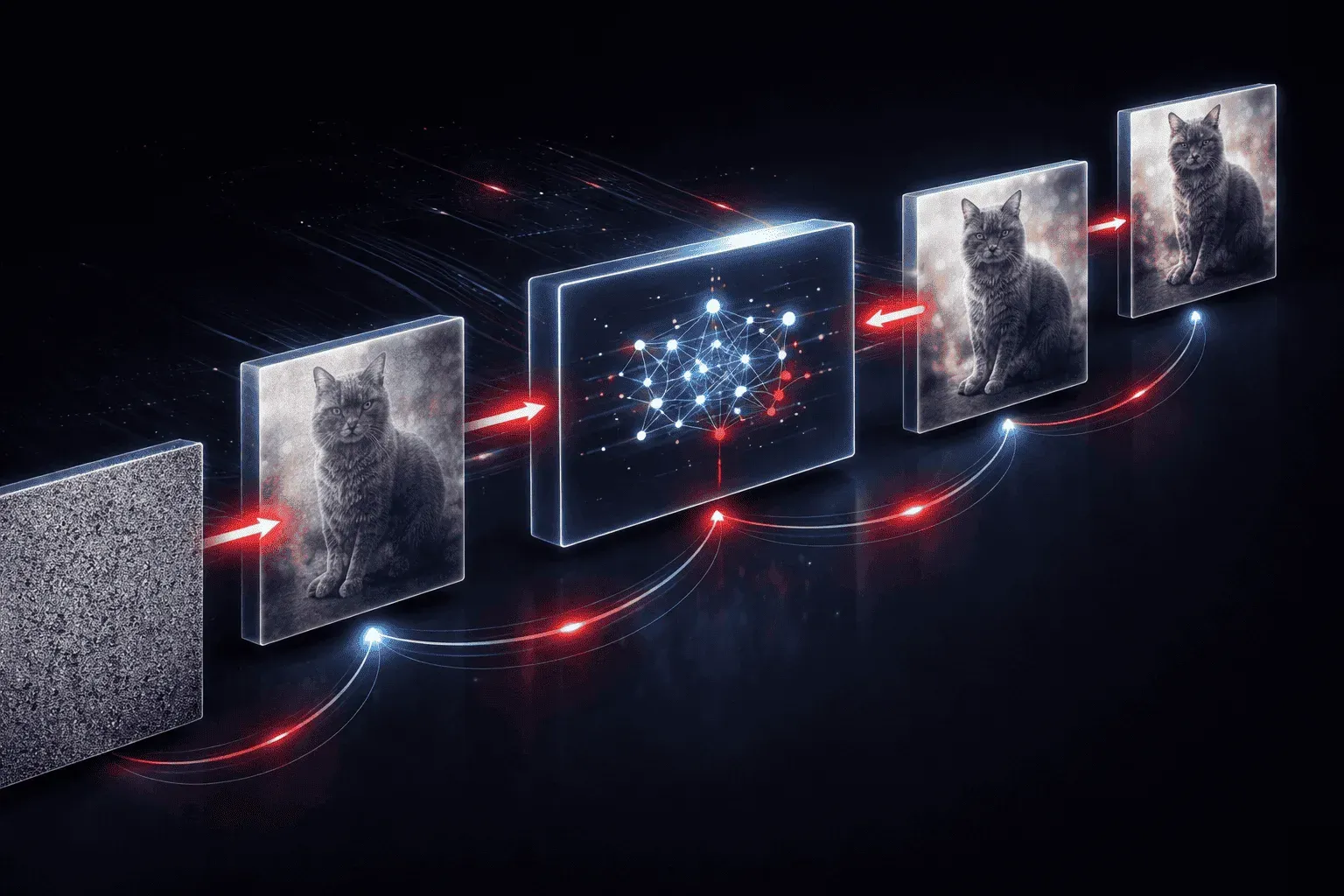
At their core, diffusion models work by learning to reverse a noise-adding process. Imagine taking a clear photograph and gradually adding random noise until it becomes pure static. A diffusion model learns this process backward — it starts with noise and gradually removes it to create something meaningful.
How Diffusion Models Work
The training process involves two key phases:
- Forward Process: The model learns how clean data (like images) gradually becomes noisy
- Reverse Process: The model learns to remove noise step by step, reconstructing the original data
During generation, the model starts with pure random noise and applies the reverse process. Each step removes a small amount of noise while adding structure and detail. After many iterations, what began as static becomes a coherent image, sound, or other data type.
This approach differs significantly from other generative models. Instead of trying to create data in one step, AI diffusion models take a gradual, iterative approach that often produces higher-quality results with better control over the generation process.
Key Advantages
Diffusion models offer several compelling benefits:
- High Quality Output: The gradual denoising process typically produces more detailed and realistic results
- Stable Training: Unlike some other generative models, diffusion models train reliably without complex balancing acts
- Controllable Generation: You can guide the process with text prompts, sketches, or other inputs
- Versatility: The same principles work for images, audio, 3D models, and other data types
Real-World Applications
Diffusion model applications span numerous industries and use cases:
Creative Industries
Artists and designers use tools like Stable Diffusion and Midjourney to create concept art, marketing materials, and digital artwork. These tools can generate images from text descriptions, modify existing images, or create variations on a theme.
Healthcare and Research
Medical researchers apply diffusion models to generate synthetic medical images for training other AI systems, enhancing low-resolution scans, and even drug discovery processes.
Entertainment and Gaming
Game developers use diffusion models to generate textures, create character designs, and produce environmental art. Film studios employ them for concept visualization and special effects.
Business and Marketing
Companies leverage diffusion models for product visualization, creating marketing content, and generating personalized visuals for customers without expensive photo shoots.
Getting Started with Diffusion Models
You can begin exploring diffusion models through several accessible platforms:
- Stable Diffusion: Open-source and available through various web interfaces
- Hugging Face Diffusers: Python library for experimenting with different models
- Google Colab: Free notebooks that let you run diffusion models in your browser
Start with simple text prompts like "a red apple on a wooden table" and observe how the model interprets and generates images. Experiment with different styles, subjects, and descriptive language to understand how prompting affects results.
What's Next
Now that you understand the fundamentals of diffusion models, you're ready to explore the practical side. In our next post, we'll dive into prompt engineering techniques that help you get better results from diffusion models, including advanced prompting strategies and parameter tuning for optimal outputs.