
Fiber Optic vs Copper Cable: Which is Better?
Compares fiber optic and copper network cables, covering speed, distance, cost, installation, and EMI considerations. Explains when to choose each type and introduces hybrid network approaches.

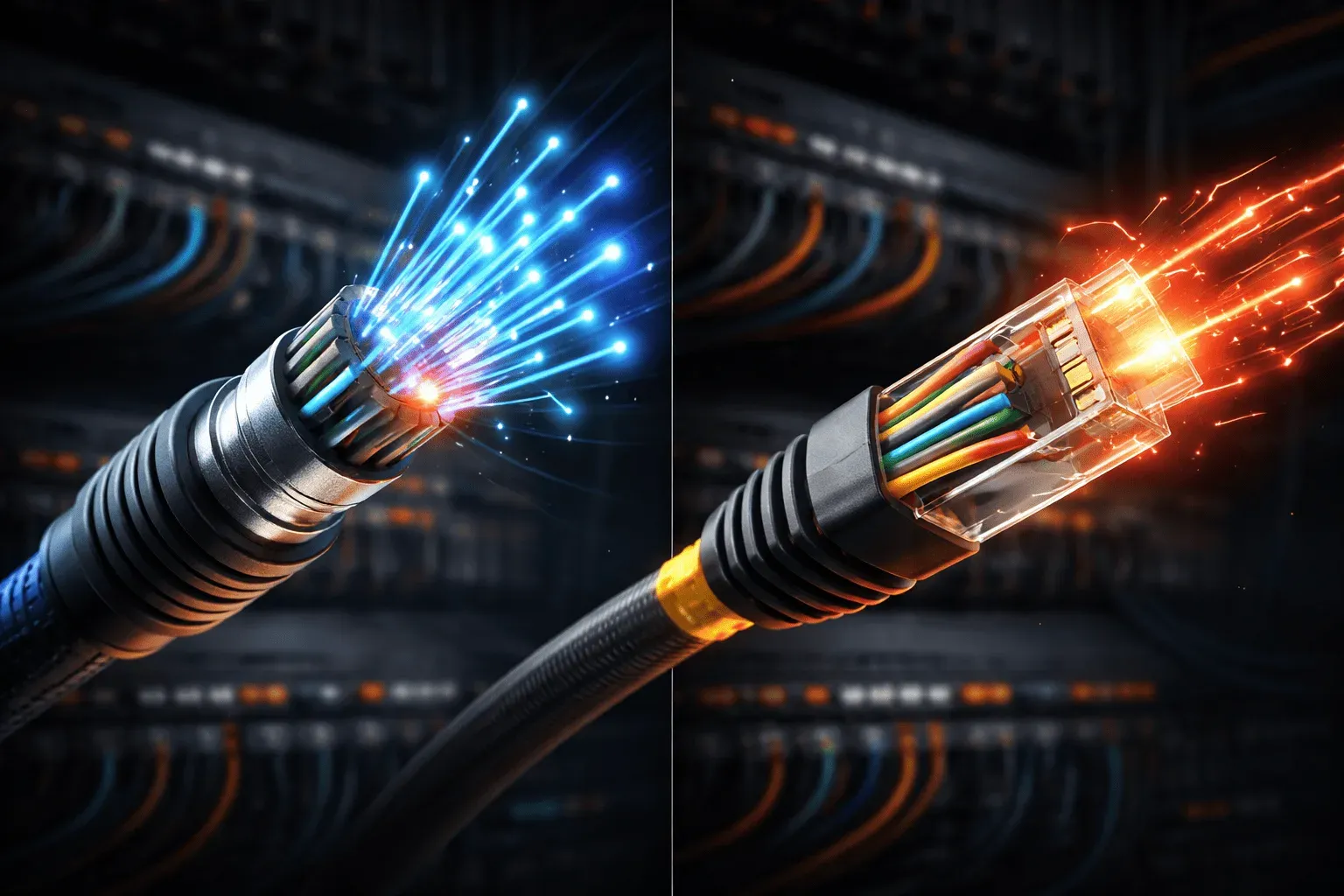
When building a network, one of the most fundamental decisions you'll make is choosing between fiber optic and copper cables. This cable comparison affects everything from network speed to installation costs, so let's break down the key differences to help you understand when each type shines.
Understanding the Basics
Copper cables, like Cat5e, Cat6, and Cat6a, transmit data using electrical signals through copper wires. They're the traditional workhorses of networking that you'll find in most office environments. Fiber optic cables, on the other hand, use pulses of light traveling through glass or plastic fibers to carry data.
The fundamental difference in how these network cables operate leads to distinct advantages and limitations for each type.
Speed and Distance Capabilities
Here's where fiber really shows its strength. While Cat6a copper can handle 10 Gbps up to 100 meters, fiber optic cables easily support 10 Gbps, 40 Gbps, 100 Gbps, and beyond over much longer distances. Single-mode fiber can transmit data for kilometers without signal degradation, while copper typically maxes out at 100 meters before you need a repeater.
For most local area networks (LANs), copper's distance limitations aren't usually a problem. But when connecting buildings or floors in a large facility, fiber becomes essential.
Installation and Cost Considerations
Copper cables win on upfront costs and installation simplicity. A Cat6 cable costs significantly less than fiber, and terminating copper cables with RJ45 connectors is straightforward with basic tools. Most network technicians can crimp copper cables in the field without specialized equipment.
Fiber requires more expensive cables, specialized connectors (like LC or SC), and fusion splicing or precision termination tools. However, the fiber optic benefits often justify this higher initial investment in the right scenarios.
Electromagnetic Interference and Security
One major advantage of fiber is its immunity to electromagnetic interference (EMI). Copper cables can pick up interference from motors, fluorescent lights, and other electrical equipment, potentially causing data errors or reduced performance. Fiber optic cables are completely immune to EMI since they use light instead of electrical signals.
Fiber also offers superior security. It's extremely difficult to tap into a fiber optic cable without detection, as any physical intrusion typically breaks the light path and triggers alarms. Copper cables are more vulnerable to eavesdropping through electromagnetic emanation or physical tapping.
Power Over Ethernet (PoE) Factor
Here's where copper has a unique advantage: Power over Ethernet capability. Copper cables can simultaneously carry data and electrical power to devices like IP cameras, wireless access points, and VoIP phones. This eliminates the need for separate power cables and outlets at device locations.
Fiber optic cables cannot carry electrical power, so powered devices require separate power sources or media converters that provide PoE on the copper side.
When to Choose Each Option
Choose copper when:
- Connecting devices within 100 meters
- Budget is a primary concern
- You need PoE capability
- Working in a typical office environment
- Your team lacks fiber termination expertise
Choose fiber when:
- Connecting across long distances
- High bandwidth requirements (10+ Gbps)
- Electrically noisy environments
- Security is paramount
- Connecting between buildings
- Future-proofing for bandwidth growth
The Hybrid Approach
Many modern networks use both cable types strategically. Fiber typically forms the network backbone, connecting switches and routers across floors or buildings. Copper handles the "last mile" connections to end devices like computers and phones, providing PoE where needed and keeping costs manageable.
What's Next
Now that you understand the fundamental differences in this fiber optic vs copper comparison, the next step is learning about specific cable categories and their technical specifications. We'll dive into Cat5e, Cat6, Cat6a, and Cat8 copper standards, plus single-mode and multimode fiber types.
Network+ study resources
- CompTIA Network+ Study Guide — Full N10-009 exam coverage across all five domains. Essential exam preparation.