
Key Elements of an Effective Security Governance Framework
This post breaks down the key components of a security governance framework, including policies, standards, procedures, and guidelines, as well as the critical roles that make governance work. It connects these concepts to the CompTIA Security+ Domain 5 exam objectives and real-world application.

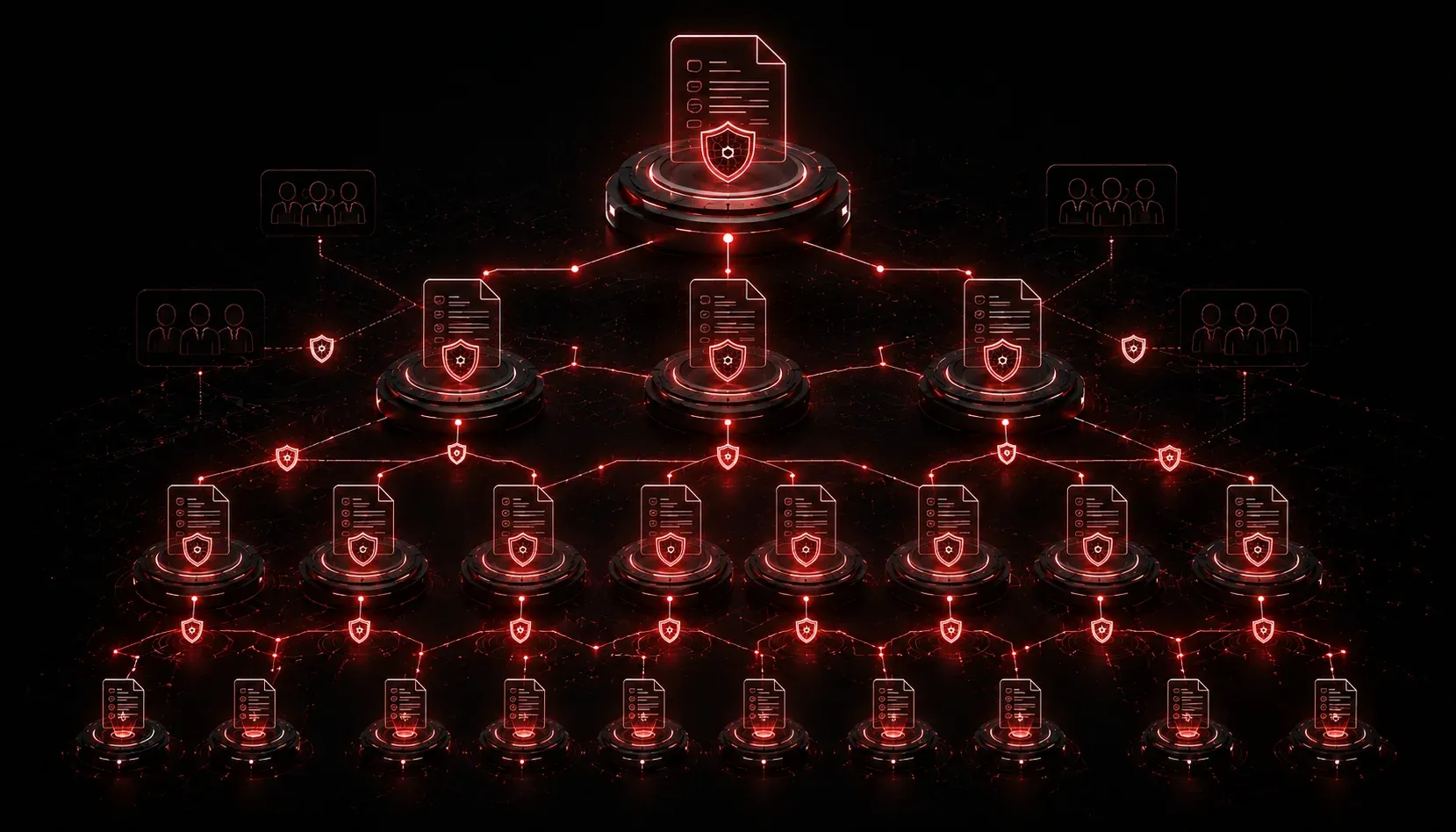
Security governance might sound like a buzzword reserved for boardroom conversations, but it is one of the most foundational concepts in the Security+ exam and in real-world security practice. Before you can protect systems, respond to incidents, or audit your organization's posture, you need a structured framework that tells everyone what to do, why they are doing it, and who is responsible. That structure is your security governance framework.
What Is a Security Governance Framework?
A security governance framework is the collection of policies, procedures, standards, and roles that an organization uses to manage and direct its information security program. Think of it as the rulebook and organizational chart for how security decisions get made and enforced.
Without governance, security becomes reactive and inconsistent. One team might handle passwords one way, another team does it differently, and nobody is accountable when something goes wrong. A solid framework eliminates that ambiguity.
The Core Components
Policies
Policies are high-level statements that define an organization's security intentions and expectations. They are typically written by leadership and approved at the executive or board level. Policies do not explain how to do something; they explain what must be done and why.
Common examples include:
- Acceptable Use Policy (AUP): defines how employees may use company systems and networks
- Information Security Policy: establishes the overall commitment to protecting data and systems
- Password Policy: sets requirements for password length, complexity, and rotation
Policies are the foundation of your security framework. Everything else flows from them.
Standards
Standards take a policy and add specificity. If your password policy says "passwords must be complex," a standard defines exactly what complex means: at least 12 characters, one uppercase letter, one number, one special character.
Standards give teams a measurable benchmark to work toward and audit against.
Procedures
Procedures are step-by-step instructions for carrying out specific security tasks. They answer the question: "How exactly do we do this?" A procedure for onboarding a new employee might include steps for account creation, access provisioning, and security awareness training enrollment.
Together, policies and procedures create a loop: policies set the intent, and procedures deliver the execution.
Guidelines
Guidelines are recommendations rather than requirements. They offer best-practice advice for situations where flexibility is appropriate. Because they are not mandatory, they carry less weight than policies or standards, but they are still valuable for guiding decision-making in gray areas.
Governance Roles and Responsibilities
A governance framework is only effective if the right people own the right responsibilities. Here are the key governance roles you need to know for Security+:
- Chief Information Security Officer (CISO): owns the overall security program and reports to executive leadership
- Data Owner: a business leader responsible for a specific data set, including its classification and protection requirements
- Data Custodian: the IT team or individual responsible for the day-to-day protection and maintenance of data on behalf of the owner
- System Owner: responsible for the overall security of a specific system or application
- Security Analyst / Practitioner: implements and monitors controls defined by governance documents
Understanding the difference between a data owner and a data custodian is a classic exam question. The owner makes decisions about the data; the custodian protects it technically.
Industry Frameworks Worth Knowing
Organizations rarely build governance from scratch. They align with established industry frameworks such as:
- NIST Cybersecurity Framework (CSF): a flexible, widely adopted framework organized around five functions: Identify, Protect, Detect, Respond, and Recover
- ISO/IEC 27001: an international standard for information security management systems
- CIS Controls: a prioritized set of security best practices for organizations of all sizes
These frameworks give organizations a proven structure to build from rather than starting from zero.
Why This Matters for the Exam
Domain 5 of the Security+ exam focuses on security program management and oversight. Questions in this area often ask you to identify the correct document type for a given scenario, distinguish between roles and their responsibilities, or recognize which framework element applies to a situation. Understanding the relationships between policies, standards, procedures, and guidelines will help you work through these questions with confidence.
What's Next
Now that you understand the building blocks of a security governance framework, the next post dives into risk management concepts: how organizations identify, assess, and prioritize risks so they can allocate security resources where they matter most. Risk management is the engine that drives many governance decisions, so it is a natural next step in your Security+ preparation.
Tools and resources for this topic
- CompTIA Security+ Study Guide — Full SY0-701 exam coverage including threats, vulnerabilities, and mitigation.