
Next-Generation Firewalls: How They Protect Your Network
Next-generation firewalls enhance network security beyond traditional firewalls by providing application awareness, integrated IPS, deep packet inspection, and user-based policies for comprehensive threat protection.

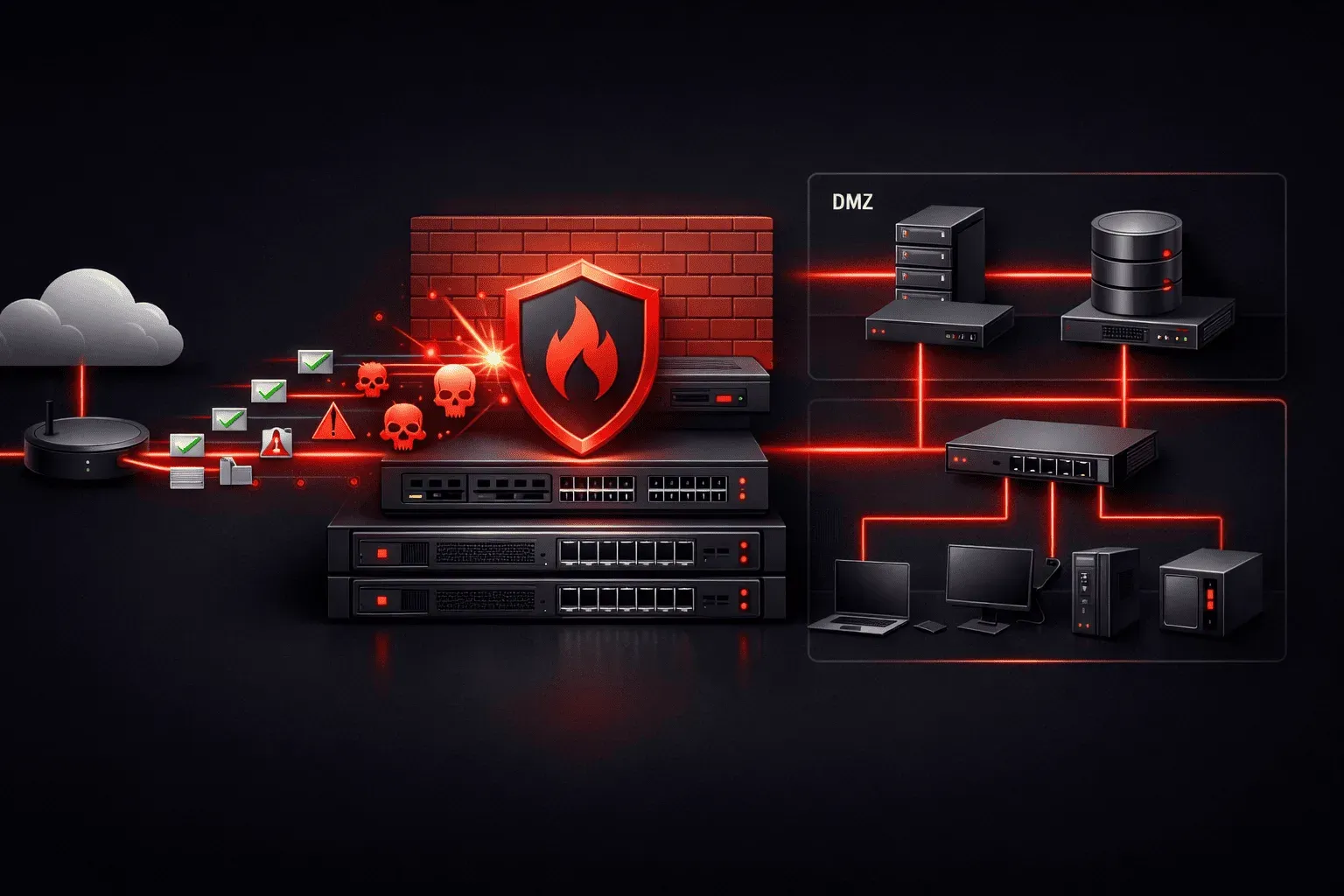
Traditional firewalls have served as the first line of defense for networks for decades, but modern threats require more sophisticated protection. Next-generation firewalls (NGFWs) represent a significant evolution in firewall protection, combining traditional packet filtering with advanced security features to create a comprehensive defense system.
Understanding Traditional vs. Next-Generation Firewalls
Traditional firewalls operate at layers 3 and 4 of the OSI model, making decisions based on source and destination IP addresses, ports, and protocols. They use simple rules like "allow HTTP traffic on port 80" or "block all traffic from this IP range."
Next-generation firewalls go far beyond these basic functions. They examine traffic at the application layer (layer 7), identifying specific applications and users regardless of port or protocol. This means an NGFW can distinguish between legitimate web browsing and malicious traffic using HTTP, even when both use port 80.
Key Features of Next-Generation Firewalls
Application Awareness and Control
NGFWs can identify applications running on any port or protocol. For example, they can detect Skype traffic even if it's using port 80 to bypass traditional firewall rules. This application awareness enables granular control policies like "allow Facebook but block Facebook games" or "permit YouTube viewing but restrict uploads."
Integrated Intrusion Prevention System (IPS)
Built-in IPS functionality provides real-time threat detection and prevention. The IPS component analyzes traffic patterns, signatures, and behaviors to identify and block known attacks, malware, and suspicious activities. This integration eliminates the need for separate IPS devices and reduces network complexity.
Deep Packet Inspection
NGFWs examine the complete contents of network packets, not just headers. This deep inspection capability allows them to detect threats hidden within seemingly legitimate traffic, such as malware embedded in email attachments or SQL injection attempts in web requests.
User Identity Integration
Modern NGFWs can integrate with directory services like Active Directory to create user-based policies. Instead of just "allow traffic from 192.168.1.100," you can create rules like "allow John from Accounting to access the financial database during business hours."
Enhanced Network Security Benefits
The advanced capabilities of next-generation firewalls provide several security advantages over traditional solutions:
- Reduced Attack Surface: Application control prevents unauthorized applications from establishing network connections
- Advanced Threat Protection: Integrated IPS and behavioral analysis detect sophisticated attacks that bypass signature-based detection
- Granular Policy Control: User and application awareness enables precise security policies that balance security with productivity
- Simplified Management: Consolidated security functions reduce the complexity of managing multiple security devices
NGFW in Action: A Practical Example
Consider a company policy that allows employees to use social media during breaks but restricts it during work hours. A traditional firewall might block all traffic to social media sites, causing friction when employees legitimately want to check personal accounts during lunch.
An NGFW can implement a more nuanced approach:
Rule 1: Allow Facebook browsing for HR group during 12:00-13:00
Rule 2: Block Facebook games for all users at all times
Rule 3: Allow LinkedIn for Sales team during business hours
Rule 4: Log all social media usage for compliance reporting
This level of control maintains network security while supporting business productivity and user satisfaction.
Deployment Considerations
When implementing NGFWs, consider performance impact. The advanced inspection and processing capabilities require more computational resources than traditional firewalls. Proper sizing and placement in your network architecture are crucial for maintaining network performance while maximizing security benefits.
What's Next
Understanding NGFW capabilities provides the foundation for exploring network security architecture. Next, we'll examine how these firewalls integrate with other security components like network access control (NAC) and security information and event management (SIEM) systems to create comprehensive defense strategies.
CCNA study resources
- CCNA Official Cert Guide Library (Wendell Odom) — Both volumes covering the full 200-301 exam blueprint. The definitive CCNA study resource.
- Wendell Odom CCNA Vol 1 — Networking fundamentals, switching, VLANs, STP, and IPv4 routing.
- Wendell Odom CCNA Vol 2 — Advanced routing, WAN, security, automation, and network management.