
AI Governance vs. Risk Management: Key Differences
AI governance sets strategic frameworks and principles for AI programs, while AI risk management focuses on identifying and mitigating specific operational threats. Both work together to ensure responsible AI deployment aligned with organizational goals.

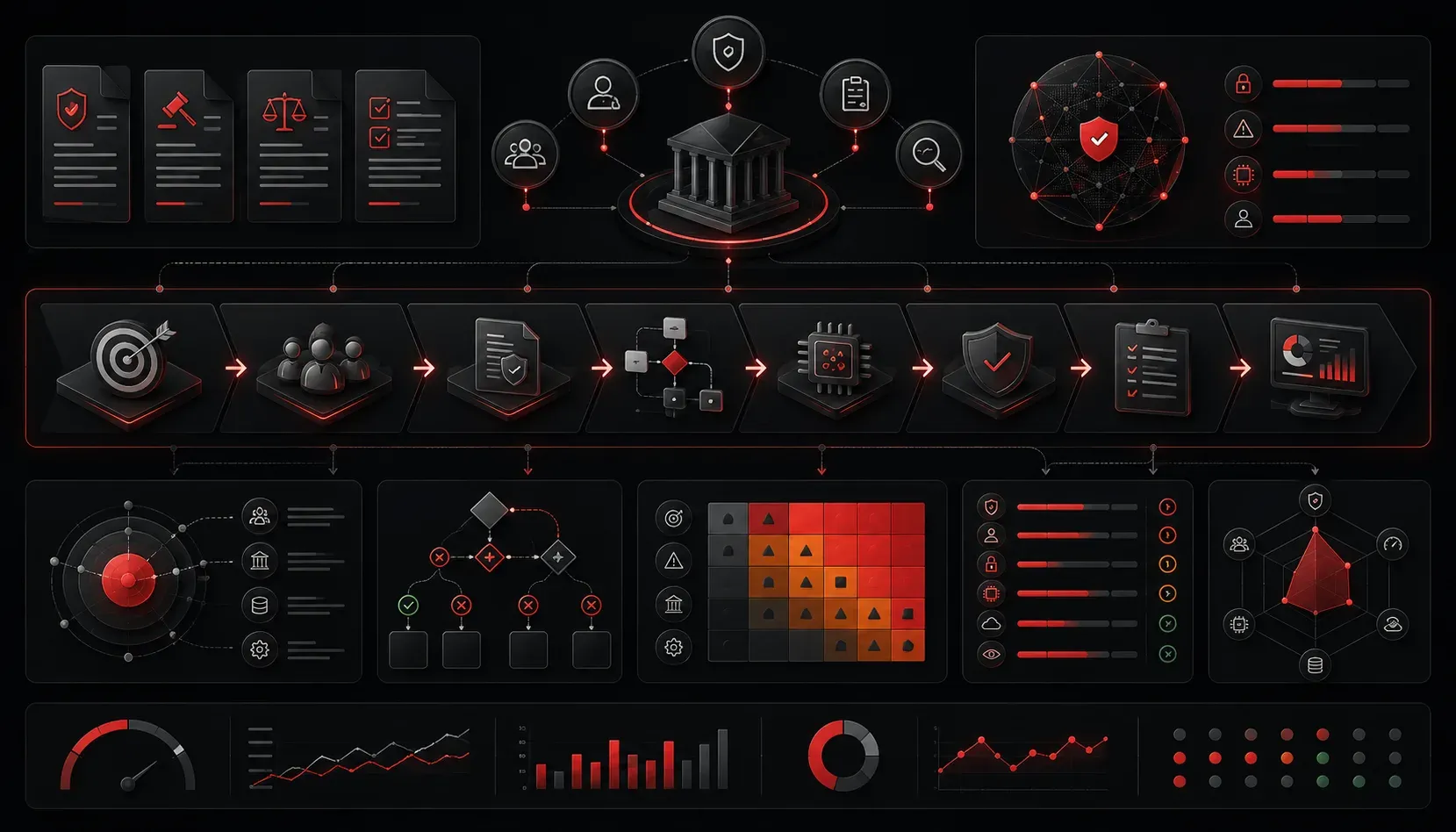
When organizations embark on their AI journey, two critical frameworks often get confused or used interchangeably: AI governance and AI risk management. While these concepts are closely related and work together, understanding their distinct roles is essential for building a successful AI strategy that aligns with your organizational goals.
What is AI Governance?
AI governance is the strategic framework that defines how your organization will develop, deploy, and manage AI systems. Think of it as the constitution for your AI program; it establishes principles, policies, and decision-making structures that guide every AI initiative.
Key components of AI governance include:
- Policy frameworks that define acceptable AI use cases
- Decision-making authority for AI investments and deployments
- Ethical guidelines for responsible AI development
- Oversight mechanisms to ensure compliance with organizational values
For example, an AI governance policy might state: "All customer-facing AI applications must include human oversight capabilities and provide explainable decisions when requested by customers."
What is AI Risk Management?
AI risk management, on the other hand, focuses on identifying, assessing, and mitigating specific risks associated with AI systems. It's the tactical execution that protects your organization from potential AI-related harms.
AI risk management typically addresses:
- Technical risks like model bias, data poisoning, or adversarial attacks
- Operational risks, including system failures or performance degradation
- Compliance risks related to regulatory requirements
- Reputational risks from unintended AI behavior
A risk management process might involve conducting bias testing on a hiring algorithm, implementing monitoring systems for model drift, or establishing incident response procedures for AI system failures.
Key Differences: Governance vs Management
The fundamental difference between AI governance and risk management lies in their scope and timeline:
Strategic vs. Tactical Focus
AI governance operates at the strategic level, setting the overall direction and principles for AI use. Risk management works tactically, implementing specific controls and monitoring systems to address identified threats.
Proactive vs. Reactive Elements
Governance is inherently proactive, establishing frameworks before AI systems are built. Risk management combines both proactive measures (like security controls) and reactive responses (like incident handling).
Authority vs. Execution
Governance defines who makes decisions and what principles guide those decisions. Risk management focuses on how to implement protections and when to take corrective action.
How They Work Together
In practice, effective AI programs integrate both governance and risk management into a cohesive AI strategy. Governance provides the foundation and direction, while risk management ensures safe execution.
Consider this example: Your governance framework establishes that AI systems must be transparent and auditable (the what and why). Your risk management program then implements specific logging requirements, audit trails, and regular compliance reviews (the how and when).
This integration ensures that your organizational goals for responsible AI aren't just aspirational statements—they're backed by concrete processes and controls that make them reality.
Building Your Integrated Approach
To align AI governance and risk management with your organizational goals:
- Start with governance—establish clear principles and decision-making structures
- Identify your risk landscape—understand what could go wrong in your specific context
- Create feedback loops—let risk assessments inform governance updates
- Assign clear ownership—designate who's responsible for governance oversight vs. operational risk management
What's Next
Now that you understand the distinction between AI governance and risk management, the next step is exploring how to implement regulatory compliance frameworks. We'll examine specific compliance requirements and how they shape both your governance policies and risk management controls in modern AI systems.