
Wired Networks: Copper and Fiber Explained
Learn the key differences between copper and fiber optic cables in wired networks. Understand when to use each technology and their respective advantages for home and business networking.

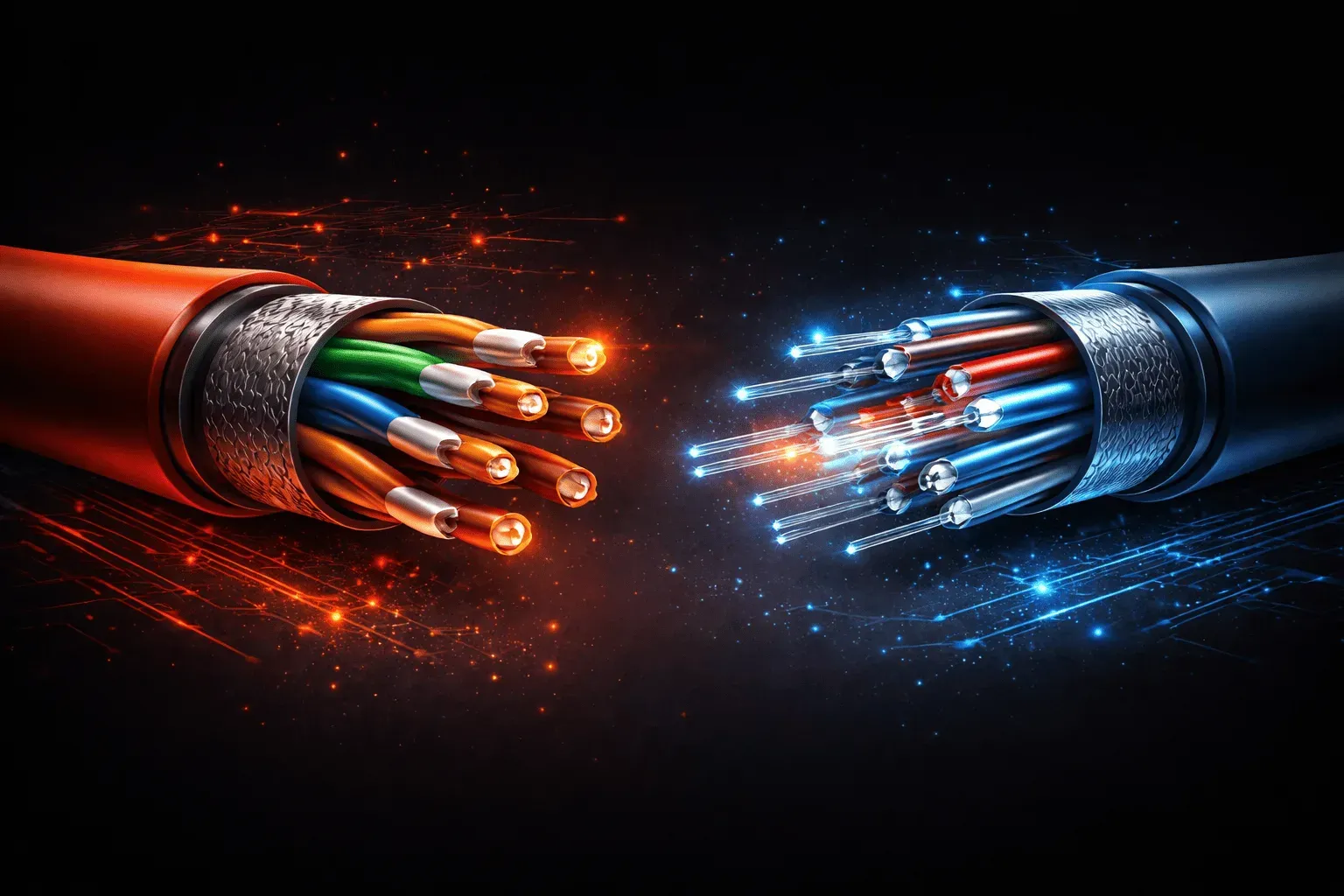
When building any network, choosing the right physical medium is crucial for performance and reliability. In wired networks, copper and fiber represent the two primary transmission technologies, each with distinct characteristics that make them suitable for different scenarios.
Understanding Copper Networks
Copper cabling uses electrical signals to transmit data through metal conductors. The most common types you'll encounter are Cat5e, Cat6, and Cat6a cables, typically using RJ-45 connectors.
Key characteristics of copper cables include:
- Distance limitations: Maximum 100 meters (328 feet) for Ethernet
- Speed capabilities: Cat5e supports up to 1 Gbps, Cat6 up to 10 Gbps (shorter distances)
- Cost-effective: Relatively inexpensive for both cables and network equipment
- Easy installation: Familiar to most technicians and requires standard tools
However, copper has some limitations. It's susceptible to electromagnetic interference (EMI) from nearby electrical equipment and experiences signal degradation over distance. This is why you'll often see copper used in office environments and home networks where distances are relatively short.
Exploring Fiber Optic Technology
Fiber optic cables transmit data using light signals through glass or plastic strands. This fundamental difference gives fiber optic technology several advantages over copper.
There are two main types of fiber:
- Single-mode fiber (SMF): Uses a single light path, supports longer distances (up to 40km+)
- Multi-mode fiber (MMF): Uses multiple light paths, typically used for shorter distances (up to 2km)
Fiber optic characteristics include:
- High bandwidth: Can support 10 Gbps, 40 Gbps, 100 Gbps, and beyond
- Long distances: No significant signal loss over kilometers
- Immunity to EMI: Light signals aren't affected by electrical interference
- Security: Difficult to tap without detection
Copper vs Fiber: Making the Right Choice
When deciding between copper and fiber, consider these factors:
Choose copper when:
- Building a small office or home network
- Budget is a primary concern
- Distances are under 100 meters
- Current bandwidth requirements are modest (1 Gbps or less)
Choose fiber when:
- Connecting buildings or floors in a campus environment
- High bandwidth requirements (10 Gbps+)
- Distances exceed 100 meters
- Operating in electrically noisy environments
- Future-proofing the network infrastructure
Real-World Applications
In practice, many networks use both technologies strategically. A typical enterprise setup might use fiber for the backbone connections between network closets and buildings, while using copper for end-user connections to desktops and access points.
For example, you might see a 10GBASE-SR fiber connection running between core switches, then 1000BASE-T copper connections from access switches to user workstations. This hybrid approach balances performance, cost, and practicality.
Internet service providers often bring fiber to neighborhoods or buildings, then use copper for the final connection to individual homes. This "Fiber to the Neighborhood" (FTTN) approach provides high-speed internet while managing installation costs.
What's Next
Now that you understand the fundamentals of wired network media, the next step is exploring wireless technologies and how they complement wired infrastructure. We'll examine different wireless standards, their capabilities, and how to design networks that effectively combine both wired and wireless components.