
Common Attack Surfaces in Network Security
Attack surfaces represent all potential entry points where attackers can access your network. This post covers physical, digital, and social attack surfaces, how attackers exploit them, and methods for identification and reduction.

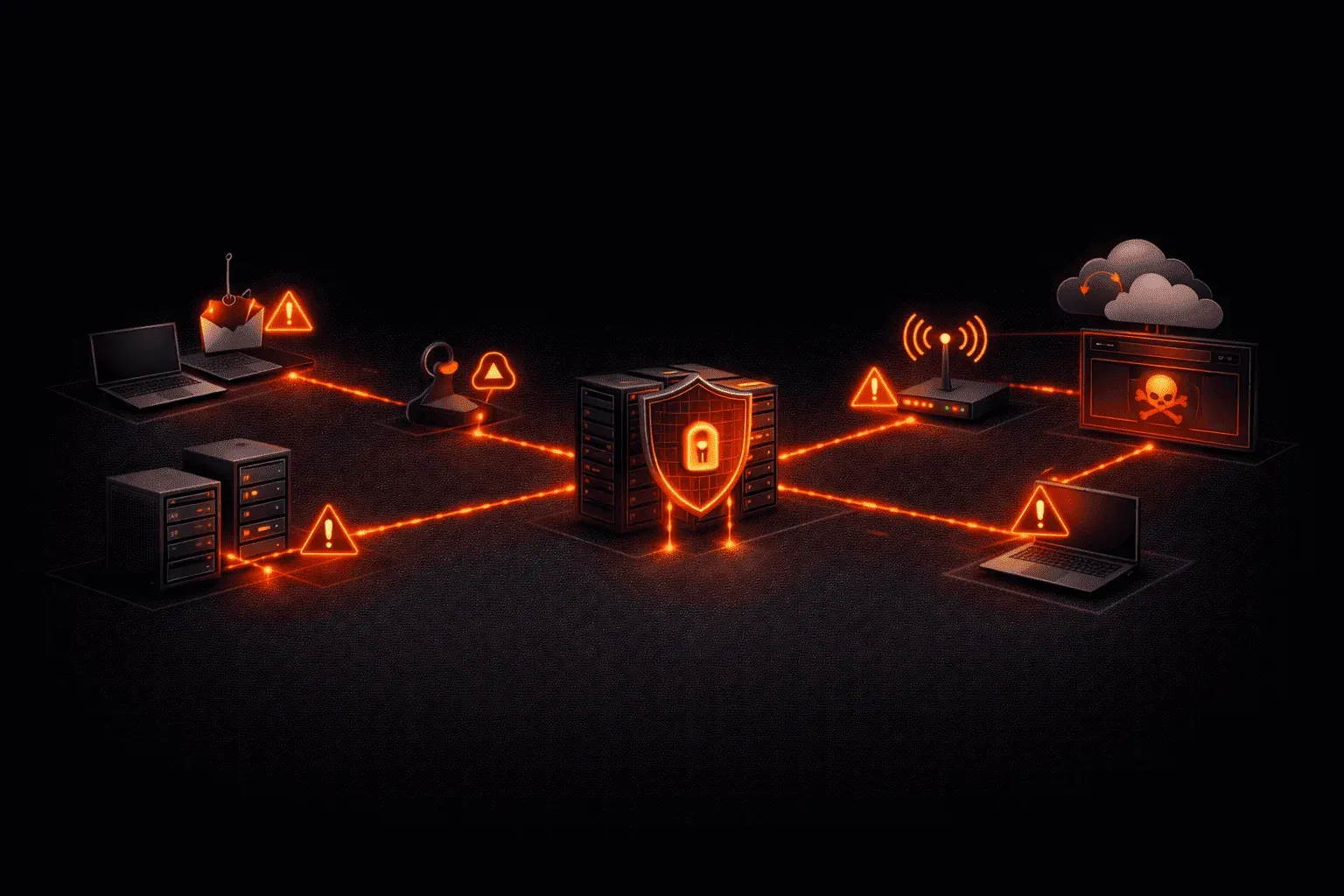
Understanding attack surfaces is fundamental to network security. An attack surface represents all the points where an unauthorized user can try to enter or extract data from your network environment. Think of it as every door, window, and potential entry point that an attacker might use to break into your digital house.
What Makes Up an Attack Surface?
Your network's attack surface consists of three main categories: physical, digital, and social. Each presents unique vulnerabilities that security professionals must address.
Physical Attack Surfaces
Physical access remains one of the most dangerous attack vectors. When attackers can physically touch your equipment, they bypass many network security controls entirely. Common physical attack surfaces include:
- Unsecured server rooms and network closets: Unlocked doors give attackers direct access to critical infrastructure
- Workstations and laptops: Unattended devices can be compromised with USB-based attacks or direct access
- Network ports and wireless access points: Ethernet jacks in public areas or unsecured WiFi networks
- IoT devices and sensors: Security cameras, smart thermostats, and industrial sensors often have weak default credentials
Digital Attack Surfaces
Digital attack surfaces encompass all software-based entry points. These represent the vast majority of cyber attacks today:
- Web applications and APIs: Every web form, login page, and API endpoint represents a potential vulnerability
- Network services: Running services like SSH, RDP, or database servers expose ports that attackers can target
- Email systems: Phishing attacks and malicious attachments frequently compromise networks through email
- Remote access solutions: VPNs and remote desktop services create external access points that require careful securing
Social Attack Surfaces
Human factors often provide the easiest path for attackers. Social engineering exploits trust and human psychology rather than technical vulnerabilities:
- Employee interactions: Phone calls requesting password resets or impersonating IT support
- Social media presence: Information gathered from LinkedIn, Facebook, or company websites helps attackers craft convincing attacks
- Third-party relationships: Vendors, contractors, and partners with network access expand your attack surface
How Attackers Exploit These Surfaces
Understanding attacker methodology helps you think like a threat actor. Most cyber attacks follow a predictable pattern:
Reconnaissance comes first. Attackers scan your network using tools like nmap to identify open ports and running services. They might run:
nmap -sV -sC target_network/24This command reveals service versions and potential vulnerabilities across your network range.
Initial access typically exploits the weakest point. This might be a phishing email that installs malware, an unpatched web application vulnerability, or social engineering that tricks an employee into providing credentials.
Lateral movement follows successful initial access. Attackers use their foothold to explore your network, escalate privileges, and access additional systems.
Identifying Your Attack Surfaces
Regular attack surface assessment is crucial for maintaining security. Start with network scanning to identify all devices and services:
# Discover live hosts
nmap -sn 192.168.1.0/24

# Identify services on discovered hosts
nmap -sV -A target_ip
Document everything you find. Many organizations are surprised by the number of forgotten devices, test systems, or shadow IT deployments that unexpectedly expand their attack surface.
Vulnerability scanners like OpenVAS or Nessus can automatically identify security vulnerabilities across your discovered assets. These tools check for missing patches, default credentials, and configuration weaknesses.
Don't forget about your cloud infrastructure. Cloud services often expose databases, storage buckets, or APIs to the internet accidentally. Tools like aws s3 ls can help identify publicly accessible resources.
Reducing Your Attack Surface
Every unnecessary service, open port, or exposed system increases your risk. Apply the principle of least privilege consistently:
- Disable unused services: If you're not actively using SSH on a server, turn it off
- Implement network segmentation: Isolate critical systems from general user networks
- Keep software updated: Patches eliminate known security vulnerabilities
- Use firewalls strategically: Block unnecessary network traffic at multiple layers
Remember that attack surfaces are dynamic. New devices, software updates, and configuration changes constantly alter your risk profile. Regular assessment and monitoring are essential.
What's Next
Now that you understand attack surfaces, the next step is learning about specific vulnerability types and how they're exploited. In our next post, we'll explore common network vulnerabilities like buffer overflows, injection attacks, and authentication bypasses that attackers use to compromise these surfaces.
Security+ study resources
- CompTIA Security+ Study Guide — Full SY0-701 exam coverage including threats, vulnerabilities, architecture, and operations.