
Common Mistakes in Understanding Security Basics
Identifies common mistakes beginners make when learning cybersecurity fundamentals, including confusing authentication with authorization, misunderstanding the CIA triad, and treating security as binary. Provides practical guidance for avoiding these pitfalls.

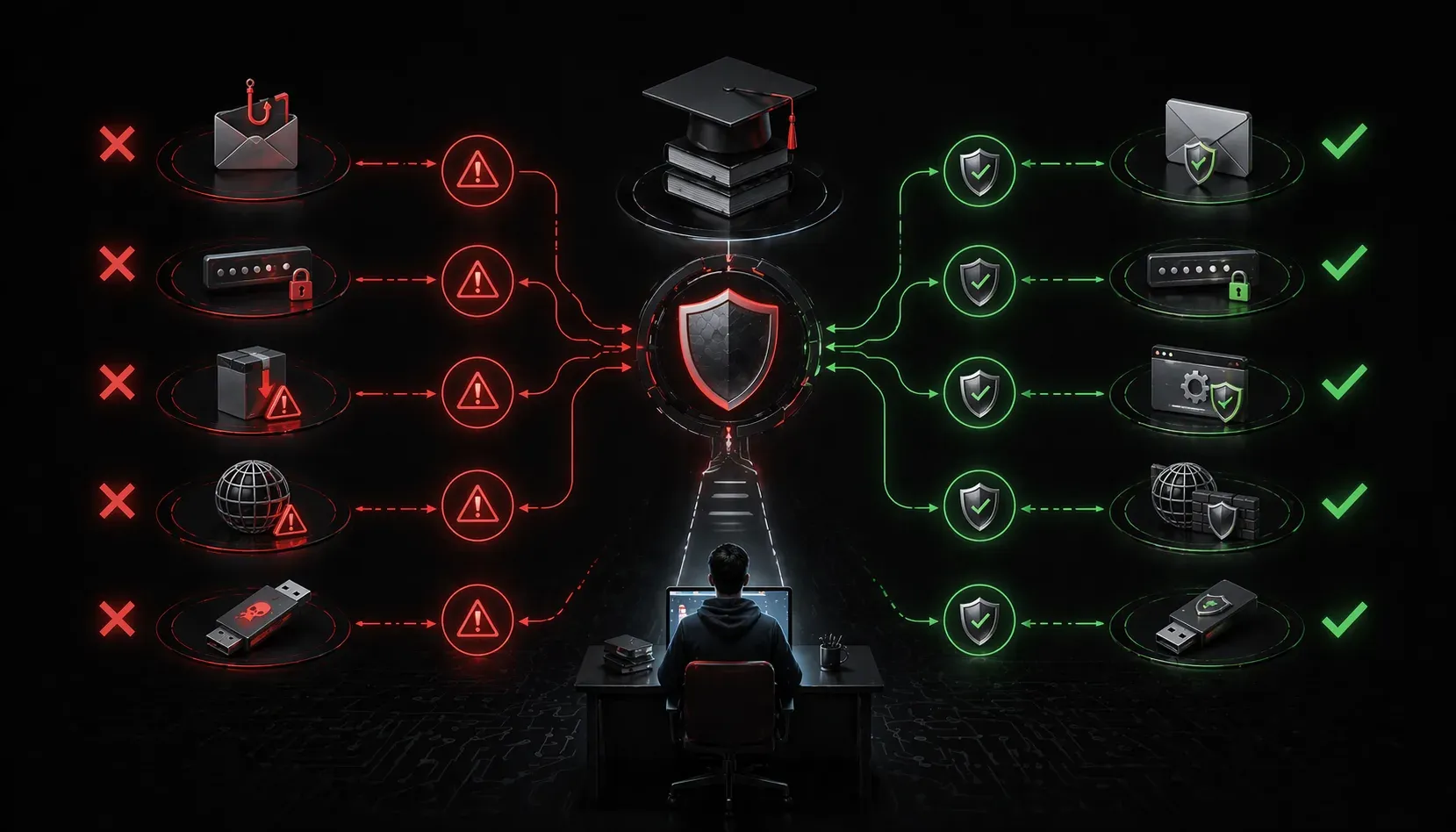
Starting your cybersecurity journey can feel overwhelming, especially when preparing for Security+. Many beginners fall into predictable traps that can slow their progress and create gaps in understanding. Let's identify the most common mistakes in security basics and learn how to avoid them.
Confusing Authentication and Authorization
This is probably the biggest mistake beginners make when learning security. These concepts sound similar but serve completely different purposes.
Authentication answers "Who are you?" It's the process of verifying identity through something you know (password), something you have (token), or something you are (biometric).
Authorization answers "What can you do?" It determines what resources an authenticated user can access.
Think of it like entering a secure building. Authentication is showing your ID at the front desk. Authorization is your badge determining which floors you can access. You can't have authorization without authentication, but authentication doesn't guarantee any specific level of access.
Misunderstanding the CIA Triad
Many beginners memorize Confidentiality, Integrity, and Availability without truly grasping what each means in practice. This leads to security+ errors when analyzing scenarios.
Confidentiality isn't just about encryption. It's about ensuring only authorized parties can access information. This includes physical security, access controls, and data classification.
Integrity means data hasn't been tampered with. It's not just about backups, it's about checksums, digital signatures, and version control.
Availability means systems are accessible when needed. This includes redundancy, disaster recovery, and even simple maintenance windows.
When studying, always ask: "Which part of the CIA triad does this threat target?" This helps you think like a security professional.
Treating Security as All-or-Nothing
Beginner cybersecurity issues often stem from thinking security is binary, either completely secure or completely vulnerable. Real-world security works in layers and degrees of risk.
Security is about managing risk, not eliminating it entirely. Perfect security is impossible and impractical. Instead, focus on:
- Defense in depth (multiple security layers)
- Risk assessment and acceptance
- Cost-benefit analysis of security measures
- Understanding that convenience often conflicts with security
Overcomplicating Basic Concepts
When learning security, students often jump to advanced topics before mastering the fundamentals. This creates confusion and knowledge gaps.
For example, trying to understand advanced cryptographic protocols before grasping symmetric vs. asymmetric encryption basics. Or studying complex network attacks before understanding basic network protocols.
Build your foundation systematically. Master password security before diving into multi-factor authentication. Understand basic firewalls before exploring next-generation firewall features.
Ignoring Physical Security
Digital natives often overlook physical security entirely, focusing only on network and software protections. This is one of the most common mistakes in security basics.
Physical access often equals total compromise. An attacker with physical access can:
- Boot from external media
- Install hardware keyloggers
- Access unencrypted data
- Reset passwords through console access
Always consider physical security in your threat models and security assessments.
Memorizing Without Understanding Context
Security+ preparation often involves memorizing port numbers, acronyms, and definitions. However, memorization without context leads to poor practical application.
Instead of just memorizing that HTTPS uses port 443, understand why secure communications need dedicated ports and how this relates to firewall rules. Don't just memorize that AES is a symmetric encryption algorithm, understand when you'd choose symmetric over asymmetric encryption and why.
Connect each concept to real-world scenarios. This approach helps with both exam success and practical application.
Avoiding These Mistakes
To avoid these beginner cybersecurity issues:
- Practice with hands-on labs, not just theory
- Join cybersecurity communities for practical discussions
- Read security news to see concepts in action
- Question your assumptions regularly
- Focus on understanding "why" not just "what"
What's Next
Now that you understand common pitfalls in learning security basics, our next post will dive deeper into building a proper security mindset. We'll explore how to think like an attacker to better defend systems and develop the critical thinking skills essential for cybersecurity success.
Tools and resources for this topic
- CompTIA Security+ Study Guide — Full SY0-701 exam coverage including threats, vulnerabilities, and mitigation.