
Comparing AI Security Threats: Model Poisoning vs. Adversarial Attacks
A comprehensive comparison of model poisoning and adversarial attacks, explaining when each threat occurs and how to defend against them. Model poisoning corrupts training data while adversarial attacks manipulate inputs to deployed models.

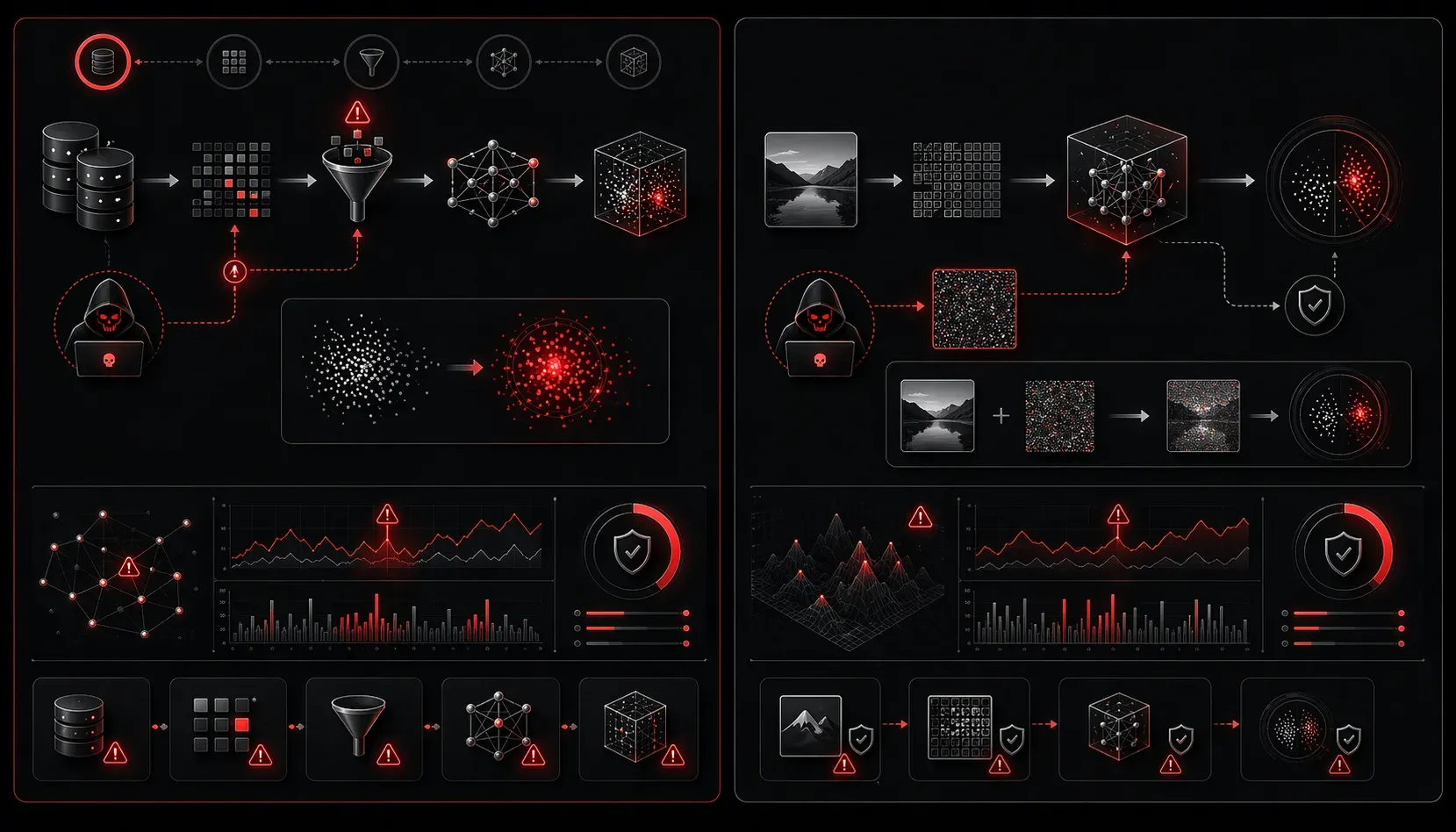
When deploying AI systems in production environments, understanding the threat landscape is crucial for maintaining security and reliability. Two of the most significant AI security threats you'll encounter are model poisoning and adversarial attacks. While both can compromise your AI systems, they operate through completely different mechanisms and require distinct defensive strategies.
Understanding Model Poisoning
Model poisoning attacks occur during the training phase of machine learning models. Attackers inject malicious data into the training dataset, causing the model to learn incorrect patterns or behaviors. Think of it as corrupting the model's education before it ever goes to work.
Here's how model poisoning typically works:
- Attackers gain access to training data or contribute to crowdsourced datasets
- Malicious samples are introduced that appear normal but contain subtle manipulations
- The model learns from this corrupted data and incorporates the malicious patterns
- Once deployed, the model exhibits unexpected or harmful behaviors when encountering specific triggers
For example, an attacker might poison an image recognition model by adding barely visible pixels to training images of stop signs, causing the deployed model to misclassify modified stop signs as speed limit signs.
Understanding Adversarial Attacks
Adversarial attacks happen after a model is already trained and deployed. These attacks involve crafting specific inputs designed to fool the model into making incorrect predictions. The model itself remains unchanged; only the input data is manipulated.
Key characteristics of adversarial attacks include:
- Attacks occur during inference time, not training
- Input modifications are often imperceptible to humans
- The same model can be fooled repeatedly with different adversarial inputs
- No access to training data or model retraining is required
A classic example is adding noise to an image that causes a well-trained image classifier to confidently misidentify a panda as a gibbon, even though the image looks identical to human observers.
Key Differences: Timing and Access
The fundamental difference between these threats lies in when and how they strike:
Model Poisoning:
- Requires access to training data or the training process
- Attacks happen before deployment
- Creates persistent vulnerabilities in the model
- Harder to detect once the model is trained
- Typically requires insider access or compromised data sources
Adversarial Attacks:
- Only requires access to model inputs
- Attacks happen during normal operation
- Each attack is instance-specific
- Can be detected through monitoring and validation
- Accessible to external attackers with no special privileges
Impact and Detection Strategies
Both threats can severely impact the reliability of AI systems, but their detection and mitigation approaches differ significantly.
For model poisoning, focus on:
- Data provenance and validation during training
- Statistical analysis of training datasets
- Regular model auditing and performance testing
- Secure data collection and labeling processes
For adversarial attacks, implement:
- Input sanitization and validation
- Ensemble methods using multiple models
- Adversarial training with known attack patterns
- Real-time monitoring of prediction confidence levels
Choosing Your Defense Strategy
Your defense priorities should align with your AI deployment context. If you're using third-party models or crowdsourced data, model poisoning poses a higher risk. If you're deploying customer-facing AI systems that process external inputs, adversarial attacks become the primary concern.
Consider implementing layered security that addresses both threat vectors. This includes secure development practices for training, robust input validation for deployment, and continuous monitoring throughout the model lifecycle.
What's Next
Now that you understand the key differences between model poisoning and adversarial attacks, the next step is learning specific detection techniques for each threat type. In our upcoming post, we'll explore practical tools and methods for identifying when your AI systems are under attack, including code examples for implementing detection algorithms.