
What Are Endpoint Security Policies and Standards?
Endpoint security policies are formal documents that define rules for protecting devices connecting to networks. They establish baseline security requirements, incorporate industry standards like NIST and ISO 27001, and ensure compliance through automated tools and regular audits.

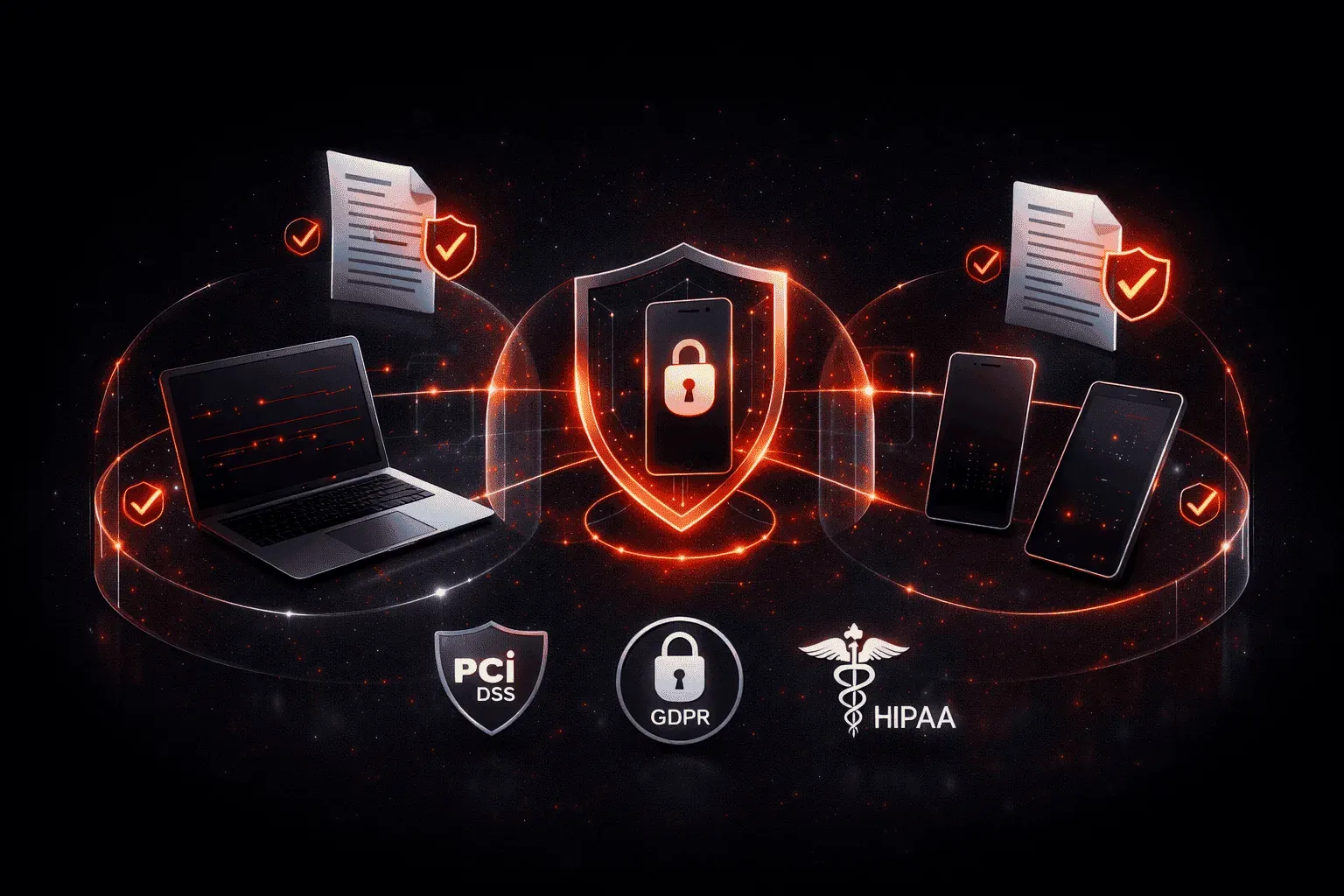
Endpoint security policies serve as the rulebook for protecting every device that connects to your organization's network. Think of them as comprehensive guidelines that define exactly how computers, mobile devices, and other endpoints should be configured, monitored, and maintained to prevent security breaches.
Understanding Endpoint Security Policies
An endpoint security policy is a formal document that outlines specific rules and procedures for securing end-user devices. These policies establish baseline security requirements that every device must meet before connecting to the corporate network.
Core components of effective endpoint security policies include:
- Device configuration requirements: Mandatory security settings and software installations
- Access control rules: Who can access what resources and when
- Software restrictions: Approved applications and prohibited downloads
- Update and patch management: Required security updates and timelines
- Incident response procedures: Steps to take when security threats are detected
Security Standards and Frameworks
Security standards provide the foundation for creating robust endpoint policies. These industry-recognised frameworks help organisations implement consistent, proven security practices.
Common Security Standards
Several established standards guide endpoint security implementations:
- NIST Cybersecurity Framework: Provides a risk-based approach to cybersecurity organised around five functions: Identify, Protect, Detect, Respond, and Recover
- ISO 27001: International standard for information security management
- CIS Controls: Prioritised set of actions for cyber defence
- SANS Top 20: Critical security controls for effective cyber defence
In practice, organisations apply these frameworks directly to endpoint policy requirements. Under the NIST Cybersecurity Framework's Protect function, for example, an endpoint policy might mandate that all workstations enforce automatic screen lock after five minutes of inactivity and require multi-factor authentication for remote access. ISO 27001's Annex A controls map to specific endpoint requirements such as restricting removable media, enforcing full-disk encryption, and maintaining a formal process for managing endpoint software installations.
The CIS Controls recommend implementing application whitelisting on endpoints, which means only pre-approved software can run. Your endpoint security policy might specify: All workstations must use application control software configured to allow only business-approved applications.
Policy Components in Action
Let's examine how these policies translate into real-world requirements:
Antivirus and Anti-malware
A typical policy requirement might state: All endpoints must have enterprise antivirus software installed, configured for real-time protection, and updated daily. This ensures consistent malware protection across all devices. Modern endpoint policies increasingly extend this to require Endpoint Detection and Response (EDR) capabilities, which go beyond traditional antivirus by monitoring for behavioural indicators of compromise rather than relying solely on known signatures.
Operating System Hardening
Policies often mandate specific OS configurations, such as: Windows Firewall must be enabled with default-deny rules for inbound connections. This reduces the attack surface on each endpoint.
Data Protection
Endpoint policies typically require encryption: All laptops and mobile devices must use full-disk encryption with AES-256 or equivalent. This protects data if devices are lost or stolen.
Compliance and Enforcement
Compliance ensures that endpoint security policies are actually followed, not just documented. Organisations use various tools and processes to enforce these requirements:
- Automated compliance scanning: Tools that check device configurations against policy requirements. Microsoft Intune and Jamf are widely used for managing and enforcing compliance across Windows and macOS endpoints respectively.
- Network access control (NAC): Systems that verify compliance before granting network access. Cisco ISE is a common enterprise NAC platform that integrates with existing network infrastructure to enforce posture assessment.
- Mobile Device Management (MDM): Platforms that remotely enforce policy on mobile endpoints, including enforcing encryption, remotely wiping lost devices, and restricting which apps can be installed.
- Regular audits: Periodic reviews to ensure ongoing compliance
- Remediation procedures: Automatic fixes for non-compliant devices
For instance, a NAC system might check if an endpoint has current antivirus definitions before allowing network access. Non-compliant devices could be quarantined to a restricted network segment until they meet policy requirements.
Implementation Best Practices
Successful endpoint security policies share several characteristics:
- Clear and specific language: Avoid ambiguous requirements that lead to inconsistent implementation
- Regular updates: Policies must evolve with new threats and technologies
- User education: Employees need training on policy requirements and their importance. Human behaviour remains one of the most significant factors in endpoint security, and policies that are not backed by awareness training are routinely bypassed through social engineering, phishing, or simple mistakes.
- Reasonable requirements: Overly restrictive policies may be circumvented or ignored
Remember that policies are only effective when they're practical to implement and enforce. A policy requiring daily password changes might seem secure but could lead to weaker passwords or user frustration.
What's Next
Now that you understand the foundation of endpoint security policies and standards, the next step is exploring the specific technologies that enforce these policies. In our next post, we'll dive into endpoint protection platforms and how they automatically implement and monitor compliance with your security requirements.
CCST Cybersecurity study resources
- Cisco Certified Support Technician CCST Cybersecurity 100-160 Official Cert Guide - The only Cisco-approved study guide for the CCST Cybersecurity exam. Covers security fundamentals and incident response.