
How Does Cellular Networking Work?
Cellular networking connects your phone to the internet through licensed radio spectrum and cell towers. Unlike Wi-Fi's unlicensed frequencies, carriers pay for exclusive spectrum rights, providing reliable wide-area coverage through a complex network of base stations and switching centers.

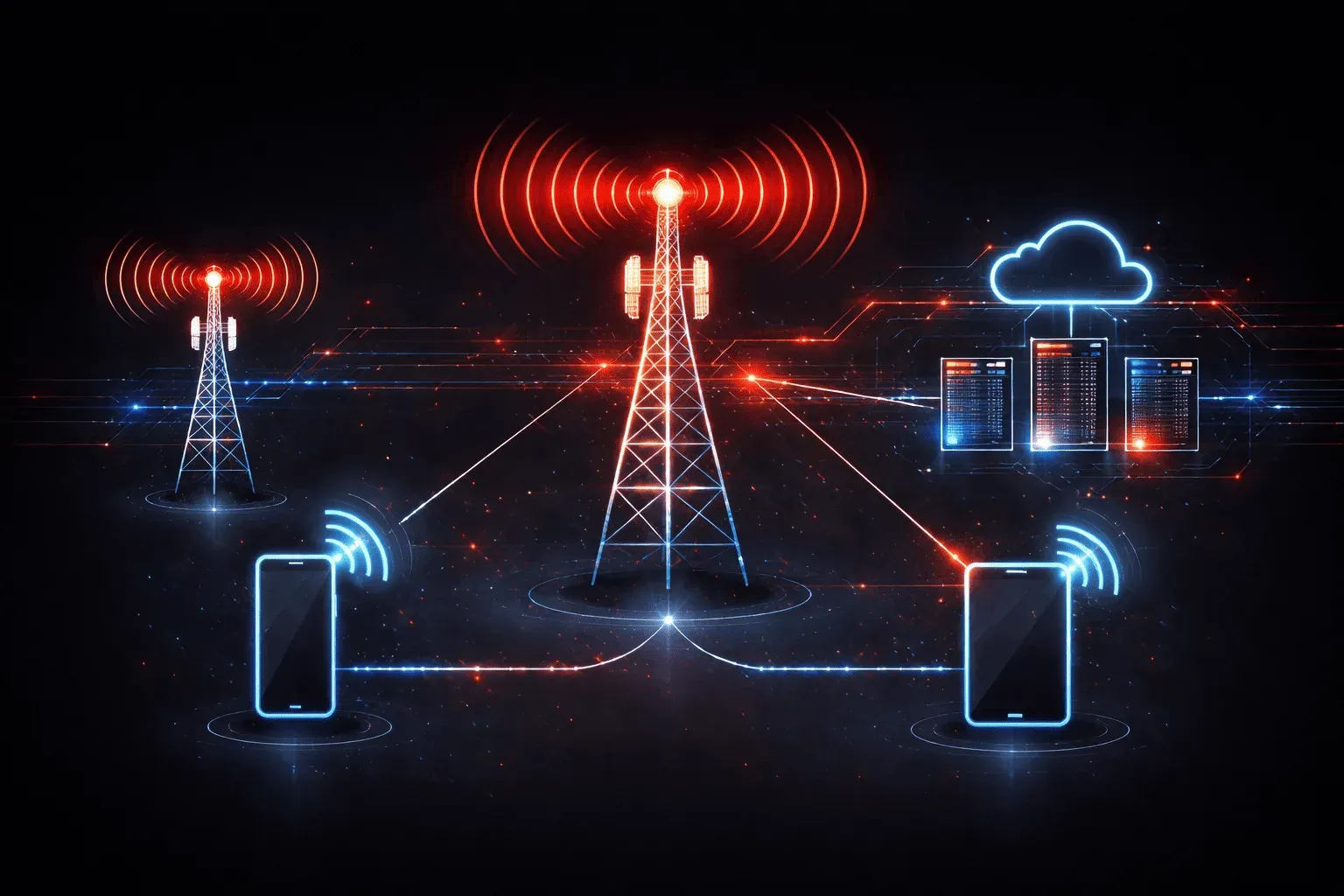
When you pull out your phone and check Instagram or send a text, you're tapping into one of the most sophisticated networking technologies ever created. Cellular networking connects billions of devices worldwide through a carefully orchestrated system of radio waves, towers, and switching equipment. Let's break down how this amazing technology works.
The Foundation: Licensed Spectrum
Unlike Wi-Fi, which uses unlicensed radio frequencies that anyone can use, cellular networks operate on licensed spectrum. This means cellular carriers like Verizon, AT&T, and T-Mobile pay governments for exclusive rights to use specific radio frequencies.
Think of it like owning a private highway versus using a public road. Wi-Fi operates on unlicensed bands (like 2.4 GHz and 5 GHz) that are shared by everyone, your neighbor's router, baby monitors, and microwave ovens all compete for the same frequencies. Cellular networks get their own dedicated "lanes" of spectrum, which provides more reliable service but comes at a high cost.
The Cellular Network Architecture
Cellular networking basics start with understanding the network's structure. The system is built around cells, geographic areas covered by individual cell towers (technically called base stations). Here's how your phone connects:
- Cell Tower Connection: Your phone constantly scans for the strongest signal from nearby towers
- Authentication: The tower verifies your phone is authorized to use the network
- Data Routing: Your internet traffic gets routed through the carrier's core network
- Internet Gateway: Finally, your data reaches the broader internet
Each cell tower typically covers a radius of 1-3 miles in urban areas, though rural towers can cover much larger distances. As you move around, your phone seamlessly "hands off" between towers without dropping your connection.
Cellular vs Wi-Fi: Key Differences
Understanding the differences between cellular and Wi-Fi helps explain when to use each technology:
Coverage and Mobility
Cellular networks provide wide-area coverage. You can drive across the country while maintaining internet access. Wi-Fi networks offer local-area coverage, typically within a building or a small outdoor area. Step too far from the router, and you lose connection.
Spectrum and Interference
Mobile networks use licensed spectrum with dedicated frequencies for each carrier, resulting in more predictable performance. Wi-Fi uses unlicensed spectrum, which can become congested in dense areas such as apartment buildings or office complexes.
Power and Battery Life
Wi-Fi generally uses less power than cellular radios. This is why your phone's battery lasts longer when connected to Wi-Fi versus cellular data.
How Data Travels Through Cellular Networks
When you open a web page on cellular, here's the journey your data takes:
Your Phone → Cell Tower → Base Station Controller →
Mobile Switching Center → Carrier's Internet Gateway →
Website Server
This multi-hop journey happens in milliseconds, but it's more complex than Wi-Fi, which typically goes directly from your device to a local router to the internet.
Modern Cellular Technologies
Today's mobile networks use technologies like 4G LTE and 5G, which employ advanced techniques:
- Multiple antennas (MIMO) to increase data speeds
- Advanced modulation to pack more data into radio waves
- Carrier aggregation to combine multiple frequency bands
- Small cells to increase capacity in dense areas
These innovations enable modern cellular networks to deliver internet speeds that rival or exceed those of many Wi-Fi connections.
What's Next
Now that you understand cellular networking basics and how licensed spectrum works, you're ready to explore specific cellular technologies. In our next post, we'll dive deeper into 4G LTE and 5G technologies, examining how they achieve their impressive speeds and what makes 5G a game-changer for networking.