
What is Network Architecture? Basics Explained
Network architecture defines how computers connect and communicate, with client-server and peer-to-peer models representing the two fundamental approaches to organizing network resources and services.

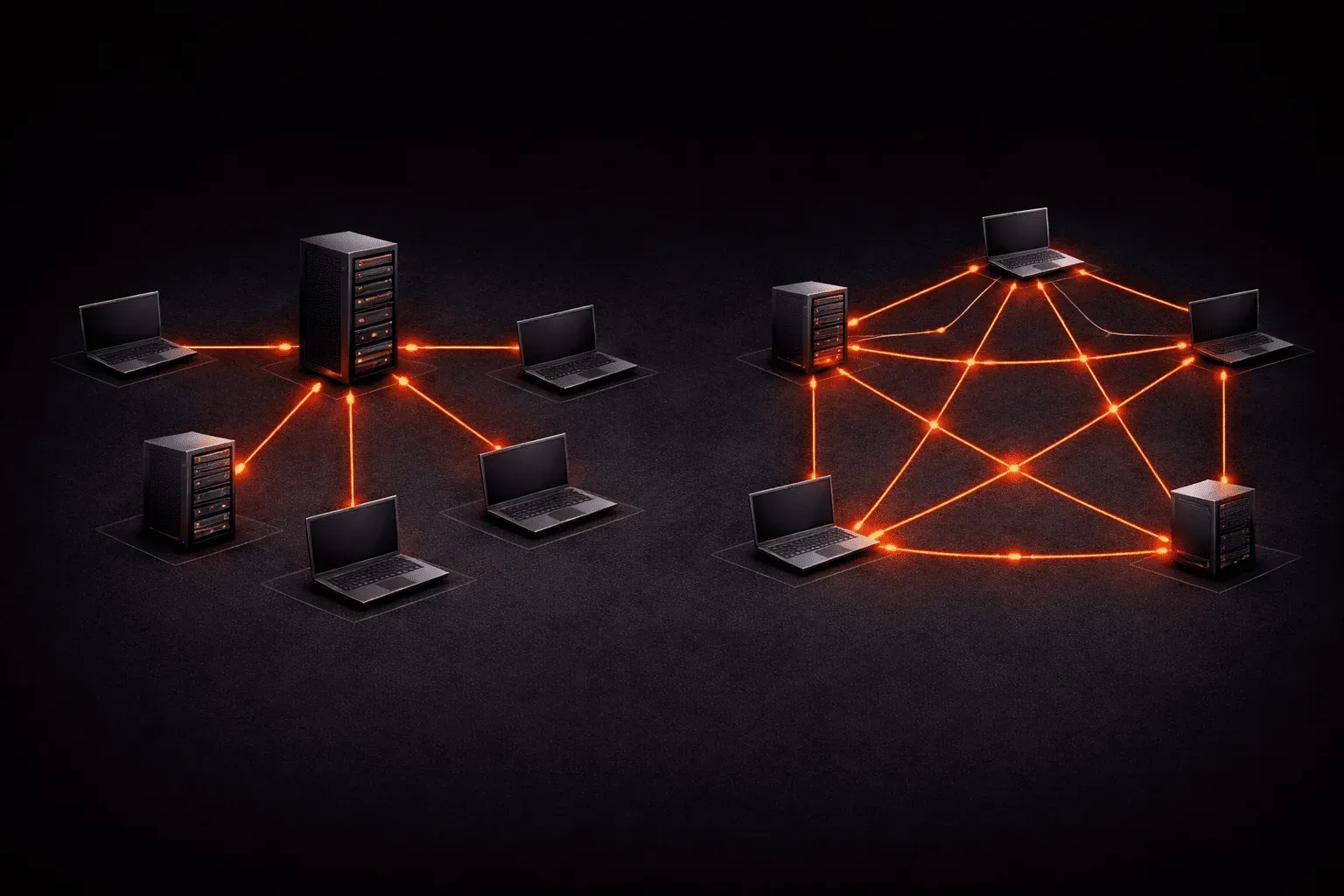
Network architecture forms the foundation of how computers communicate and share resources in modern computing environments. Think of it as the blueprint that defines how devices connect, interact, and exchange information across a network. Understanding these fundamental concepts is essential for anyone working with networks, whether you're troubleshooting connectivity issues or designing enterprise systems.
What is Network Architecture?
Network architecture refers to the design and structure of a computer network, including how devices are connected, how data flows between them, and the rules that govern communication. It encompasses both the physical layout of network components and the logical organization of services and applications.
Just like building architecture defines how rooms connect and function within a structure, network architecture determines how computers, servers, and other devices interact within a digital environment. This includes decisions about topology, protocols, security measures, and resource allocation.
Client-Server Model
The client-server model represents one of the most common network architectures in use today. In this structure, devices are categorized into two distinct roles:
- Servers: Powerful computers that provide services, resources, or data
- Clients: End-user devices that request and consume these services
When you open a web browser and visit a website, your computer acts as a client sending a request to a web server. The server processes your request and sends back the webpage content. This centralized approach offers several advantages:
- Centralized management and security
- Efficient resource utilization
- Easier backup and maintenance
- Scalable performance through dedicated hardware
Common examples include email systems (mail servers and email clients), file sharing (file servers and workstations), and database applications (database servers and application clients).
Peer-to-Peer Network Model
In contrast to the client-server model, a peer-to-peer network treats all connected devices as equals. Each device, called a "peer," can act as both a client and server simultaneously. This means any computer can share resources and request services from other computers in the network.
Imagine a small office where employees share files directly between their computers without using a central server. Each workstation can access shared folders on other workstations, creating a distributed network structure.
Key characteristics of peer-to-peer networks include:
- Decentralized resource sharing
- Lower implementation costs
- Simplified setup for small networks
- No single point of failure
However, peer-to-peer networks also present challenges such as security concerns, difficulty in managing permissions, and performance issues as the network grows larger.
Hybrid Approaches
Modern network structures often combine elements from both models. For example, a corporate network might use servers for critical applications like email and databases while allowing peer-to-peer file sharing for collaborative projects. This hybrid approach leverages the strengths of each architecture while mitigating their individual weaknesses.
Choosing the Right Architecture
Selecting between client-server and peer-to-peer models depends on several factors:
- Network size: Small networks (under 10 devices) often work well with peer-to-peer, while larger networks benefit from client-server structure
- Security requirements: Organizations with strict security needs typically prefer centralized client-server models
- Budget constraints: Peer-to-peer networks require less upfront investment in server hardware
- Performance needs: High-performance applications usually require dedicated server resources
What's Next
Now that you understand the basic network architecture models, the next step is exploring network topologies, the physical and logical arrangements of network devices. We'll examine how star, bus, ring, and mesh topologies work, and how they relate to the architectural models discussed here.
Network+ study resources
- CompTIA Network+ Study Guide — Full N10-009 exam coverage across all five domains. Essential exam preparation.