
Understanding Network Management Methods
Network management methods include in-band vs out-of-band management, centralized vs distributed control, and active vs passive monitoring approaches. Understanding these fundamental methods helps network administrators choose the right management strategy for their infrastructure needs.

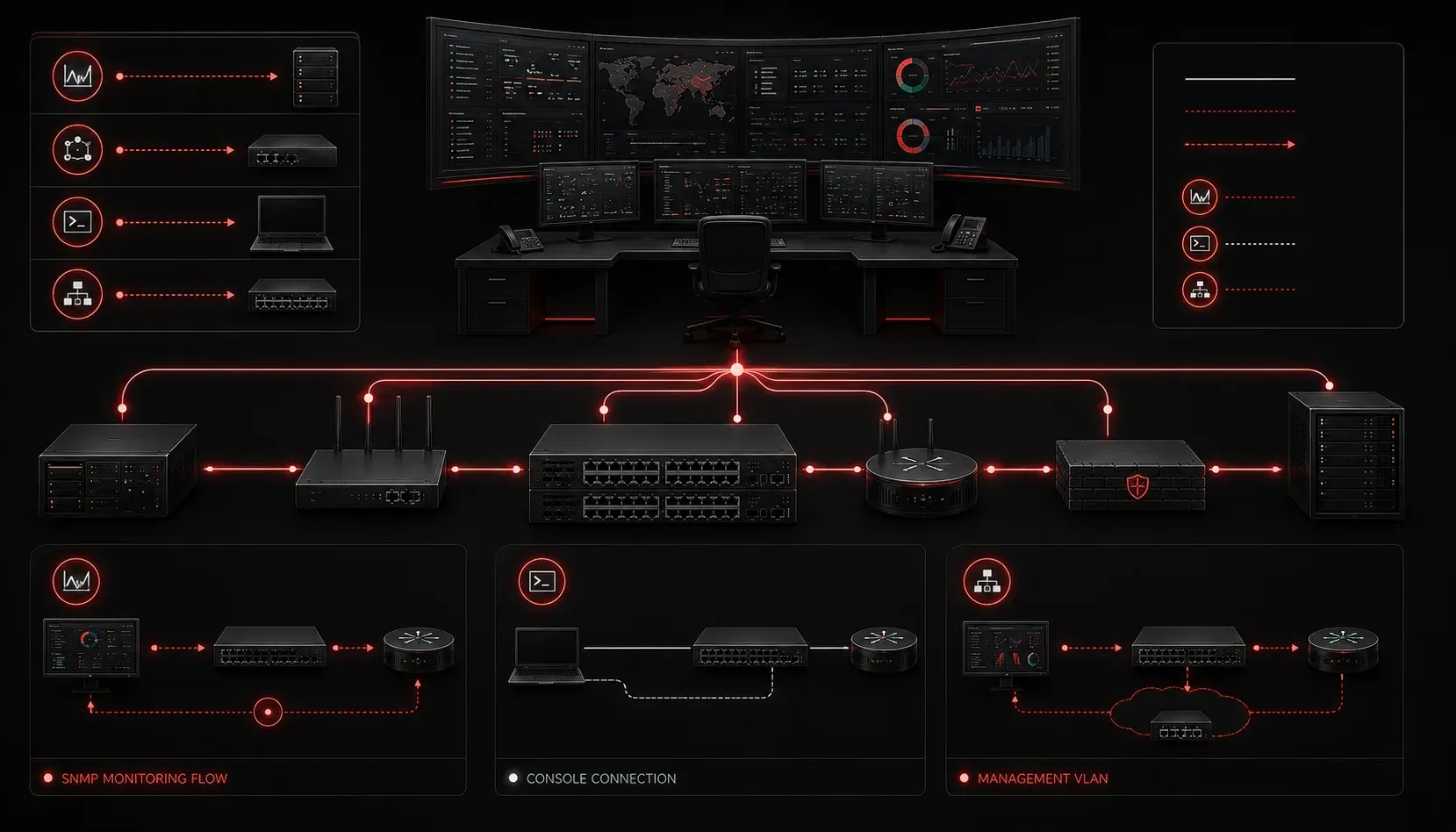
Network management methods are the systematic approaches used to monitor, control, and maintain network infrastructure. As networks become increasingly complex, understanding these management approaches becomes crucial for any IT professional. Let's explore the primary methods used to keep networks running smoothly and securely.
In-Band vs Out-of-Band Management
The fundamental distinction in network management lies between in-band and out-of-band management methods.
In-Band Management
In-band management uses the same network infrastructure that carries user data to manage network devices. This is the most common approach because it's cost-effective and straightforward to implement.
Examples of in-band management include:
- SSH connections to routers and switches over the production network
- Web-based management interfaces accessed through standard network connections
- SNMP monitoring traffic traveling alongside user data
The main advantage is simplicity because you only need one network infrastructure. However, if the network fails, you lose management access when you need it most.
Out-of-Band Management
Out-of-band management uses a separate, dedicated network path for management traffic. This creates a reliable management channel that remains available even when the primary network experiences issues.
Common out-of-band implementations include:
- Console servers connected via serial cables
- Dedicated management VLANs on separate physical interfaces
- Cellular or satellite backup connections for remote management
- Lights-out management cards in servers
Centralized vs Distributed Management
Network control can be organized using different architectural approaches.
Centralized Management
Centralized management consolidates network control into a single location or system. Network Management Systems (NMS) like SolarWinds or PRTG exemplify this approach, providing a unified dashboard for monitoring and controlling distributed network resources.
Benefits include:
- Consistent policy enforcement across the entire network
- Simplified troubleshooting with centralized logging and monitoring
- Reduced administrative overhead
Distributed Management
Distributed management spreads control across multiple systems and locations. Each network segment or device maintains some level of autonomous management capability.
This approach offers:
- Greater resilience: local failures don't affect the entire network
- Reduced bandwidth usage for management traffic
- Faster local response times
Active vs Passive Management
Network management methods also differ in how they interact with network devices and traffic.
Active Management
Active management involves systems that directly interact with network devices to gather information or make changes. SNMP polling, where management systems regularly query devices for status information, is a prime example.
snmpget -v2c -c public 192.168.1.1 1.3.6.1.2.1.1.5.0This command actively requests the system name from a device using SNMP.
Passive Management
Passive management relies on devices to report their status automatically. SNMP traps, syslog messages, and flow monitoring are passive approaches in which devices push information to management systems when events occur.
Common Management Protocols and Tools
Several protocols and tools enable these management methods:
- SNMP (Simple Network Management Protocol): The foundation of network monitoring, supporting both active polling and passive trap notifications
- SSH (Secure Shell): Encrypted command-line access for device configuration
- Syslog: Centralized logging protocol for collecting device messages
- NetFlow/sFlow: Traffic analysis and monitoring
- REST APIs: Modern programmable interfaces for network automation
Choosing the Right Management Method
The best network administration approach depends on your specific requirements:
- Small networks: In-band management with centralized tools often suffices
- Mission-critical environments: Out-of-band management provides essential redundancy
- Geographically distributed networks: Hybrid approaches combining centralized oversight with local distributed control
Most enterprise networks employ multiple management types simultaneously, using in-band methods for routine operations and out-of-band for emergency access and critical maintenance windows.
What's Next
Now that you understand the fundamental network management methods, the next logical step is to explore specific monitoring protocols and tools. In our next post, we'll dive deep into SNMP configuration and troubleshooting, showing you how to implement effective network monitoring in real-world scenarios.
Tools and resources for this topic
- CompTIA Network+ Study Guide — Comprehensive N10-009 exam preparation covering all five domains.