
What Are Networking Appliances and Their Functions?
This beginner's guide explains networking appliances - specialized hardware devices that perform specific network functions like routing, switching, and security. It covers core types including routers, switches, firewalls, and load balancers, plus the trend toward virtual appliances.

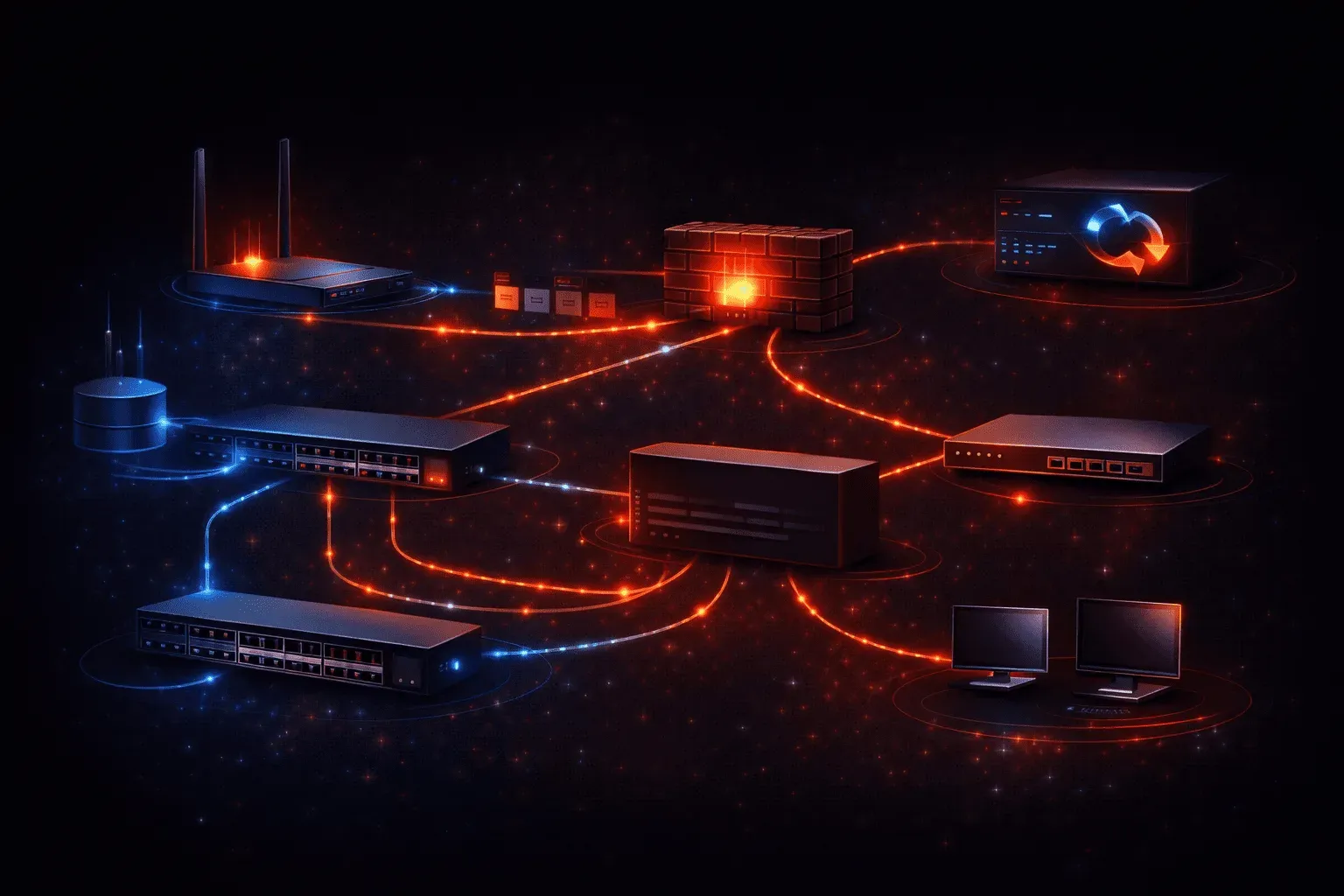
When you're starting your networking journey, one of the first things you'll encounter is the concept of networking appliances. These are specialized hardware devices designed to perform specific network functions, forming the backbone of modern network infrastructure.
What Are Networking Appliances?
Networking appliances are dedicated hardware devices that perform specific network-related tasks. Unlike general-purpose computers, these devices are built and optimized for particular network functions. Think of them as specialized tools in a network engineer's toolkit; each one has a specific job to do, and it does it very well.
These appliances can be physical hardware boxes or virtual devices running on standard server hardware. What makes them "appliances" is their purpose-built nature and the fact that they typically run embedded operating systems optimized for their specific functions.
Core Types of Networking Appliances
Routers
Routers are the traffic directors of the network world. Their primary function is to forward data packets between different networks, making routing decisions based on IP addresses. When you send data from your home network to a website on the internet, routers along the path determine the best route for your packets to take.
Router(config)# show ip route
Codes: C - connected, S - static, R - RIP, M - mobile, B - BGP
Gateway of last resort is 192.168.1.1 to network 0.0.0.0
C    192.168.1.0/24 is directly connected, FastEthernet0/0
S*   0.0.0.0/0 [1/0] via 192.168.1.1
Switches
Switches operate at Layer 2 of the OSI model and are responsible for forwarding frames within a local network segment. They learn MAC addresses and build forwarding tables to efficiently deliver data to the correct destination port. Modern switches can also perform Layer 3 functions, blurring the line between switching and routing.
Firewalls
Firewalls are security appliances that control network traffic flow based on predetermined security rules. They examine packets and make allow/deny decisions based on factors like source IP, destination IP, port numbers, and protocol types. Think of them as security guards checking IDs at the network entrance.
Load Balancers
Load balancers distribute incoming network traffic across multiple servers to ensure no single server becomes overwhelmed. This improves both performance and reliability. They can operate at different layers, from simple Layer 4 load balancing based on IP and port to sophisticated Layer 7 application-aware load balancing.
Specialized Network Functions
Network Access Control (NAC)
NAC appliances enforce security policies by controlling which devices can access the network and what resources they can reach. They often integrate with identity management systems to provide role-based access control.
Intrusion Detection and Prevention Systems (IDS/IPS)
These security appliances monitor network traffic for malicious activity. IDS devices detect and alert on suspicious behavior, while IPS devices can actively block threats in real-time.
WAN Optimization Appliances
These devices improve performance over wide area network connections through techniques like data compression, caching, and protocol optimization. They're particularly valuable for organizations with multiple branch offices.
Physical vs. Virtual Appliances
Traditional networking appliances were always physical hardware boxes. Today, many network functions are available as virtual appliances, software versions that run on standard server hardware or in cloud environments. This shift toward Network Functions Virtualization (NFV) provides greater flexibility and cost efficiency.
Virtual appliances offer several advantages:
- Faster deployment and scaling
- Lower hardware costs
- Easier management and updates
- Better resource utilization
Choosing the Right Appliance
When selecting networking appliances for your environment, consider these factors:
- Performance requirements: Throughput, concurrent connections, packet processing rate
- Scalability: Can the appliance grow with your network?
- Integration: How well does it work with your existing infrastructure?
- Management: Does it integrate with your network management tools?
What's Next
Now that you understand what networking appliances are and their basic functions, the next step is diving deeper into how these devices interconnect and communicate. In our next post, we'll explore network topologies and how different appliance configurations create various network designs to meet specific business requirements.
Network+ study resources
- CompTIA Network+ Study Guide — Full N10-009 exam coverage across all five domains. Essential exam preparation.