
Software Development vs Software Design: What's the Difference?
Software design is the planning and architecture phase where you define requirements and system structure, while software development is the implementation phase where you write and test the actual code. Both are essential for successful networking automation projects.

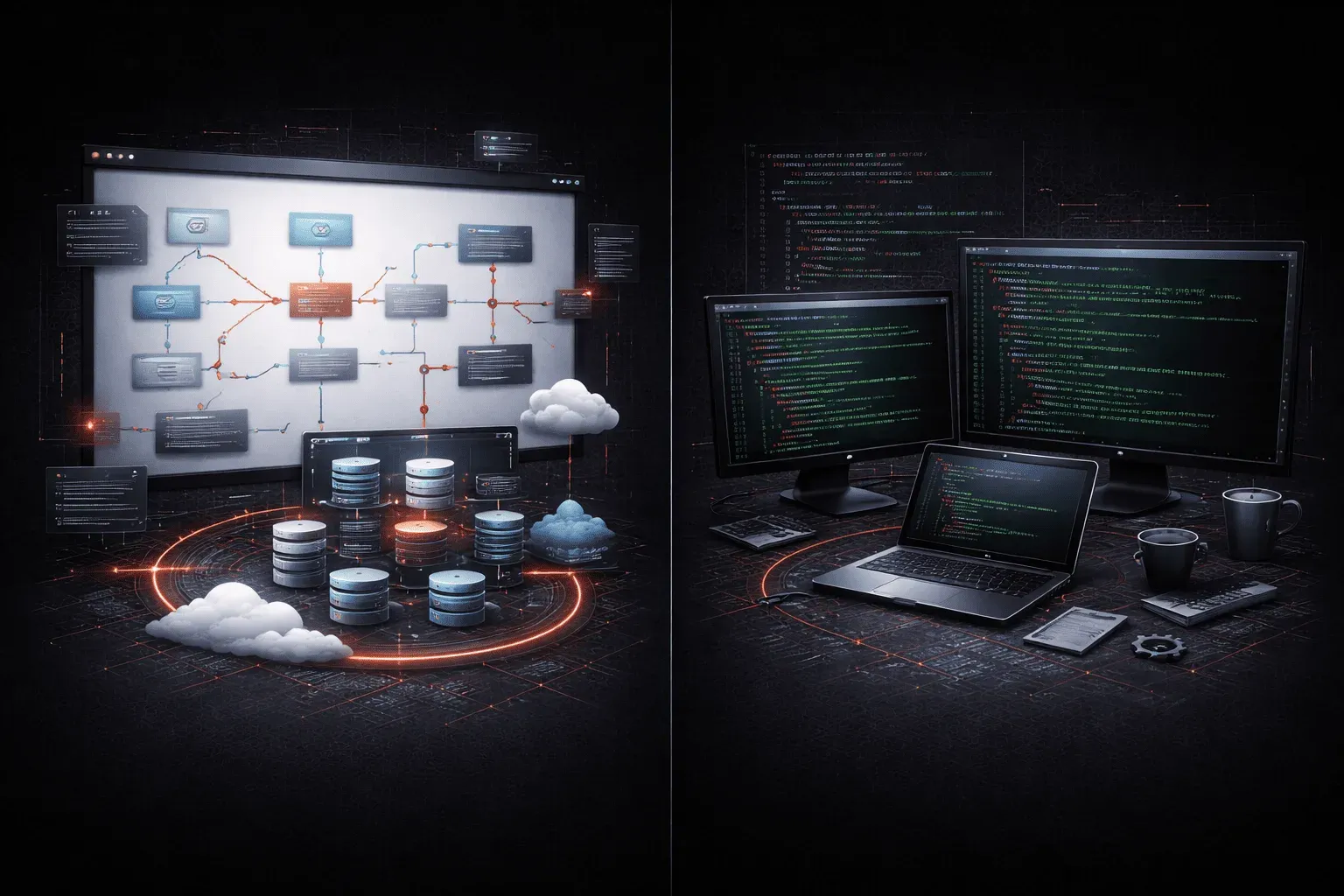
When you're starting your journey into network automation, you'll quickly encounter two terms that seem similar but represent distinct phases of creating solutions: software development and software design. Understanding the difference between these concepts is crucial for building effective automation tools and advancing in your CCNA automation studies.
What is Software Design?
Software design is the planning phase where you architect your solution before writing any code. It's like creating a blueprint for a building before construction begins. In networking automation, design involves:
- Analyzing the problem you need to solve
- Defining system requirements and constraints
- Planning the overall structure and flow
- Choosing appropriate tools and technologies
- Creating diagrams and documentation
For example, if you're designing an automated network backup solution, you'd first determine which devices need backing up, how often backups should occur, where to store the files, and what happens if a backup fails. You might create flowcharts showing the backup process or diagrams illustrating how different components interact.
What is Software Development?
Software development is the implementation phase where you write the actual code based on your design. This involves:
- Writing scripts or programs in languages like Python
- Implementing the logic defined in your design
- Testing your code to ensure it works correctly
- Debugging and fixing issues
- Maintaining and updating the code over time
Continuing our backup example, development would involve writing Python scripts that connect to network devices using libraries like netmiko, execute backup commands, and handle error conditions:
import netmiko
from datetime import datetime

def backup_device(device_ip, username, password):
    connection = netmiko.ConnectHandler(
        device_type='cisco_ios',
        host=device_ip,
        username=username,
        password=password
    )

    config = connection.send_command('show running-config')
    filename = f"backup_{device_ip}_{datetime.now().strftime('%Y%m%d')}.txt"

    with open(filename, 'w') as f:
        f.write(config)

    connection.disconnect()
    return filename
Key Role Differences
The role differences between design and development become clear when you consider their focus areas:
Design Focus:
- Strategic thinking: What should the system do?
- Architecture: How should components interact?
- User experience: How will operators use this tool?
- Requirements gathering: What are the business needs?
Development Focus:
- Technical implementation: How do we make it work?
- Code quality: Is the code efficient and maintainable?
- Testing: Does everything function as expected?
- Performance: Does it run fast enough?
How They Work Together in Automation
In networking automation projects, design and development are complementary phases that often overlap. Good design makes development more efficient, while development experience informs better design decisions.
Consider an Ansible playbook for configuring VLANs across multiple switches. The design phase would involve:
- Determining which VLANs need configuration
- Planning the playbook structure
- Defining variable files and templates
- Planning error handling and rollback procedures
The development phase implements this design:
---
- name: Configure VLANs on switches
  hosts: switches
  tasks:
    - name: Create VLANs
      cisco.ios.ios_vlans:
        config:
          - vlan_id: "{{ item.id }}"
            name: "{{ item.name }}"
        state: merged
      loop: "{{ vlans }}"
Why Both Matter for CCNA Automation
Understanding both aspects helps you become a more well-rounded automation professional. Design skills help you create solutions that actually solve business problems, while development skills let you implement those solutions effectively. Many automation projects fail because they skip the design phase and jump straight to coding, resulting in tools that work but don't meet real needs.
What's Next
Now that you understand the difference between software design and development, the next step is learning about the software development lifecycle (SDLC) and how it applies to networking automation projects. We'll explore the phases of SDLC and how they guide successful automation initiatives from conception to deployment.