
Essential Steps in Vulnerability Management
This post outlines the seven essential steps in vulnerability management: asset discovery, vulnerability identification, risk assessment, remediation planning, implementation, reporting, and continuous monitoring. Each step is explained with practical examples to help beginners understand how this

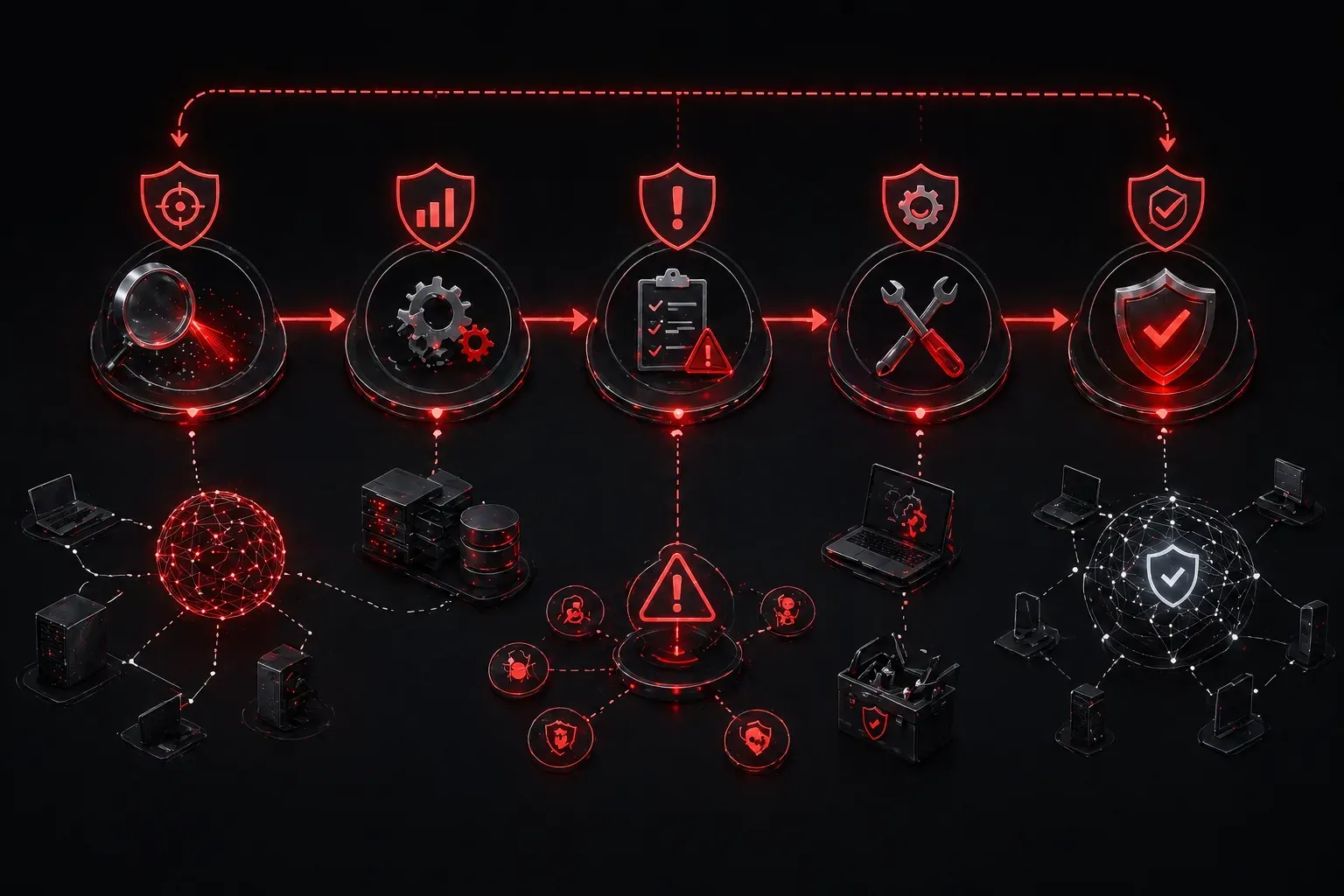
Vulnerability management is one of the most critical security processes in any organization. It's the systematic approach to identifying, evaluating, and addressing security weaknesses before attackers can exploit them. For Security+ candidates and security professionals, understanding these essential steps provides the foundation for protecting systems and data.
Let's walk through the core vulnerability management steps that form this crucial security process.
Step 1: Asset Discovery and Inventory
Before you can secure what you don't know exists, you need to discover and catalog all assets in your environment. This includes:
- Servers, workstations, and mobile devices
- Network equipment (routers, switches, firewalls)
- Applications and databases
- Cloud resources and containers
Modern organizations use automated discovery tools like Nessus, Qualys VMDR, or Rapid7 InsightVM to continuously scan network ranges and maintain an up-to-date inventory. This step is crucial because you can't protect assets you don't know about.
Step 2: Vulnerability Identification
Once you know what assets exist, the next step involves scanning them for known vulnerabilities. This process typically uses:
- Authenticated scans: Using credentials to perform deeper inspection
- Unauthenticated scans: External perspective scanning
- Configuration assessments: Checking for misconfigurations
Vulnerability scanners compare discovered software versions, configurations, and services against databases like the Common Vulnerabilities and Exposures (CVE) database to identify potential security issues.
Step 3: Risk Assessment and Prioritization
Not all vulnerabilities are created equal. This critical step involves evaluating each vulnerability using frameworks like the Common Vulnerability Scoring System (CVSS). Consider these factors:
- Exploitability: How easy is it to exploit?
- Impact: What damage could occur if exploited?
- Asset criticality: How important is the affected system?
- Threat intelligence: Are there active exploits in the wild?
A vulnerability with a CVSS score of 9.8 on a critical database server gets immediate attention, while a medium-severity issue on a test system might wait for the next maintenance window.
Step 4: Remediation Planning
This step transforms your risk assessment into actionable plans. Remediation options include:
- Patching: Installing security updates
- Configuration changes: Adjusting settings to reduce risk
- Compensating controls: Adding additional security layers
- Asset isolation: Segmenting vulnerable systems
Create remediation timelines based on risk levels. Critical vulnerabilities might require emergency patching within 72 hours, while lower-risk issues follow normal maintenance schedules.
Step 5: Implementation and Verification
Execute your remediation plans systematically. This involves:
- Testing patches in non-production environments first
- Coordinating with system owners for maintenance windows
- Documenting all changes made
- Rescanning systems to verify successful remediation
Always verify that your remediation efforts actually resolved the vulnerability. Sometimes patches fail to install correctly, or configuration changes don't take effect as expected.
Step 6: Reporting and Documentation
Maintain comprehensive records of your vulnerability management activities. Key reports include:
- Executive dashboards: High-level risk metrics and trends
- Technical reports: Detailed findings for IT teams
- Compliance reports: Documentation for auditors and regulators
Good documentation helps track progress, demonstrates due diligence, and supports continuous improvement efforts.
Step 7: Continuous Monitoring
Vulnerability management isn't a one-time activity. Establish ongoing processes for:
- Regular vulnerability scans (weekly or monthly)
- Monitoring for new vulnerabilities affecting your environment
- Tracking remediation progress and timelines
- Updating asset inventories as systems change
New vulnerabilities emerge daily, and your environment constantly evolves, making continuous monitoring essential for maintaining security posture.
What's Next
Understanding these vulnerability management steps provides the framework for protecting your organization's assets. In our next post, we'll explore specific vulnerability assessment tools and techniques that make this process more efficient and effective. We'll look at how different scanning approaches and tools fit into your overall security strategy.
Tools and resources for this topic
- CompTIA Security+ Study Guide — Full SY0-701 exam coverage including threats, vulnerabilities, and mitigation.